Isaac of Nineveh and the Ocean of Mercy

Hell as a Hospital
Isaac of Nineveh and the Ocean of Mercy
Abstract
This paper explores the theology of Isaac of Nineveh (Isaac the Syrian) with particular focus on his understanding of divine justice, punishment, hell, and restoration. Against retributive and carceral models of divine judgment, Isaac presents a radically therapeutic vision: hell as a hospital, punishment as medicine, and divine fire as love experienced by the unhealed will. At the heart of his theology stands an image of God as an infinite Ocean of Mercy, within which no creature can ultimately be lost. This paper situates Isaac within the broader Christian mystical tradition, articulates his implicit doctrine of universal restoration, and examines the metaphysical, psychological, and ethical implications of treating judgment as healing rather than revenge.
I. Introduction: Two Visions of Judgment
Christian history contains two fundamentally different imaginations of judgment:
-
Judgment as Prison
- Punishment as retribution
- Justice as payback
- Hell as eternal containment
- God as cosmic warden
-
Judgment as Hospital
- Punishment as therapy
- Justice as correction and restoration
- Hell as remedial suffering
- God as divine physician
Isaac of Nineveh stands unambiguously in the second tradition. He does not merely soften punishment; he redefines its entire purpose. For Isaac, punishment that does not heal is not justice at all.
II. Isaac of Nineveh: The Mystic of Mercy
Isaac writes from the Syriac Christian tradition, a stream of theology less juridical and more medical, poetic, and experiential than its later Western counterparts.
Key characteristics of Isaac’s theology:
- Deep suspicion of legal metaphors applied to God
- Emphasis on inner transformation rather than external conformity
- Radical trust in the inexhaustibility of divine mercy
- A refusal to ascribe cruelty, wrath, or vindictiveness to God
Isaac’s God is not a magistrate balancing accounts.
Isaac’s God is a physician treating a wounded creation.
III. God Beyond Retribution
One of Isaac’s most shocking claims is his outright rejection of attributing “justice” to God in the human sense.
“Do not call God just, for His justice is not like yours.”
Human justice:
- Responds to offense
- Measures punishment proportionally
- Seeks balance through pain
Divine justice (for Isaac):
- Responds to sickness
- Measures treatment according to need
- Seeks healing through transformation
To punish endlessly is not justice—it is failure.
A physician who leaves a patient forever diseased is not righteous but incompetent.
IV. Sin as Sickness, Not Crime
At the core of Isaac’s vision lies a decisive reframing:
- Sin is not primarily criminal guilt
- Sin is ontological damage
- Evil is not rebellion alone, but wounded desire
- The will does not choose evil freely—it chooses under distortion
Thus:
- Punishment must address the cause, not merely the act
- Judgment must repair perception, desire, and will
- Healing, not retaliation, is the goal
This makes eternal punitive hell not merely cruel, but illogical. Endless suffering does not cure disease—it ossifies it.
V. Hell Reimagined: Fire as Love
Isaac does not deny hell. He transfigures it.
Hell, for Isaac:
- Is not the absence of God
- Is not inflicted hatred
- Is not divine revenge
Hell is the experience of divine love by an unhealed soul.
The same fire that delights the purified torments the sick.
The fire is not different.
The condition of the soul is different.
Thus hell is:
- Subjective, not arbitrary
- Corrective, not final
- Finite in purpose, even if intense in experience
Hell is truth encountered too late, not mercy withdrawn.
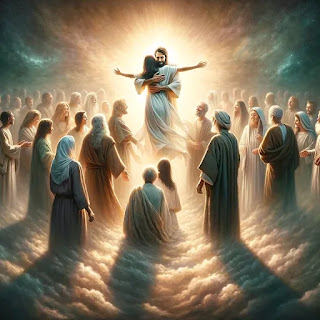
VI. The Ocean of Mercy
Isaac’s most famous metaphor is oceanic:
“As a handful of sand thrown into the sea, so are the sins of all flesh compared to the mind of God.”
This is not rhetorical excess—it is metaphysical assertion.
Implications:
- Sin is finite; mercy is infinite
- Evil has limits; love does not
- Resistance exhausts itself; compassion does not
An infinite ocean does not fail to absorb a finite drop.
To claim eternal damnation is to assert that:
- A finite will can defeat infinite love
- Time-bound rebellion can overpower eternal mercy
- God’s purpose can be permanently frustrated
Isaac refuses all three.
VII. Apokatastasis Without Fear
Isaac never systematizes universal restoration as a doctrine.
He does something far more dangerous: he assumes it.
For Isaac:
- God never abandons His creatures
- Divine pedagogy continues beyond death
- Punishment exists only as long as healing requires it
- Love never ceases its work
This is not indulgence—it is confidence in divine competence.
VIII. Psychological and Ethical Consequences
1. Fear-Based Religion Collapses
If God is a healer:
- Fear loses its motivational power
- Love becomes the engine of transformation
- Obedience becomes alignment, not survival
2. Human Justice Is Transformed
If divine justice heals:
- Human punishment should rehabilitate
- Prisons become clinics
- Courts become diagnostic spaces
- Vengeance becomes obsolete
3. The Moral Universe Becomes Coherent
A God who restores all:
- Is worthy of worship
- Is morally intelligible
- Is stronger than evil, not merely reactive to it
IX. Isaac Against Eternal Hell
Isaac never argues against hell by denying suffering.
He argues against eternal hell by denying divine failure.
Eternal damnation would mean:
- God failed to heal
- Love was overcome
- Creation defeated its Creator
For Isaac, this is unthinkable.
God does not create in order to lose.
X. Conclusion: Judgment Completed as Healing
Isaac of Nineveh leaves us with a vision that is at once terrifying and beautiful:
- Terrifying because divine love is inescapable
- Beautiful because divine love is inescapable
Hell, in this vision, is not God’s final word.
Healing is.
The fire burns.
The fire purifies.
The fire heals.
And when healing is complete, suffering ends—not because justice was abandoned, but because it was fulfilled.
Final Thesis
Hell is not a prison constructed by divine anger.
Hell is a hospital ward within the Ocean of Mercy—
and no patient is abandoned forever.



Comments
Post a Comment