Words-as-Incarnations

Words-as-Incarnations
How Ideas Become Flesh, Action, Institutions, and Worlds
I. The Core Claim
Words-as-Incarnations proposes the following foundational thesis:
A word is not complete until it becomes embodied.
Meaning reaches fulfillment only when it enters matter, action, behavior, structure, or lived form.
Words are not merely spoken or thought.
They seek embodiment.
An idea that never enters reality remains:
- unfinished
- unrealized
- inert
- ethically weightless
Incarnation is the completion phase of meaning.
II. What Incarnation Means (Precisely)
Incarnation is often misunderstood as purely religious or symbolic.
Here, we define it rigorously:
Incarnation = the translation of meaning into material, behavioral, temporal, or social form
A word incarnates when it:
- becomes an action
- shapes a habit
- structures a system
- organizes matter
- alters a body
- leaves a trace in time
Incarnation is meaning paying the price of reality.
III. Why This Model Is Necessary
Most linguistic and philosophical models stop too early.
They analyze:
- semantics
- syntax
- cognition
- discourse
But they fail to explain:
- why beliefs change behavior
- why ideologies build institutions
- why lies cause suffering
- why truth requires sacrifice
- why ideas kill or save people
Words-as-Incarnations answers the missing question:
How does meaning cross the boundary from thought into the world?
IV. The Lifecycle of a Word
Every word passes through four existential phases:
- Conception – idea arises
- Articulation – idea is named
- Internalization – idea shapes mind
- Incarnation – idea shapes reality
A word that fails to incarnate decays.
A word that incarnates falsely corrupts.
A word that incarnates truthfully creates.
V. Degrees of Incarnation
Not all incarnations are equal.
1. Micro-Incarnations
- tone of voice
- posture
- attention
- choice
These are small but constant.
2. Behavioral Incarnations
- habits
- routines
- disciplines
- addictions
These shape character.
3. Social Incarnations
- norms
- roles
- rituals
- customs
These shape cultures.
4. Structural Incarnations
- laws
- institutions
- technologies
- architectures
These shape civilizations.
5. Total Incarnations
- ideologies
- religions
- worldviews
- moral orders
These shape history.
VI. The Cost of Incarnation
Incarnation is expensive.
To incarnate a word is to:
- constrain possibility
- accept limits
- endure resistance
- suffer consequences
This is why many people prefer:
- abstract ideals
- endless theorizing
- symbolic gestures
Abstraction is cheap.
Incarnation costs time, energy, risk, and pain.
A word that cannot survive incarnation was never strong.
VII. Psychological Incarnation
1. Belief as Embodied Pattern
Beliefs are not statements.
They are repeated behaviors.
If a person says they believe something but does not live it,
the belief does not exist.
The body tells the truth the mouth avoids.
2. Trauma as Corrupted Incarnation
Trauma is meaning incarnated against consent.
Events force interpretations into:
- nervous systems
- reflexes
- identity
- memory
Healing requires re-incarnation:
- new meanings
- new patterns
- new embodied truths
Talk alone cannot heal trauma.
The body must learn something new.
VIII. Moral Incarnation
Ethics is not about knowing the good.
It is about becoming it.
A virtue is a word that:
- survived repetition
- shaped reflex
- became instinct
Hypocrisy is failed incarnation.
Moral outrage without embodiment is theatrical.
IX. Political and Institutional Incarnation
Every institution is a frozen word.
- A constitution is an incarnated philosophy
- A prison is an incarnated judgment
- A market is an incarnated value system
- A school is an incarnated theory of mind
Institutions persist long after their words are forgotten.
This is why bad ideas are so dangerous: They outlive their authors.
X. Technological Incarnation
Technology is idea made artifact.
Every tool contains:
- assumptions
- values
- priorities
- blind spots
Code is philosophy in executable form.
Technology does not ask permission.
It incarnates whatever was built into it.
XI. Spiritual Incarnation
At the highest level, incarnation is sacred.
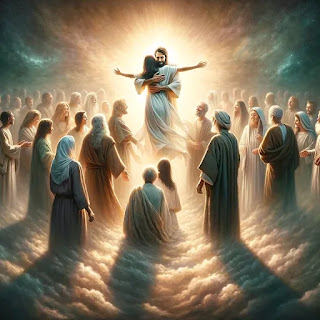
If Logos is divine intelligibility,
then incarnation is Logos entering finitude.
This is why spiritual traditions emphasize:
- embodiment
- sacrifice
- ritual
- practice
A spirituality that never incarnates becomes fantasy.
Holiness is not imagined—it is lived.
XII. Anti-Incarnation and Escape
Modern pathology often takes the form of incarnation avoidance:
- endless commentary
- infinite critique
- performative belief
- symbolic activism
- digital abstraction
This produces:
- impotence
- cynicism
- resentment
- unreality
Reality always wins.
Meaning that refuses incarnation will be incarnated by someone else, often badly.
XIII. Restoration Through Right Incarnation
Restoration is not about new words.
It is about re-embodying old truths correctly.
Healing asks:
- What must this idea become?
- What does this word demand of the body?
- What cost must be paid?
Truth without incarnation is inert.
Incarnation without truth is destructive.
XIV. Integration with the Words-as Canon
Words-as-Incarnations integrates every prior theory:
- Words-as-Logos → source of meaning
- Words-as-Logoi → structured participation
- Words-as-Forces → causality
- Words-as-Systems → organization
- Words-as-Ecosystems → growth
- Words-as-Worlds → total environments
Incarnation is where all of them become real.
XV. Final Seal
A word that never becomes flesh is unfinished.
Meaning proves itself by enduring time, resistance, and cost.
The body is the final editor of belief.
History is the record of incarnated ideas.To speak truth is good.
To think truth is better.
But to become truth—
that is where meaning finally lives.

Comments
Post a Comment