INFINITE ONTOLOGICAL AND PHENOMENOLOGICAL PLURALISM

INFINITE ONTOLOGICAL AND PHENOMENOLOGICAL PLURALISM
A Metaphysical Thesis on the Inexhaustibility of Being, Mind, Consciousness, and Reality
Toward a Philosophy of Infinite Worlds, Infinite Minds, and the Infinite Creative Intellect
ABSTRACT
What if the ultimate nature of reality is characterized not merely by the existence of infinitely many entities, but by an inexhaustible multiplicity of fundamentally distinct modes of existence, consciousness, cognition, and experiential possibility?
This thesis introduces Infinite Ontological and Phenomenological Pluralism (IOPP), a speculative but philosophically structured metaphysical framework proposing that the domain of possible being may be irreducibly plural, qualitatively inexhaustible, and potentially infinite in its fundamental forms.
The theory distinguishes between numerical multiplicity, qualitative diversity, ontological plurality, phenomenological plurality, and generative transcendence.
Its central proposition is that reality may admit not only infinitely many worlds, but infinitely many fundamentally different kinds of worlds; not merely infinitely many minds, but infinitely many irreducibly distinct modes of mind; and not merely infinitely many experiences, but an inexhaustible plurality of possible structures through which existence may become conscious of itself.
Drawing upon ontological pluralism, phenomenology, modal metaphysics, process philosophy, metaphysical idealism, philosophies of infinity, and contemporary theories of consciousness, this thesis develops a systematic account of what may be called Infinite Qualitative Multiplicity.
A further theological interpretation examines the possibility of an Infinite Creative Mind whose intellectual and ontological generativity is inexhaustible.
The thesis argues that no finite taxonomy of existence, no human-centered theory of consciousness, and no particular architecture of reality should automatically be considered exhaustive of all metaphysical possibilities.
However, epistemic humility does not establish infinity by itself. The strongest version of IOPP therefore remains a substantive metaphysical conjecture requiring independent defense.
Ultimately, the theory proposes a philosophical orientation toward existence as fundamentally open to forms of reality and consciousness that may transcend even our presently available categories of imagination and understanding.
Keywords: Ontological Pluralism; Phenomenological Pluralism; Metaphysical Infinity; Infinite Mind; Modal Metaphysics; Philosophy of Consciousness; Qualitative Multiplicity; Process Metaphysics; Ontological Creativity; Phenomenology; Cosmopsychism; Generative Ontology; Metaphysical Transcendence.
I. INTRODUCTION: THE PROBLEM OF INEXHAUSTIBLE BEING
Philosophy has traditionally approached existence through several foundational questions:
What exists?
Why does anything exist?
What is the ultimate nature of being?
What is consciousness?
What constitutes the relationship between mind and reality?
And what are the necessary structures governing everything that could possibly exist?
These questions have generated some of humanity's most sophisticated intellectual traditions, ranging from ancient metaphysics to contemporary analytic ontology and the philosophy of mind.
Yet another question arises when these inquiries are considered together:
Must all possible existence conform to a finite inventory of fundamental ontological categories?
This question is more radical than asking whether the physical universe is spatially infinite.
It is also more radical than asking whether infinitely many universes exist.
An infinite universe might contain infinitely many galaxies while remaining governed by one set of physical laws.
An infinite collection of worlds might contain endless rearrangements of familiar substances and processes without introducing a fundamentally new mode of being.
Likewise, infinitely many conscious organisms might possess only finitely many basic kinds of consciousness.
Numerical infinity does not establish qualitative inexhaustibility.
The central problem of this thesis is therefore not whether reality contains an infinity of objects.
It is whether reality's possibilities extend into an infinity of genuinely distinct ontological and phenomenological forms.
Consider the proposition:
Existence may be infinitely diverse not only in what exists, but in what it means for something to exist.
A corresponding phenomenological proposition follows:
Consciousness may be infinitely diverse not merely in what is experienced, but in the fundamental structures by which experience becomes possible.
Together, these propositions form the foundation of Infinite Ontological and Phenomenological Pluralism.
IOPP begins from the recognition that our concepts of substance, process, identity, relation, space, time, cognition, experience, and consciousness are shaped by our particular position within reality.
We encounter existence through the faculties available to human beings.
But what justifies treating those faculties as providing an exhaustive inventory of possible existence?
The absence of such justification motivates an investigation into the metaphysical possibility of radically unfamiliar forms of being.
The ambition of this thesis is to construct a framework capable of accommodating such possibilities without abandoning logical coherence, disciplined reasoning, or epistemic responsibility.
II. DEFINING INFINITE ONTOLOGICAL AND PHENOMENOLOGICAL PLURALISM
2.1. The General Definition
Infinite Ontological and Phenomenological Pluralism is the metaphysical hypothesis that possible reality encompasses an inexhaustible multiplicity of qualitatively distinct modes of being and modes of consciousness, potentially extending beyond every finite classification available to any particular finite intellect.
This definition contains five principal commitments.
1. Ontological plurality
Reality may admit fundamentally different ways of existing.
2. Phenomenological plurality
Consciousness may admit fundamentally different structures of subjective experience.
3. Qualitative irreducibility
Some modes of existence or consciousness may be genuinely different in kind rather than merely variations of familiar structures.
4. Modal openness
The range of metaphysically possible forms may exceed the presently known or imaginable forms.
5. Potential infinitude
There may be no finite upper bound on the number of qualitatively distinct possible ontological and phenomenological structures.
These commitments must be distinguished.
The first four are compatible with a finite but extremely diverse metaphysical landscape.
The fifth introduces the theory's strongest and most controversial claim.
It is the fifth proposition that transforms ordinary pluralism into infinite pluralism.
2.2. Ontological Pluralism
In contemporary metaphysics, ontological pluralism concerns whether being is fundamentally uniform or whether different entities possess distinct ways or modes of being.
Kris McDaniel's The Fragmentation of Being (2017) provides an important contemporary treatment of this question.
McDaniel considers whether distinctions involving substances, attributes, temporality, persons, and other categories might concern being itself rather than merely different properties of things that all exist in precisely the same manner.
IOPP extends this discussion in a speculative direction.
Rather than assuming that the number of fundamental modes of being is necessarily small, IOPP asks whether the plurality of possible modes might be unbounded or infinite.
Its distinctive question is:
Could there exist modes of being that cannot be adequately captured by any presently established ontology?
This is not equivalent to asserting that every unfamiliar object constitutes a new mode of existence.
A genuinely distinct ontological mode must differ at the level of its constitutive structure, not merely in accidental properties.
2.3. Phenomenological Pluralism
Phenomenology investigates experience as it is lived, including the intentional structures through which things appear to consciousness.
Edmund Husserl's phenomenological project examines the structures of consciousness, intentionality, temporality, and intersubjective experience.
Maurice Merleau-Ponty subsequently emphasizes the embodied and situated character of perception.
IOPP proposes that the phenomenological structures familiar to human beings might represent only a restricted portion of a far more extensive possibility space.
The crucial distinction is between:
- Different experiences within a shared structure of consciousness.
- Fundamentally different structures through which experience occurs.
Two human beings might experience different emotions while sharing broadly similar cognitive and phenomenological architectures.
A radically unfamiliar consciousness, however, might differ in its fundamental organization of subjectivity, temporality, selfhood, intentionality, or experiential unity.
Consequently, IOPP investigates the possibility of phenomenological architectures not reducible to recognizable modifications of human consciousness.
III. THE FIVE LEVELS OF INFINITE MULTIPLICITY
A rigorous theory of infinite pluralism must distinguish several forms of multiplicity.
3.1. Numerical Multiplicity
The simplest form is numerical plurality.
There may be infinitely many instances of a particular kind of thing.
An infinite sequence of integers is an obvious mathematical example.
But numerical infinity does not require unlimited qualitative diversity.
An infinite collection could consist entirely of structurally identical objects.
Therefore:
Infinite quantity does not imply infinite qualitative difference.
This distinction is indispensable.
3.2. Structural Multiplicity
Structural plurality concerns the different configurations, relations, and organizations that entities may possess.
An architecture of reality might allow indefinitely many configurations.
For example, a world governed by a finite alphabet of fundamental physical components might nevertheless support an enormous, potentially infinite range of complex structures.
Structural infinity therefore represents a deeper form of multiplicity than mere numerical repetition.
Nevertheless, structural variation alone does not establish different fundamental modes of being.
3.3. Ontological Multiplicity
Ontological multiplicity concerns genuinely distinct categories or modes of existence.
The distinction between a physical object and an abstract mathematical object provides one familiar philosophical example, although their ultimate ontological status remains contested.
One might also investigate distinctions between:
- Substances and events.
- Objects and processes.
- Particulars and universals.
- Actualities and possibilities.
- Relational structures and intrinsic properties.
- Temporally situated beings and allegedly timeless entities.
The ontological pluralist asks whether these differences concern different kinds of entities existing in one uniform sense, or genuinely different ways of being.
IOPP extends this investigation beyond familiar categories.
3.4. Phenomenological Multiplicity
Phenomenological multiplicity concerns the different possible organizations of subjective experience.
A conscious being might possess unfamiliar forms of:
- Sensory apprehension.
- Temporal awareness.
- Selfhood.
- Unity.
- Memory.
- Attention.
- Intentionality.
- Emotional significance.
- Cognitive integration.
- Experiential depth.
However, the true ambition of IOPP is not merely to rearrange these faculties.
It is to investigate the possibility of modes of consciousness for which these categories themselves are inadequate.
3.5. Generative Multiplicity
The fifth level concerns the production or actualization of genuinely new forms.
This introduces a distinction between an infinite inventory of possibilities and an inexhaustible source of ontological creativity.
An inventory contains possibilities already understood as members of a domain.
A generative conception of reality emphasizes the possibility of novel formations whose structures are not adequately anticipated by existing classifications.
Alfred North Whitehead's process philosophy and Gilles Deleuze's philosophy of difference provide important precedents for treating becoming, creativity, and differentiation as metaphysically significant.
IOPP develops this into the hypothesis of Inexhaustible Generative Ontology.
Under this hypothesis, reality is not understood exclusively as an established collection of things.
It is also understood through the principles by which new organizations and modes of being may emerge or become actual.
Whether such creativity genuinely extends the realm of metaphysical possibility, rather than actualizing possibilities that were always available, remains an open philosophical question.
IV. THE INFINITE MIND: CONSCIOUSNESS AS AN ONTOLOGICAL FOUNTAINHEAD
The most expansive version of IOPP introduces the hypothesis of an Infinite Creative Mind.
This is not an established scientific account of reality.
It is a metaphysical and theological interpretation that can be developed alongside, but must not be confused with, the theory's more general pluralist commitments.
The central intuition is that ultimate reality may possess an inexhaustible intellectual or creative foundation.
Such a foundation would not merely contain an immense number of ideas.
It would possess an extraordinary capacity for the conception, organization, differentiation, and possible actualization of worlds and forms of consciousness.
4.1. The Infinite Mind as Intellectual Multiplicity
Suppose an Infinite Mind possesses inexhaustible intellectual capacities.
Its thinking might encompass:
An infinity of ideas.
An infinity of relations.
An infinity of possible worlds.
An infinity of conceptual systems.
An infinity of intelligible structures.
An infinity of possible cognitive architectures.
And an infinity of distinct ways in which existence might become meaningful or conscious.
Yet an important qualification is required.
An infinite number of thoughts does not logically entail an infinite number of existing worlds.
Nor does the conceptual representation of a world guarantee its metaphysical possibility.
Nor does possibility guarantee actuality.
Consequently, IOPP distinguishes three relations:
Conception → Possibility → Actualization
These relations are not automatically equivalent.
A coherent metaphysics must explain the transitions between them.
4.2. The Mind as a Principle of Creative Differentiation
The Infinite Mind hypothesis becomes especially significant when considered through the relationship between unity and multiplicity.
An ultimate intelligence might be one in its metaphysical foundation while supporting an inexhaustible plurality of conceptual distinctions.
This suggests a principle:
The unity of an ultimate creative source need not entail uniformity among its expressions.
A single foundation might support diverse forms without requiring those forms to possess identical structures.
Such a model has affinities with philosophical traditions associated with Leibniz, Spinoza, Neoplatonism, and certain forms of idealism.
But the comparison must be qualified.
Leibniz's monads, Spinoza's modes, and Neoplatonic emanations belong to different metaphysical systems.
Their differences should not be collapsed into a single historical doctrine.
IOPP treats them as sources of philosophical possibilities, not as interchangeable formulations of the same theory.
4.3. The Transcendence of the Creative Source
An especially radical extension holds that the Infinite Mind transcends not only every particular created system but the necessity of any single created system.
Under this interpretation, no finite ontology exhausts the ultimate creative foundation.
No single universe defines the total range of reality.
No particular architecture of mind constitutes the final measure of consciousness.
No finite conceptual framework exhausts the possibilities of intelligibility.
The Infinite Mind would therefore be understood as possessing creative non-exhaustibility.
However, this proposition requires conceptual care.
To say that a source is inexhaustible is not to say that contradictions become possible.
An unlimited intellect need not make a square circle metaphysically coherent.
Likewise, the claim that no finite conceptual framework exhausts reality does not imply that all descriptions of reality are equally accurate.
Transcendence is not equivalent to logical arbitrariness.
V. THE INFINITE DIVERSITY OF CONSCIOUSNESS
Perhaps the most extraordinary implication of IOPP concerns consciousness itself.
The central question is:
What if the forms of consciousness familiar to humanity represent only a minute fraction of the possible architectures of subjective existence?
5.1. The Human Phenomenological Horizon
Human beings experience reality through a particular biological and cognitive organization.
Our conscious experience exhibits familiar structures.
We experience temporal succession.
We distinguish ourselves from surrounding environments.
We organize sensory information.
We possess memories, emotions, intentions, and conceptual representations.
We frequently experience the world as populated by relatively stable objects existing in relations of space and time.
But these structures should not automatically be universalized.
The human mind may provide evidence concerning human consciousness without providing an exhaustive inventory of possible consciousness.
Thomas Nagel's 1974 essay, What Is It Like to Be a Bat?, is especially relevant.
Nagel argues that the subjective character of experience cannot simply be recovered by imagining ourselves possessing the behavior or sensory mechanisms of another organism.
To imagine oneself navigating by echolocation is not necessarily to grasp the subjective character of a bat's experience.
This generates a profound epistemological implication.
Our inability to imagine a particular mode of consciousness does not establish its impossibility.
Nevertheless, this implication remains negative.
It challenges an inference from inconceivability to impossibility.
It does not establish that infinitely many unfamiliar modes actually exist.
5.2. Beyond Anthropomorphic Consciousness
IOPP proposes that consciousness should be investigated without assuming that all possible minds must possess recognizably human structures.
Consider several speculative possibilities.
Atemporal consciousness
A mode of experience that does not organize awareness through a familiar sequence of past, present, and future.
Relational consciousness
A form of awareness in which relations, rather than independent objects, constitute the primary organization of experience.
Distributed consciousness
A hypothetical consciousness whose experiential unity is constituted through a distributed organization rather than a single familiar biological center.
Nonconceptual intelligence
A cognitive architecture capable of sophisticated orientation or discrimination without organizing its experience through concepts resembling human language.
Multidimensional phenomenal integration
A hypothetical experience whose fundamental structures involve dimensions of differentiation unavailable to ordinary human perception.
Non-egoic subjectivity
A mode of experience possessing phenomenal awareness without the familiar organization of a persistent, narratively defined individual self.
These possibilities are philosophical thought experiments.
They are not presented as demonstrated examples of actual nonhuman consciousness.
Their purpose is to expose the extent to which our definitions of mind may be constrained by familiar examples.
5.3. The Possibility of Unimaginable Modes
The strongest phenomenological proposition is not simply that alien minds may think differently.
It is that some possible minds may possess fundamental experiential structures that human imagination cannot adequately represent.
This produces a philosophical distinction between two types of limitation.
Empirical limitation: We have not yet encountered or investigated a particular form of mind.
Constitutive limitation: Our current cognitive architecture may be incapable of adequately simulating the subjective character of certain forms of mind.
The second limitation is more radical.
If genuine, it implies that the space of possible experience cannot be exhaustively mapped through human introspection alone.
Phenomenology would then confront an intrinsic methodological challenge: the study of experience must acknowledge the possibility of forms of experience inaccessible to direct human participation.
VI. PHENOMENOLOGICAL WORLDS: THE RELATIONSHIP BETWEEN MIND AND REALITY
The relationship between consciousness and reality introduces another dimension of pluralism.
A world is not necessarily experienced identically by every being inhabiting it.
6.1. The Concept of Umwelt
Jakob von Uexküll's concept of Umwelt provides a useful foundation.
An organism's Umwelt is its meaningful, organism-relative environment.
Different organisms encounter and organize their surroundings through different perceptual and practical capacities.
Their experienced worlds are not simply interchangeable representations.
They possess distinctive structures of salience and significance.
This suggests that even within one physical environment, multiple meaningful experiential worlds coexist.
A bee, a bat, a human being, and an octopus may inhabit overlapping physical environments while engaging those environments through significantly different perceptual and behavioral systems.
The Umwelt concept does not demonstrate that these organisms inhabit separate physical universes.
It demonstrates the importance of distinguishing an environment considered independently of a particular organism from that environment as meaningfully encountered by the organism.
6.2. Phenomenological Worldhood
IOPP extends this distinction.
Let a phenomenological world be the structured field of experience available to a conscious subject or a class of subjects.
Its organization may depend upon such features as:
The subject's perceptual capacities.
Its temporal organization.
Its embodiment.
Its capacity for recognizing patterns.
Its forms of affective significance.
Its cognitive and practical interests.
Its relationship to other subjects.
Consequently, a plurality of consciousnesses may generate or inhabit a plurality of phenomenological worlds without requiring an equivalent plurality of physically separate universes.
This yields a critical distinction:
Ontological worlds concern what exists; phenomenological worlds concern how existence is disclosed or experienced.
The distinction prevents the theory from confusing perceptual diversity with the creation of separate material realities.
6.3. Radical Perspectivism
Anthropological discussions of perspectivism also illuminate the issue.
Eduardo Viveiros de Castro's 1998 study of Amerindian perspectivism examines cosmologies in which human, animal, and spiritual perspectives challenge familiar Western divisions between nature and culture.
These traditions should not be reduced to evidence for Western metaphysical theories.
Rather, they reveal that assumptions concerning persons, worlds, and perspectives are themselves culturally situated.
IOPP draws a methodological lesson from this encounter:
Philosophical systems should examine whether their allegedly universal categories are genuinely universal or reflect particular historical and experiential conditions.
VII. THE METAPHYSICS OF INFINITE POSSIBILITY
IOPP cannot be developed adequately without modal metaphysics.
Modal metaphysics concerns possibility, necessity, contingency, and the conditions under which things could exist or be otherwise.
7.1. Possible Worlds
David Lewis's On the Plurality of Worlds (1986) provides one of the most influential modern defenses of modal realism.
According to Lewis, possible worlds are concrete realities rather than merely abstract representations.
This position supplies an important philosophical precedent for taking alternative worlds seriously as objects of metaphysical inquiry.
However, IOPP does not logically require Lewisian modal realism.
It remains compatible with approaches that understand possible worlds as abstract representations, structured possibilities, or theoretical devices.
The distinction matters because the existence of possible worlds within a semantic model does not establish the physical existence of multiple universes.
7.2. The Problem of Modal Exhaustiveness
Suppose we possess a theory describing every metaphysical possibility expressible within a particular formal language.
Does that establish that every possible form of reality has been adequately represented?
Not necessarily.
The formal system may presuppose categories that restrict what its language can describe.
It may therefore fail to represent possibilities that require fundamentally different descriptive resources.
This motivates what may be called the Problem of Modal Exhaustiveness.
The problem asks:
How could a finite intellect establish that its inventory of possible ontological categories is complete?
One cannot establish the completeness of a conceptual inventory merely by failing to imagine alternatives.
However, the failure to establish completeness does not itself prove incompleteness.
Thus, a responsible version of IOPP must distinguish between justified openness and demonstrated infinity.
7.3. Possibility Is Not Actuality
Three propositions must remain separate:
- A novel form of consciousness is conceptually describable.
- A novel form of consciousness is metaphysically possible.
- A novel form of consciousness actually exists.
The truth of the first does not automatically establish the second.
The truth of the second does not automatically establish the third.
This distinction is especially important for cosmological speculation.
A philosophical thesis concerning infinitely many possible worlds cannot be treated as empirical evidence that infinitely many worlds have been physically realized.
VIII. QUALITATIVE INFINITY AND THE MATHEMATICS OF MULTIPLICITY
Georg Cantor's theory of infinite sets offers essential conceptual distinctions.
Modern set theory demonstrates that infinite cardinalities need not all be equal.
The natural numbers form a countably infinite set.
The real numbers form an uncountably infinite set.
Cantor's theorem establishes that the power set of a given set has strictly greater cardinality than that set.
These results demonstrate the mathematical richness of infinity.
However, they do not establish that physical reality, consciousness, or ontological categories possess corresponding infinite cardinalities.
IOPP therefore uses mathematical infinity as a precise conceptual resource rather than as an independent proof of metaphysical plenitude.
8.1. Numerical and Qualitative Infinity
Let a collection contain infinitely many entities.
This establishes numerical infinity.
But suppose every entity belongs to one of only three fundamental ontological types.
Then numerical infinity coexists with finite qualitative classification.
Conversely, suppose that for every natural number n, there are at least n mutually distinct possible modes of being.
Under an appropriate and fixed criterion of ontological distinctness, this would establish that no finite number bounds the domain of possible modes.
The distinction between these propositions is foundational.
IOPP is principally concerned with the second.
8.2. The Problem of Fundamental Distinctness
What qualifies two modes as fundamentally different?
A useful criterion is that they cannot be rendered equivalent through a transformation preserving their constitutive ontological structure.
For example, changing the color of an object does not ordinarily produce a fundamentally new mode of being.
Changing the spatial arrangement of an organism does not necessarily produce a new mode of consciousness.
But a hypothetical architecture possessing irreducibly different principles of individuation, subjectivity, or experiential organization might qualify.
The challenge is to establish such distinctness without defining it so loosely that every minor variation becomes an entirely new mode.
Thus, IOPP requires a theory of qualitative individuation.
8.3. Indefinite Extensibility
The idea of indefinite extensibility also requires examination.
Some philosophical and mathematical domains resist treatment as completed totalities under particular formal assumptions.
This provides an analogy for an inexhaustible metaphysical domain.
However, an indefinitely extendible classification is not necessarily equivalent to a completed infinite collection.
Nor does it establish that previously unknown modes of being actually exist.
Accordingly, IOPP distinguishes:
Actual infinity: An infinite multiplicity exists.
Potential infinity: A process can continue without a finite terminal bound.
Modal infinity: The range of possible forms has no finite upper bound.
Generative inexhaustibility: A source or process possesses no finite bound on its possible differentiated expressions.
These notions are related but not interchangeable.
IX. A FORMAL PHILOSOPHICAL SCHEMA
A preliminary formal model can make the theory's commitments more precise.
Let:
W represent a domain of metaphysically possible worlds.
B(w) represent the beings existing in a world w.
M(w) represent the fundamental ontological modes instantiated in w.
P(w) represent the fundamental phenomenological modes instantiated in w.
Let ~ₒ signify an appropriate equivalence relation between ontological structures.
Let ~ₚ signify an appropriate equivalence relation between phenomenological structures.
Two structures are equivalent under the relevant relation when they share the constitutive features selected by a defensible criterion of structural identity.
The following propositions can then be distinguished.
Proposition O1: Ontological Plurality
There exist possible worlds containing multiple non-equivalent ontological modes.
Proposition P1: Phenomenological Plurality
There exist possible worlds containing multiple non-equivalent phenomenological modes.
Proposition O2: Unbounded Modal Ontological Diversity
For every positive integer n, there is some possible world containing at least n pairwise non-equivalent ontological modes.
Proposition P2: Unbounded Modal Phenomenological Diversity
For every positive integer n, there is some possible world containing at least n pairwise non-equivalent phenomenological modes.
Proposition G1: Generative Inexhaustibility
For every finite collection of established ontological or phenomenological types, there is a possible extension introducing a type not equivalent to any member of that collection.
The word possible is crucial.
G1 is a substantive hypothesis about the availability of novel structures, not an automatic consequence of human ignorance.
Proposition A1: Actual Infinite Realization
Infinitely many qualitatively distinct ontological or phenomenological modes are actually instantiated.
A1 is substantially stronger than the corresponding modal propositions.
It cannot be inferred merely from O2, P2, or G1.
Proposition T1: Infinite Creative Ground
There exists a fundamental creative reality or intelligence capable of grounding or actualizing an unbounded plurality of qualitatively distinct forms.
T1 constitutes an additional metaphysical hypothesis.
It does not follow from ontological or phenomenological plurality alone.
The value of this formalization is that it prevents several independent claims from being confused.
One may affirm phenomenological diversity without affirming infinite worlds.
One may affirm unbounded possible diversity without affirming actual infinity.
One may affirm infinite possible modes without affirming the existence of an Infinite Mind.
The complete visionary form of IOPP combines these claims, but their logical independence must be preserved.
X. THE ORIGINAL ARGUMENT FROM ONTOLOGICAL NON-EXHAUSTIBILITY
We can now construct an original argument supporting a cautious version of IOPP.
10.1. The Argument
Premise 1: Human metaphysical concepts are developed through finite cognitive capacities, finite experience, and historically conditioned forms of inquiry.
Premise 2: A conceptual framework's inability to represent a particular structure does not, by itself, establish that the structure is metaphysically impossible.
Premise 3: Known reality already exhibits substantial structural, experiential, and organizational diversity.
Premise 4: We possess no demonstrated general principle establishing that the known fundamental forms of consciousness and being exhaust all metaphysically possible forms.
Intermediate conclusion: We are not justified in treating presently known ontological and phenomenological categories as demonstrably exhaustive.
Further premise: If reality permits indefinitely many irreducibly distinct fundamental structures, then the domain of possible ontological and phenomenological modes has no finite upper bound.
Conditional conclusion: Under that additional premise, Infinite Ontological and Phenomenological Pluralism follows as a thesis concerning modal diversity.
The argument deliberately avoids a logical overreach.
The first four premises establish reasons for anti-exhaustivism.
They do not prove infinitude.
The transition from anti-exhaustivism to infinite plurality requires the further premise concerning unbounded qualitative diversity.
This additional premise is a central research problem rather than an established conclusion.
10.2. The Principle of Ontological Non-Exhaustibility
The theory's governing principle can be expressed as follows:
No finite inventory of known modes of being or consciousness should be presumed to exhaust the domain of metaphysical possibility without an independent argument for its completeness.
This is a defensible methodological principle.
Its stronger metaphysical counterpart states:
For every finite inventory of possible modes of being or consciousness, there exist further metaphysically possible modes irreducible to those already enumerated.
The first proposition is an epistemic caution.
The second is a substantial ontological hypothesis.
Their distinction determines the philosophical rigor of the entire theory.
XI. THE RELATIONSHIP BETWEEN INFINITE UNITY AND INFINITE PLURALITY
One of the deepest questions raised by IOPP concerns whether an ultimately unified reality can sustain inexhaustible diversity.
Philosophical history contains several models relating unity to multiplicity.
11.1. Leibniz: Plurality of Perceptual Centers
Leibniz's Monadology presents reality through a plurality of simple substances possessing distinctive perceptual states.
His philosophy offers an important historical example of a metaphysical system in which perspective and individuality are fundamental.
IOPP takes inspiration from the idea of multiple irreducible centers of representation.
But it goes beyond Leibniz by asking whether fundamentally different architectures of subjectivity could exist, rather than assuming one general architecture shared by all monads.
11.2. Spinoza: Infinite Substance and Modal Multiplicity
Spinoza's Ethics describes one substance possessing infinitely many attributes and producing infinitely many things in infinitely many ways.
His account is particularly relevant to the relationship between metaphysical unity and infinite expression.
IOPP may draw upon the idea that infinite diversity does not necessarily require infinitely many independent ultimate substances.
Yet IOPP need not embrace Spinoza's necessitarian tendencies.
A creative metaphysics may distinguish what could be actualized from what necessarily follows from ultimate reality.
11.3. William James: Radical Pluralism
William James's A Pluralistic Universe challenges philosophical systems that subordinate the richness of reality to excessively rigid forms of absolute unity.
James's radical empiricism also emphasizes experience and relations as central philosophical concerns.
IOPP shares James's resistance to premature conceptual closure.
A world of irreducible perspectives and relations may resist reduction to one completed explanatory inventory.
11.4. Whitehead: Creative Advance
Whitehead understands reality through actual occasions, processes, relations, and becoming.
His metaphysics accords creativity a foundational role.
IOPP develops a related intuition: being is not adequately understood through static classification alone.
To understand reality may require understanding how new forms of organization arise.
Nevertheless, processual novelty must not be confused with the demonstrated creation of new logical possibilities.
Whether creative becoming produces genuinely new ontological types is a question requiring further argument.
11.5. Unity Without Homogeneity
These comparisons suggest an important metaphysical possibility:
The ultimate unity of reality, if such unity exists, need not imply the uniformity of everything grounded in it.
The existence of a common foundation would not necessarily erase the distinction between particular beings.
The One need not abolish the Many.
The Many need not negate the One.
A unified ground might support irreducible plurality without reducing every particular mode to mere illusion.
This relationship can be described as Non-Reductive Generative Unity.
Its central proposition is that metaphysical dependence and qualitative distinctness are compatible.
XII. THEOLOGICAL EXTENSION: THE INFINITE CREATIVE INTELLECT
A theological version of IOPP asks whether the inexhaustible plurality of possible realities can be grounded in an infinite divine intellect.
This proposal is particularly relevant to philosophical traditions identifying ultimate reality with an infinite source of being, intelligibility, or creative power.
12.1. The Divine Intellect and Possible Worlds
Suppose God possesses unlimited intellectual perfection.
One might then propose that every coherent possibility is intelligible to the divine intellect.
But divine knowledge of a possibility is not identical to divine actualization of that possibility.
A theology of infinite creation requires additional claims concerning the relationship between divine knowledge, freedom, will, and creative activity.
The distinction is necessary to avoid treating the existence of every conceivable world as an automatic consequence of omniscience.
12.2. Nicholas of Cusa and Learned Ignorance
Nicholas of Cusa's De docta ignorantia offers an especially relevant philosophical precedent.
Cusa emphasizes the disproportion between finite human understanding and divine infinity.
The finite mind cannot measure the infinite in the manner it measures finite quantities.
This suggests a fundamental distinction between:
The limits of human intelligibility.
And the limits of ultimate reality.
IOPP develops this insight into a speculative account of ontological and phenomenological possibility.
If an infinite divine intellect exists, its intellectual comprehension might encompass forms of reality inaccessible to finite human imagination.
12.3. The Divine Mind as More Than an Infinite Collection
The strongest theological formulation does not simply describe God as possessing infinitely many thoughts.
It describes divine intelligence as an inexhaustible ground of intelligibility.
In this view, infinity is not merely a quantity attributed to the divine intellect.
It expresses an absence of finite limitation in the intellect's creative and conceptual capacities.
Nevertheless, the concept of divine infinity cannot by itself prove that infinitely many different created modes are actualized.
A creator may possess unlimited power without necessarily exercising every possible creative capacity.
12.4. The Transcendence of All Systems
The most radical theological expression of IOPP proposes:
The Infinite Creative Mind is not exhausted by any particular world, conceptual structure, ontology, phenomenology, or system of existence.
Every finite reality may participate in intelligibility without exhausting its ultimate source.
Every created mind may express a particular capacity for consciousness without exhausting all possible consciousness.
Every system may instantiate specific forms of organization without establishing the final boundaries of all possible organization.
This formulation retains both immanence and transcendence.
The creative source is related to the worlds it grounds, yet is not reducible to any particular world.
Such a position has affinities with several forms of theism and panentheism, although it is not identical to any one of them.
XIII. CONSCIOUSNESS AS AN INEXHAUSTIBLE POSSIBILITY SPACE
We may now state the theory's central phenomenological hypothesis more precisely.
There may exist no finite exhaustive classification of all metaphysically possible structures of subjective experience.
To investigate this hypothesis, we must distinguish between experiential content and experiential form.
13.1. The Difference Between Content and Architecture
A human being who sees red and another who sees blue may have different experiences.
But these differences alone do not establish distinct fundamental modes of consciousness.
Both experiences might occur within a shared architecture of sensory awareness.
By contrast, an unfamiliar intelligence might organize phenomenal states through principles unlike those governing human sensory experience.
The question is not simply what the intelligence experiences.
It is what makes its experience the kind of experience it is.
This distinction concerns phenomenal architecture.
13.2. Consciousness Beyond Human Categories
The possibility of radically different phenomenal architectures raises important questions.
Must all consciousness possess intentionality?
Must all consciousness have a unified subject?
Must all conscious experience possess temporality?
Must all intelligence possess a distinction between self and world?
Must all minds organize information into recognizable objects?
Must all subjective experience possess anything resembling sensory qualities?
These are philosophical questions rather than settled empirical conclusions.
Different theories of consciousness answer them differently.
Some may treat certain structures as necessary conditions of consciousness.
Others may allow alternative architectures.
IOPP does not resolve these debates merely by asserting unlimited diversity.
Instead, it proposes that such necessity claims require explicit argument.
13.3. The Hard Problem of Consciousness
David Chalmers's formulation of the hard problem of consciousness reinforces the importance of these questions.
Even if the functional organization of a cognitive system were completely described, there would remain the philosophical problem of explaining why and how such organization is associated with subjective experience.
IOPP adds a further question:
If different architectures can sustain consciousness, how extensive is the possible diversity of their phenomenal character?
This may be called the Problem of Phenomenological Plenitude.
The problem asks whether all possible modes of experience belong to a finite family of fundamental structures or whether the range of those structures is unbounded.
No established science of consciousness presently supplies a decisive answer.
XIV. MAJOR OBJECTIONS AND PHILOSOPHICAL RESPONSES
A serious thesis must confront its strongest objections.
Objection 1: Infinity Does Not Follow from Diversity
The existence of many types of things does not establish infinitely many types.
Even extreme complexity may arise from a finite set of fundamental principles.
Response
This objection is correct.
IOPP must not infer infinity merely from observed diversity.
The theory's defensible minimal conclusion is that present conceptual classifications may be incomplete.
Its stronger infinitude thesis requires independent modal, mathematical, or metaphysical support.
The distinction between these positions should remain explicit.
Objection 2: Human Incomprehension Does Not Establish Metaphysical Possibility
The fact that human beings cannot imagine every possible form of experience does not demonstrate the existence of additional possibilities.
Perhaps reality possesses a finite and discoverable number of fundamental structures.
Response
This objection is also valid.
IOPP does not establish its strongest thesis through an appeal to ignorance.
Rather, cognitive limitation undermines unwarranted claims of completeness.
Further arguments are needed to establish positive metaphysical possibilities.
The burden of proof applies both to claims of exhaustive finitude and claims of infinite plurality.
Objection 3: Infinite Qualitative Diversity May Be Incoherent
Perhaps every possible mode of consciousness necessarily possesses a limited number of fundamental structures.
If consciousness has necessary conditions, its possible forms may be constrained.
Response
Necessary constraints do not automatically imply finite qualitative diversity.
A domain may possess universal constraints while still allowing infinitely many non-equivalent structures.
Mathematics offers numerous examples of infinite families of structures satisfying shared axioms.
However, transferring this possibility to consciousness requires a defensible criterion of phenomenal structure and evidence that infinitely many admissible structures are genuinely distinct.
The mathematical analogy opens a line of inquiry but does not settle the metaphysical question.
Objection 4: Ontological Pluralism Multiplies Fundamental Categories Unnecessarily
An ontological monist may argue that apparent differences between kinds of being can ultimately be explained through one fundamental ontology.
Perhaps everything is physical, experiential, informational, or processual.
Response
IOPP need not reject all fundamental unity.
It rejects the unsupported assumption that unity must entail qualitative homogeneity.
A common metaphysical ground may support genuinely distinct forms.
Nevertheless, whether those differences are fundamental or derivative remains a substantive metaphysical dispute.
A successful reduction of all proposed modes to one adequate foundational structure would challenge the stronger pluralist version of IOPP.
Objection 5: Phenomenological Diversity Does Not Prove Different Ontological Realities
Different minds may experience one shared physical world differently.
This does not establish that their experiences generate separate ontological worlds.
Response
The objection is correct.
IOPP distinguishes phenomenological worlds from ontological worlds.
Phenomenological plurality alone does not establish a multiverse.
The theory's ontological and phenomenological dimensions require different kinds of argument.
Their integration is a philosophical objective rather than a demonstrated identity.
Objection 6: The Infinite Mind Is an Unnecessary Hypothesis
An atheist or naturalist may argue that the plurality of possible consciousnesses requires no divine intellect.
Perhaps natural laws, biological evolution, or other generative processes can account for relevant diversity.
Response
The objection exposes an important distinction.
The general theory of IOPP does not require theism.
Its Infinite Mind extension is an optional metaphysical interpretation.
It must therefore be evaluated through the explanatory advantages, coherence, and independent plausibility it offers.
Invoking an Infinite Mind does not eliminate the responsibility to explain how possibility, actuality, consciousness, and creative grounding are related.
Objection 7: Unlimited Creation May Generate Unlimited Suffering
If infinitely many forms of consciousness are possible, infinitely many forms of suffering may also be possible.
A theory celebrating infinite creative possibility might therefore confront serious moral and theological difficulties.
Response
This is one of the most consequential objections.
Infinite possibility does not entail the moral desirability of actualizing every possibility.
A distinction must be preserved between the capacity to create and the wisdom or goodness of creation.
Under a value-oriented interpretation of IOPP, creative richness is not sufficient by itself to justify actualization.
The welfare, autonomy, dignity, and flourishing of conscious beings become indispensable considerations.
A philosophy of infinite creativity without an ethics of creation would remain critically incomplete.
XV. THE ETHICS OF INFINITE PLURALISM
IOPP has significant implications for moral philosophy.
If consciousness admits unfamiliar forms, ethical systems should resist defining moral concern exclusively through familiar human capacities.
The central principle is:
The unfamiliarity of a mode of consciousness is not, by itself, evidence of its moral insignificance.
This principle has several consequences.
15.1. Epistemic Humility Toward Other Minds
An unfamiliar intelligence should not automatically be dismissed as incapable of experience merely because its behavior or cognitive organization differs from ours.
This does not mean attributing consciousness indiscriminately.
It means recognizing the need for careful investigation and proportionate moral consideration under uncertainty.
15.2. Moral Consideration Beyond Human Likeness
Human-like intelligence need not be the universal measure of moral status.
A being's capacity for welfare, suffering, interests, or agency may be morally significant even when its cognitive organization is profoundly different from our own.
Contemporary debates concerning animal moral status already investigate these questions.
IOPP expands their conceptual scope.
15.3. The Ethics of Creating Consciousness
If future technologies create novel systems with morally relevant forms of experience, their development would introduce significant ethical responsibilities.
The philosophical possibility of unfamiliar consciousness requires caution concerning deliberate attempts to create, manipulate, or terminate potentially sentient systems.
This argument does not assume that present artificial systems are conscious.
It concerns the ethical implications of uncertainty and future technological possibilities.
15.4. Diversity Without Domination
A plurality of minds should not automatically be organized into a hierarchy of intrinsic worth according to their resemblance to human intelligence.
Differences in cognitive capacities may be real and important.
But difference in capability does not by itself justify domination, exploitation, or disregard for welfare.
A mature philosophy of pluralism must therefore distinguish descriptive diversity from moral superiority.
XVI. THE AXIOMS OF INFINITE ONTOLOGICAL AND PHENOMENOLOGICAL PLURALISM
The preceding argument can be distilled into ten guiding principles.
These are proposed philosophical axioms of the framework, not established mathematical truths.
Axiom I: The Principle of Ontological Openness
No currently available finite ontology should be presumed exhaustive without independent justification.
Axiom II: The Principle of Phenomenological Openness
Human consciousness should not be presumed to exemplify every possible fundamental structure of subjective experience.
Axiom III: The Principle of Qualitative Distinction
Genuine differences in modes of being must be distinguished from merely numerical or accidental differences.
Axiom IV: The Principle of Modal Responsibility
Conceivability, metaphysical possibility, and actual existence must be distinguished.
Axiom V: The Principle of Non-Exhaustive Taxonomy
A finite classification may remain revisable in response to newly established ontological or phenomenological structures.
Axiom VI: The Principle of Generative Possibility
The philosophical study of reality must consider becoming, emergence, and creative differentiation alongside static existence.
Axiom VII: The Principle of Non-Reductive Unity
A shared ultimate foundation, if one exists, need not eliminate the distinctness of its dependent forms.
Axiom VIII: The Principle of Epistemic Humility
The limits of a finite intellect's representational capacities are not automatically the limits of metaphysical possibility.
Axiom IX: The Principle of Moral Openness
An unfamiliar form of consciousness should not be excluded from ethical consideration solely because of its unfamiliarity.
Axiom X: The Hypothesis of Infinite Qualitative Multiplicity
The domain of metaphysically possible ontological and phenomenological structures may possess no finite upper bound.
The final axiom represents the theory's defining metaphysical hypothesis.
Its truth remains to be established.
XVII. FUTURE RESEARCH: TOWARD A SCIENCE AND PHILOSOPHY OF POSSIBLE MINDS
IOPP opens several major research programs.
17.1. Formal Ontological Taxonomy
Can different modes of being be distinguished through rigorous structural criteria?
Can mathematics provide tools for distinguishing genuine ontological categories from variations within a category?
A formal theory of ontology might investigate equivalence, individuation, dependence, identity, and grounding.
17.2. Comparative Phenomenology
Can phenomenological inquiry be expanded through the study of nonhuman perception, embodiment, and cognition?
Research in comparative cognition, consciousness studies, and animal behavior may help challenge overly narrow accounts of subjective experience.
17.3. Modal Theories of Consciousness
What are the necessary conditions for consciousness?
Which forms of phenomenal organization are metaphysically possible?
How can arguments concerning conceivability and possibility be evaluated without assuming that human imagination is exhaustive?
17.4. Generative Ontology
Can processes produce genuinely new ontological categories?
Or does every possible innovation merely actualize a structure already available within a fixed possibility space?
This question lies at the intersection of process metaphysics, emergence, and modality.
17.5. Philosophy of Artificial and Alien Minds
How should we investigate potentially unfamiliar cognitive architectures without presupposing that they must reproduce human intelligence?
The same question applies to hypothetical extraterrestrial consciousness, artificial cognition, and radically different biological organizations.
17.6. Metaphysical Theology
Can the hypothesis of an Infinite Creative Mind provide a coherent account of ontological possibility, divine knowledge, and creative freedom?
If so, what is the relationship between divine infinity and the distinct individuality of finite conscious beings?
Such research would need to address the metaphysics of divine creation, contingency, evil, and moral perfection.
XVIII. FINAL SYNTHESIS: THE INEXHAUSTIBILITY OF EXISTENCE
Infinite Ontological and Phenomenological Pluralism begins with an observation concerning the limits of our understanding.
Human beings encounter existence from within one particular configuration of reality.
We possess particular cognitive faculties, particular sensory capacities, particular forms of conceptual reasoning, and a particular experiential relationship with the world.
Through these faculties we construct metaphysical systems intended to explain existence as a whole.
But there remains an extraordinary possibility.
Our presently available categories may describe only a restricted region of what is metaphysically possible.
There may be forms of reality whose fundamental organization does not correspond to familiar distinctions between matter, mind, substance, process, space, and time.
There may be structures of consciousness whose phenomenal character cannot be adequately represented through familiar human concepts of sensation, thought, identity, or intentionality.
There may be modes of existence not reducible to the ontological categories through which our philosophical traditions have historically understood being.
And it remains an open metaphysical question whether the possible diversity of such structures possesses any finite upper bound.
This question cannot be resolved through imagination alone.
Neither the grandeur of infinity nor the limitations of human cognition establishes that an infinite plurality actually exists.
Nevertheless, a disciplined philosophy of possibility must resist treating the boundaries of presently established knowledge as the demonstrated boundaries of being.
The deeper achievement of IOPP is therefore not a proof that infinitely many modes of reality and consciousness exist.
It is the construction of a framework in which that possibility can be formulated, distinguished from weaker claims, subjected to objections, and investigated systematically.
Its strongest metaphysical vision can be expressed as follows:
Existence may possess an inexhaustible plurality of possible ways of being, while consciousness may possess an inexhaustible plurality of possible ways of experiencing existence.
Under a further theological interpretation, these possibilities may be grounded in an Infinite Creative Mind whose intellectual and creative capacities transcend every finite system.
Such a Mind would not simply contemplate an infinity of objects.
It would be capable of comprehending an inexhaustible multiplicity of relations, worlds, forms, intelligibilities, and possible conscious perspectives.
Its infinity would not be exhausted by the number of realities associated with it.
Its transcendence would concern the absence of any finite limit upon its fundamental creative and intellectual capacities.
Yet this theological proposition remains distinct from the broader philosophical thesis.
The most defensible conclusion is therefore simultaneously ambitious and restrained:
We have compelling reasons to question the exhaustiveness of human-centered ontological and phenomenological classifications, while the hypothesis of infinitely many fundamentally distinct modes of being and mind remains a profound and open metaphysical possibility.
This possibility invites a different intellectual posture toward existence.
Not the assumption that every fundamental category has already been discovered.
Not the presumption that every possible mind must resemble our own.
Not the belief that every reality must conform to one presently imaginable architecture.
But the recognition that philosophy may still stand at the beginning of its encounter with the deepest possibilities of being.
CONCLUDING PROPOSITION
The Infinite Mind thinks an Infinity of Thoughts, and its thoughts may give rise to an Infinity of Realities, Worlds, Ideas, Systems, and unique forms of consciousness.
Yet the true profundity of this vision lies not merely in an endless multiplication of things.
It lies in the possibility of an inexhaustible multiplication of fundamentally different ways in which things can exist.
An Infinity of Modes of Being.
An Infinity of Modes of Mind.
An Infinity of Modes of Consciousness.
An Infinity of Ways of Experiencing, Understanding, and Participating in Reality.
Not merely infinitely many perspectives upon familiar existence, but potentially infinitely many fundamentally different structures through which existence itself becomes intelligible.
And should such infinite plurality be grounded in an Infinite Creative Mind, no particular reality would exhaust that Mind's creative power, no particular consciousness would exhaust its intellectual possibility, and no finite architecture of existence would constitute its final expression.
For the ultimate philosophical question may not be merely how many worlds exist, but how many fundamentally different ways there could be to exist at all.
REFERENCES AND BIBLIOGRAPHY
A. Foundational Ontology and Metaphysics
1. McDaniel, Kris. (2017). The Fragmentation of Being. Oxford University Press.
A major contemporary defense and investigation of ontological pluralism, including different modes of being, metaphysical fundamentality, and ontological categories.
2. Lewis, David. (1986). On the Plurality of Worlds. Blackwell.
The major systematic defense of concrete possible worlds and modal realism.
3. Leibniz, Gottfried Wilhelm. (1714). Monadology.
A foundational work concerning simple substances, perception, individuality, and metaphysical plurality.
4. Spinoza, Baruch. (1677). Ethics. Particularly Part I.
A foundational metaphysical system examining divine substance, attributes, modes, necessity, and infinite expression.
5. James, William. (1909). A Pluralistic Universe. Longmans, Green, and Co.
An influential defense of philosophical pluralism against certain forms of metaphysical absolutism.
6. James, William. (1912). Essays in Radical Empiricism. Longmans, Green, and Co.
A major source for understanding experience, relations, and the possible metaphysical foundations of mind and matter.
7. Whitehead, Alfred North. (1929). Process and Reality: An Essay in Cosmology. Macmillan. Corrected edition edited by David Ray Griffin and Donald W. Sherburne, 1978.
A systematic process metaphysics emphasizing actual occasions, relationality, creativity, and becoming.
8. Deleuze, Gilles. (1968). Différence et répétition. Presses Universitaires de France. English translation: Difference and Repetition, translated by Paul Patton, Columbia University Press, 1994.
Relevant to difference, multiplicity, individuation, and the distinction between virtual structures and their actualization.
B. Phenomenology and Consciousness
9. Husserl, Edmund. (1913). Ideen zu einer reinen Phänomenologie und phänomenologischen Philosophie, Erstes Buch. Commonly translated as Ideas Pertaining to a Pure Phenomenology and to a Phenomenological Philosophy, First Book.
Foundational for phenomenological method, intentionality, and the structures of conscious experience.
10. Husserl, Edmund. (1931). Méditations cartésiennes. English translation: Cartesian Meditations: An Introduction to Phenomenology, translated by Dorion Cairns, 1960.
Especially relevant to intersubjectivity and the constitution of experience.
11. Merleau-Ponty, Maurice. (1945). Phénoménologie de la perception. Gallimard. English translation: Phenomenology of Perception.
Essential to embodiment, perception, situated experience, and phenomenological worldhood.
12. Nagel, Thomas. (1974). “What Is It Like to Be a Bat?” The Philosophical Review, 83(4), 435–450.
DOI: 10.2307/2183914.
A foundational argument concerning subjectivity, the limits of objective descriptions, and the challenge of understanding unfamiliar experience.
13. Chalmers, David J. (1995). “Facing Up to the Problem of Consciousness.” Journal of Consciousness Studies, 2(3), 200–219.
A foundational contemporary account of the hard problem of consciousness.
14. Chalmers, David J. (1996). The Conscious Mind: In Search of a Fundamental Theory. Oxford University Press.
Relevant to phenomenal experience, philosophical zombies, consciousness, and modal arguments.
C. Comparative Minds and Perspectivism
15. von Uexküll, Jakob. (1934). Streifzüge durch die Umwelten von Tieren und Menschen.
A foundational treatment of organisms' meaningful environments, later influential in biosemiotics and comparative studies of perception.
16. Viveiros de Castro, Eduardo. (1998). “Cosmological Deixis and Amerindian Perspectivism.” Journal of the Royal Anthropological Institute, 4(3), 469–488.
DOI: 10.2307/3034157.
Relevant to perspectivism and the relationship between bodily organization, worldhood, and culturally situated metaphysical categories.
D. Infinity and Mathematical Foundations
17. Cantor, Georg. (1891). “Über eine elementare Frage der Mannigfaltigkeitslehre.” Jahresbericht der Deutschen Mathematiker-Vereinigung, 1, 75–78.
A foundational mathematical source for distinctions between countable and uncountable infinity.
E. Philosophical Theology
18. Nicholas of Cusa. (1440). De docta ignorantia (On Learned Ignorance).
A major source concerning divine infinity, finite cognition, and the limits of conceptual comprehension.
F. Recommended Scholarly Reference Works
The following resources provide accessible scholarly treatments of the underlying philosophical disputes and additional bibliographies.
19. Stanford Encyclopedia of Philosophy. “Possible Worlds.”
For modal metaphysics, abstractionism, concretism, and modal realism.
20. Stanford Encyclopedia of Philosophy. “The Epistemology of Modality.”
For the relationship between conceivability, possibility, necessity, and modal knowledge.
21. Stanford Encyclopedia of Philosophy. “Consciousness.”
For the major contemporary theories and philosophical problems concerning consciousness.
22. Stanford Encyclopedia of Philosophy. “Animal Consciousness.”
For comparative cognition, subjective experience, and nonhuman minds.
23. Stanford Encyclopedia of Philosophy. “Infinity.”
For the philosophical history and mathematical treatment of infinity.
24. Stanford Encyclopedia of Philosophy. “Process Philosophy.”
For becoming, emergence, creativity, and processual ontology.
25. Stanford Encyclopedia of Philosophy. “Panpsychism.”
For theories treating mentality as a fundamental or pervasive feature of reality.
26. Stanford Encyclopedia of Philosophy. “Panentheism.”
For philosophical accounts concerning the relationship between God, the world, immanence, and transcendence.
FINAL THESIS STATEMENT
Infinite Ontological and Phenomenological Pluralism proposes that the space of metaphysically possible existence and consciousness may be qualitatively inexhaustible, encompassing an unbounded plurality of irreducibly distinct ways of being, experiencing, knowing, and participating in reality. Its defining hypothesis is that no finite inventory of ontological or phenomenological categories necessarily captures the full range of what may exist or be experienced. Under its theological extension, this inexhaustible possibility is grounded in an Infinite Creative Mind whose intelligence and generative capacities transcend every particular reality, system, world, and structure of consciousness.
The ultimate horizon of being may therefore be not a completed taxonomy of existence, but an inexhaustible field of possibilities whose full diversity exceeds every finite mode of understanding.
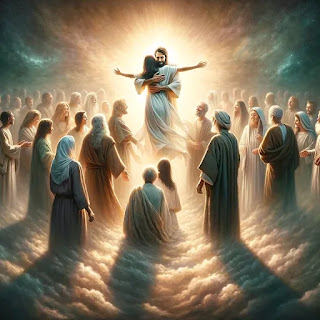
.webp)

Comments
Post a Comment