✦ THE HIGHEST HOPE ✦

✦ THE HIGHEST HOPE ✦
Apocatastasis, the End of All Suffering, and the Liberation and Salvation of All Sentient Beings
A Philosophical, Theological, Mystical, and Interdisciplinary Discussion Paper
The highest conceivable victory of goodness is not merely that evil should be defeated, but that every being wounded, corrupted, imprisoned, or estranged by evil should ultimately be healed, liberated, and restored—until no suffering remains unredeemed, no creature remains abandoned, and no enmity remains eternal.
ABSTRACT
Among the most profound questions ever raised by religion, philosophy, and moral imagination is whether the final destiny of existence is universal reconciliation. Can all sentient beings ultimately be liberated from suffering? Can every sinner be redeemed, every enemy reconciled, every injustice answered, and every wounded consciousness healed? Can evil itself come to an end without requiring the eternal destruction, exclusion, or abandonment of those whom it has corrupted?
The ancient theological concept of apocatastasis—from the Greek ἀποκατάστασις, meaning restoration or reestablishment—offers one of the most ambitious responses to these questions. Associated especially with Origen of Alexandria and Gregory of Nyssa, and reconsidered in modern theology by thinkers such as Hans Urs von Balthasar, Jürgen Moltmann, Sergius Bulgakov, and David Bentley Hart, universal restoration proposes that the ultimate triumph of divine goodness might entail the reconciliation of all creation with its source.
Yet this vision reaches beyond any single theological tradition. Buddhist aspirations toward the liberation of all sentient beings, Hindu accounts of moksha, Jain commitments to nonviolence, Islamic reflections on the vastness of divine mercy, Jewish conceptions of tikkun, and philosophical arguments concerning the nature of perfect goodness all illuminate different dimensions of the problem.
This paper develops the concept of The Highest Hope: the hope that every sentient being may ultimately be liberated from suffering, evil, oppression, ignorance, alienation, and spiritual captivity.
Its central argument is that universal restoration is especially powerful when understood not merely as a prediction concerning the future, but as a moral and spiritual orientation toward existence itself.
At the same time, the paper examines a crucial distinction: universal restoration as a hope, universal restoration as a theological doctrine, and universal restoration as an allegedly necessary metaphysical law. These positions are related but not identical. Each involves different claims about knowledge, freedom, divine power, moral responsibility, and the ultimate nature of reality.
The investigation proceeds through Christian patristics, comparative religion, metaphysics, ethics, political philosophy, philosophy of mind, and the philosophy of suffering. It argues that the highest hope entails more than universal salvation narrowly understood: it points toward universal healing, liberation, reconciliation, flourishing, and the transformation of the very conditions that make suffering possible.
I. INTRODUCTION: WHAT WOULD THE GREATEST POSSIBLE VICTORY OF GOODNESS LOOK LIKE?
Human beings have imagined many forms of ultimate victory.
Empires imagine the defeat of their enemies. Revolutionaries imagine the overthrow of oppressive institutions. Physicians imagine the eradication of disease. Philosophers imagine the overcoming of ignorance. Mystics imagine union with the divine. Religious traditions imagine salvation, liberation, enlightenment, resurrection, or the restoration of cosmic harmony.
Each vision identifies some condition of existence that ought to be overcome.
But what if these aspirations were brought together into a single question?
What would it mean for goodness to achieve the greatest victory conceivable?
Would goodness triumph if suffering persisted forever somewhere in existence?
Would justice be perfected if some beings remained eternally alienated from goodness?
Would liberation be complete if even one consciousness remained permanently enslaved?
Would divine love be victorious if its final kingdom included an everlasting population of irredeemable enemies?
These questions do not automatically establish universal salvation. They do, however, expose a fundamental philosophical tension between the aspiration toward perfect goodness and the possibility of permanent, irreparable suffering.
We may formulate the highest hope as follows:
That every sentient being, in every world and under every condition of existence, may ultimately be liberated from suffering and evil, reconciled with goodness, restored to wholeness, and enabled to participate freely in an inexhaustible fullness of life.
Several features distinguish this formulation.
First, it is universal in scope. No being is excluded from moral concern merely because of its species, origin, history, condition, or present character.
Second, it is restorative rather than merely punitive. It seeks the healing of the offender as well as the vindication and restoration of the victim.
Third, it is emancipatory. Salvation involves freedom from domination, captivity, ignorance, and destructive forms of desire.
Fourth, it is transformative. Restoration does not simply return existence to an earlier condition; it may open possibilities of goodness beyond anything previously realized.
Finally, it is eschatological without necessarily being dogmatically predictive. One may affirm the hope without claiming exhaustive knowledge of the final destiny of every consciousness.
This last distinction is indispensable.
There is a profound difference between saying:
I hope that every being will ultimately be saved.
And saying:
I know that every being must ultimately be saved.
The former expresses a universal commitment of love. The latter advances a proposition about reality that requires theological, philosophical, or metaphysical justification.
The Highest Hope can accommodate serious discussion of both.
II. APOCATASTASIS: THE RESTORATION OF ALL THINGS
2.1 The Meaning of Apocatastasis
The Greek noun apokatastasis refers to restoration, return, or reestablishment. In Acts 3:21, the phrase concerning the restoration of all things became an important scriptural reference for later Christian discussions.
Its precise theological significance has always been contested.
In a broad sense, cosmic restoration might refer to the renewal of creation, the defeat of evil, and the establishment of divine justice. In a stronger sense, it may entail the eventual salvation of every rational creature, including those presently alienated from God.
These two meanings should not be conflated.
A theologian may affirm the restoration of the cosmos without affirming the salvation of every individual. Conversely, a universalist may maintain that cosmic restoration is incomplete unless every person is included.
The dispute therefore concerns the meaning of the word all and the nature of restoration itself.
2.2 Origen of Alexandria: The Pedagogy of Divine Fire
Origen of Alexandria (approximately 185–253 CE) is among the most influential and controversial figures in the history of Christian universal restoration.
In On First Principles, Origen explores the ultimate subjection of rational creatures to God, the medicinal character of divine punishment, and the possibility of a final reconciliation.
His theological imagination emphasizes the divine purpose of correction. Punishment is not necessarily an end in itself. It can function as a means of exposing evil, purifying the soul, and restoring the creature to a proper relationship with goodness.
Fire, in this interpretation, is not exclusively an instrument of destruction. It may also symbolize purification.
The central idea is that evil does not possess the same ontological standing as goodness. Evil corrupts, disorders, and diminishes what is good; it does not constitute an independent, eternally necessary principle.
If evil is a disorder of the creature, one may ask whether divine wisdom and love can eventually heal that disorder.
Origen's speculative framework is complex, and scholars disagree about the exact extent and consistency of his universalism. Later forms of Origenism were condemned in ecclesiastical controversies, while the relationship between those condemnations and Origen's own writings remains a matter of historical debate.
Nevertheless, his lasting contribution is clear: divine judgment can be understood as therapeutic rather than merely retributive.
Under this conception, punishment finds its justification in the good it accomplishes, not in suffering considered valuable for its own sake.
2.3 Gregory of Nyssa: Evil as a Disease to Be Cured
Gregory of Nyssa (approximately 335–395 CE) offers one of the most compelling early Christian accounts of restoration.
His writings, especially On the Soul and the Resurrection and the Great Catechism, describe evil in ways that invite comparison with sickness, bondage, and distortion.
Gregory's theology draws upon a broadly Platonic understanding of evil as a privation or corruption of goodness rather than an independent substance.
This has major implications.
If evil is not a self-sustaining reality, its permanence becomes philosophically questionable. A disease may persist for a long time, but the disease is not the essence of the patient.
Likewise, the corruption of a person need not define that person's ultimate identity.
For Gregory, purification may be painful precisely because it involves the removal of what has become deeply attached to the soul. Divine judgment can thus be interpreted as the separation of a creature from the evil that disfigures it.
This yields a powerful distinction:
The destruction of evil need not require the destruction of the evildoer.
Indeed, the restoration of an evildoer might represent a more complete triumph over evil than the evildoer's permanent exclusion.
Gregory's thought also suggests that perfection need not be static. His doctrine of epektasis, or unending progress into God, allows for inexhaustible spiritual growth.
Under this vision, restoration does not culminate in an inert final state. It opens an everlasting movement into greater goodness, wisdom, love, and participation in divine life.
2.4 Isaac of Nineveh: Mercy Beyond Retribution
Isaac of Nineveh offers a particularly moving theology of divine compassion.
In the Syriac ascetical tradition associated with Isaac, God's mercy cannot be reduced to human standards of vengeance or retaliation.
Isaac's writings emphasize the immensity of divine compassion, including compassion for sinners and for beings who remain alienated from goodness.
His reflections challenge the assumption that eternal suffering would constitute an appropriate or desirable final expression of divine justice.
The deeper question becomes whether divine judgment is ultimately ordered toward the restoration of the creature or toward the everlasting maintenance of punishment.
Isaac's theology gives special force to the argument that love cannot simply cease to care about the suffering of those who have become morally corrupted.
This does not eliminate accountability. It transforms the meaning of accountability by locating it within a larger horizon of healing.
2.5 Maximus the Confessor: Cosmic Reconciliation and Its Limits
Maximus the Confessor develops a cosmic vision in which creation finds its coherence and fulfillment in the Logos.
His account of the logoi—the divine principles or intentions through which created beings possess their intelligibility and purpose—provides a rich metaphysical framework for thinking about restoration.
All things are grounded in divine wisdom, yet their fulfillment involves proper participation in the divine good.
Maximus is especially important because his theology prevents an overly simplistic equation between universal cosmic integration and universal subjective salvation.
His writings contain distinctions concerning being, well-being, and eternal well-being, and interpreters dispute the universalist implications of his thought.
He therefore represents a useful warning: the restoration of all creation to divine order does not, without further argument, prove that every personal will freely embraces blessedness.
The metaphysical unity of existence and the salvation of every person are related questions, but they are not identical.
III. THE SCRIPTURAL FOUNDATIONS AND THE GREAT CHRISTIAN DEBATE
Christian universal restoration emerges from a tension between two groups of biblical texts.
One group emphasizes the universal scope of God's redemptive purpose. Another warns of judgment, destruction, exclusion, and punishment.
A serious theology of restoration must engage both.
3.1 Passages Supporting Universal Reconciliation
| Passage | Central Theme |
|---|---|
| 1 Corinthians 15:22–28 | All made alive in Christ; God becoming all in all |
| Romans 5:18–19 | Christ's act of righteousness contrasted with Adam's transgression |
| Romans 11:32 | Divine mercy directed toward all |
| Colossians 1:19–20 | Reconciliation of all things through Christ |
| Philippians 2:9–11 | Every knee bowing and every tongue confessing Christ |
| 1 Timothy 2:3–6 | God's desire that all be saved |
| John 12:32 | Christ drawing all to himself |
| Acts 3:21 | Restoration of all things |
| Revelation 21:4–5 | Death, mourning, crying, and pain passing away |
The culminating statement of 1 Corinthians 15:28 is particularly important:
ἵνα ᾖ ὁ θεὸς πάντα ἐν πᾶσιν.
"That God may be all in all."
The interpretation of this declaration is disputed.
Does it signify God's uncontested sovereignty over everything, including eternally condemned beings? Or does it indicate the complete reconciliation of every creature with divine goodness?
The universalist argues that the latter interpretation more fully expresses the language of divine completeness.
If God becomes all in all, how could any consciousness remain permanently estranged from God?
The opposing interpretation maintains that divine sovereignty can be universal even when subjective participation in blessedness is not.
Both interpretations must account for the broader Pauline context, particularly the defeat of death and the subjection of all things to Christ.
3.2 Passages Supporting Final Judgment or Exclusion
Texts frequently cited against universalism include Matthew 25:31–46, Mark 9:43–48, 2 Thessalonians 1:5–10, Hebrews 9:27, and Revelation 20:11–15.
Matthew 25:46 is especially important because it contrasts eternal punishment with eternal life.
Universalist interpreters sometimes argue that the Greek aiōnios can carry age-related meanings and that the punishment described may be corrective.
Critics respond that the parallel between punishment and life strongly favors an enduring interpretation in this context.
Neither side can resolve the entire debate merely by appealing to a dictionary definition. The meaning of the passage depends upon grammar, literary context, Jewish apocalyptic traditions, and the theological coherence of the interpretation.
A responsible account must acknowledge that the biblical evidence is contested rather than pretending that one set of passages simply does not exist.
3.3 Augustine, Aquinas, and the Defense of Everlasting Judgment
Augustine of Hippo defended everlasting punishment, particularly in The City of God, Book XXI.
His argument reflects concerns about divine judgment, the seriousness of sin, and the authority of scriptural warnings.
Thomas Aquinas likewise affirmed the permanence of the final division between the blessed and the damned in the Summa Theologiae, particularly its eschatological material.
Aquinas's broader theology, however, also supplies concepts that universalists employ: God as perfect goodness, evil as privation, and rational creatures as naturally oriented toward the good.
This illustrates an important philosophical fact: thinkers can share metaphysical premises while disagreeing profoundly about their eschatological consequences.
3.4 The Third Major Alternative: Annihilationism
The debate is not restricted to eternal torment versus universal salvation.
Conditional immortality or annihilationism proposes that those finally unreconciled may cease to exist rather than suffer consciously forever.
Modern defenders include Edward Fudge and John Stott, though their approaches differ.
This position attempts to preserve final judgment without requiring endless conscious suffering.
Yet it raises another question: if a being is permanently destroyed, has evil truly been overcome in that being, or has the possibility of its restoration been abandoned?
Universalists may regard annihilation as a lesser victory than reconciliation. Annihilationists respond that justice does not necessarily require universal preservation and that God need not perpetuate evil indefinitely.
The disagreement turns partly on whether the ultimate good requires the salvation of every individual or simply the final abolition of evil.
IV. THE CRUCIAL DISTINCTION: HOPE, DOCTRINE, AND LAW
This is arguably the most important philosophical distinction in the entire discussion.
Universal restoration can be approached in at least three ways.
1. Universal Restoration as Hope
"May every being ultimately be saved."
An aspiration grounded in love, mercy, and trust, without claiming certainty about the outcome.
2. Universal Restoration as Doctrine
"Every being will ultimately be saved."
A theological proposition defended as true through revelation, reason, tradition, or their combination.
3. Universal Restoration as Metaphysical Law
"Given the fundamental nature of reality, final restoration cannot fail."
A stronger claim that restoration follows necessarily from the structure of existence, divine nature, or rational freedom.
The third position requires qualification. A theological doctrine may itself assert necessity, and a law-like metaphysical claim may be defended independently of religious authority. These are not mutually exclusive categories; they identify different kinds of justification and different degrees of commitment.
4.1 Universal Restoration as Hope: Hans Urs von Balthasar
Hans Urs von Balthasar (1905–1988) gave the modern debate one of its most influential formulations in Dare We Hope That All Men Be Saved?
Balthasar distinguished hoping for universal salvation from asserting that universal salvation is guaranteed.
His position refuses to presume knowledge of the outcome of final judgment. At the same time, it resists imposing arbitrary limits upon Christian hope.
Hope for another person's salvation becomes an expression of love toward that person.
If Christian charity commands love of enemies, the question arises: should that love cease at death?
Balthasar's position does not simply dissolve the warnings of judgment. It maintains their seriousness while refusing to turn them into confident knowledge that particular people will be eternally lost. His own presentation explicitly distinguishes universal hope from Origenist apocatastasis and emphasizes active concern for sinners rather than complacency.
This distinction creates a space for theological humility.
One may believe that God is infinitely merciful without claiming to know precisely how every creature will respond to divine grace.
One may pray for all without pretending to possess the final judgment.
One may refuse to wish eternal suffering upon anyone while recognizing that theological hope and demonstrated fact are different things.
Hope is not weakened merely because it refuses to disguise itself as certainty.
Indeed, hope may become morally more serious when the outcome remains uncertain.
4.2 Universal Restoration as Doctrine: Gregory, Bulgakov, and Hart
For a doctrinal universalist, universal salvation is more than a permissible aspiration.
It is a truth about the final destiny of creation.
Gregory of Nyssa is frequently interpreted in this stronger direction. Morwenna Ludlow's Universal Salvation contrasts Gregory's comparatively confident universalism with Karl Rahner's more cautious hope, while other scholars dispute whether Gregory should be read as asserting inevitable individual salvation.
Sergius Bulgakov developed a theological vision in which the divine-human relationship, the destiny of creation, and the final overcoming of evil are intimately connected.
His eschatological reflections, particularly in The Bride of the Lamb, resist treating evil as an eternally coequal reality beside divine goodness.
David Bentley Hart argues in That All Shall Be Saved (2019) that eternal damnation is incompatible with a coherent understanding of God as the infinite Good.
Hart's position is especially forceful because he challenges the assumption that a perfectly rational creature, fully aware of infinite goodness, could freely reject that goodness forever.
The doctrinal universalist therefore claims that universal salvation is not merely desirable but true.
This creates an obligation to defend the claim against contrary scriptural interpretations, alternative accounts of freedom, and objections concerning justice.
4.3 Universal Restoration as Law: Can Perfect Goodness Ultimately Fail?
A stronger metaphysical argument can be reconstructed as follows:
- Perfect goodness wills the ultimate good of every creature.
- Perfect wisdom knows how to bring creatures toward that good.
- Perfect power possesses the capacity to realize every logically possible good consistent with its nature.
- Permanent alienation from goodness is not itself a positive good.
- No creature possesses an intrinsically necessary orientation toward evil.
- Therefore, if the reconciliation of every creature is possible without violating genuine freedom, perfect goodness has decisive reason to accomplish it.
The conclusion, however, is not automatic.
The fifth premise is controversial, and the sixth contains a significant condition: whether universal reconciliation is possible while preserving creaturely freedom.
Moreover, even if God has decisive reason to restore all creatures, further argument is needed to establish that divine perfection logically entails this particular outcome.
The argument may therefore be developed into a doctrine of metaphysical necessity, but it cannot simply be declared an established law.
This is the difference between a philosophical demonstration and an expression of confidence.
4.4 The Danger of Turning Hope into an Imperative
A subtle problem emerges when universal restoration is transformed from an object of hope into a law imposed upon every creature.
Suppose someone declares:
All beings must be restored, whether they desire restoration or not.
Does this preserve the dignity and freedom of those beings?
Or does it risk making restoration another form of domination?
A defender of universalism may answer that the problem rests upon a false understanding of freedom: to be liberated from ignorance and destructive compulsion is not to be enslaved.
Nevertheless, this objection deserves serious attention.
There is a moral difference between offering healing and forcibly remaking another person according to an externally imposed ideal.
An adequate restorative theology must explain how transformation respects personal identity, agency, and genuine participation.
This leads to a crucial principle:
Universal restoration should not be imagined as the conquest of persons by goodness, but as the liberation of persons for goodness.
The distinction is especially important when considering victims of oppression, religious coercion, and systems that claim to know what is best for others.
A theology of universal liberation must not reproduce the logic of domination in the name of salvation.
4.5 Hope Without Passivity; Doctrine Without Arrogance
Hope can become passive when it substitutes wishing for action.
Doctrine can become arrogant when it substitutes certainty for understanding.
The healthiest forms of each resist these tendencies.
Universal hope should inspire healing, peacemaking, education, justice, and solidarity.
Doctrinal universalism should inspire intellectual humility concerning the mechanisms of restoration and the limits of human understanding.
A metaphysical account of necessary restoration should carefully distinguish logical necessity from theological conviction.
Thus, the positions need not be treated as enemies.
They can form a spectrum of conviction, provided their differences remain clear.
V. DIVINE LOVE, WRATH, JUSTICE, AND THE PROBLEM OF ETERNAL EVIL
A central argument for universal restoration concerns the relationship between what belongs essentially to divine goodness and what arises conditionally in response to evil.
Love, on classical theistic accounts, belongs to the character of God.
Wrath, by contrast, is frequently understood as a response to sin, injustice, and corruption.
This suggests an important asymmetry.
Love does not require evil in order to exist.
Wrath, understood as opposition to evil, requires something against which it is directed.
Therefore, if evil were completely overcome, love could remain without wrath continuing in the same form.
The argument does not prove that wrath must terminate in universal salvation. A defender of everlasting punishment might maintain that the condition justifying judgment remains forever.
But this produces the central question:
Why must the condition requiring judgment remain eternally incurable?
If divine judgment exists to oppose evil, its highest conceivable success may be the abolition of the evil that made judgment necessary.
5.1 Retributive and Restorative Justice
Retributive justice emphasizes deserved consequences for wrongdoing.
Restorative justice emphasizes the repair of harm, acknowledgment of responsibility, restitution where possible, and restoration of relationships under appropriate conditions.
These are not necessarily mutually exclusive.
A wrongdoer may deserve consequences while also needing correction. A victim may need protection, restitution, recognition, and healing.
The restorative ideal does not require the denial of wrongdoing or the immediate reconciliation of victims with their abusers.
Indeed, coerced reconciliation can itself become another injustice.
A mature universalism must insist that genuine reconciliation requires truth, transformation, and the restoration of agency.
The perpetrator must cease to be a perpetrator in character and action.
The victim must not be sacrificed to the spiritual rehabilitation of the offender.
Restoration must encompass both.
5.2 The Problem of Proportionality
One of the strongest philosophical objections to everlasting punishment concerns proportionality.
Finite creatures commit wrongdoing under conditions of limited knowledge, psychological vulnerability, social influence, and finite capacities.
Can such wrongdoing justly warrant suffering without end?
Traditional defenders sometimes argue that the gravity of sin derives from the dignity of the one offended, or that the condemned continue to reject goodness eternally.
Critics respond that neither argument clearly establishes the moral necessity of endless conscious suffering.
If punishment is proportionate, what makes an infinite duration appropriate?
If punishment is corrective, why should correction never succeed?
If punishment protects others, why must protection require the endless suffering of the dangerous individual?
If punishment manifests justice, what additional justice is achieved by its continuation after every meaningful purpose has been exhausted?
These questions press against the intelligibility of punishment detached from restoration.
5.3 The Problem of Eternal Enmity
Imagine a perfected kingdom in which every enemy of goodness has been defeated but millions of conscious beings remain eternally hateful, alienated, and miserable.
Has evil been abolished?
Not entirely.
It remains present in the wills of the condemned and in their suffering.
A universalist may therefore argue that a final reality containing everlasting hatred and despair is not a complete victory over evil.
This gives rise to a central thesis of The Highest Hope:
The final victory of God would not consist in maintaining an everlasting kingdom of irredeemable enemies, but in overcoming enmity itself.
Yet the objection must also be considered: perhaps a perfected order need not entail the happiness of every creature. Perhaps justice permits an irrevocable division.
The debate consequently concerns the meaning of perfection.
Is perfection the complete realization of order?
Or is it the complete realization of goodness in every being capable of receiving it?
The universalist adopts the second, more demanding interpretation.
VI. THE LIBERATION OF ALL SENTIENT BEINGS: A COMPARATIVE RELIGIOUS VISION
Christian apocatastasis is not the only religious framework that places universal liberation at the center of spiritual aspiration.
Several traditions offer concepts that illuminate the Highest Hope, although their metaphysical assumptions and ultimate goals differ substantially.
6.1 Mahayana Buddhism: The Bodhisattva Ideal
In Mahayana Buddhism, the bodhisattva aspires toward enlightenment for the benefit of all sentient beings.
The bodhisattva ideal is not simply a hope for personal escape from suffering. It expresses an extraordinary commitment to universal compassion.
The development of bodhicitta, the awakened intention directed toward enlightenment for the sake of others, makes universal concern central to the spiritual path.
The bodhisattva vows to work for the liberation of beings without restricting compassion to those who are pleasant, deserving, familiar, or morally admirable.
Śāntideva (approximately eighth century), particularly in the Bodhicaryāvatāra, develops an ethic of radical compassion and self-transcendence.
His reflections on suffering challenge the assumption that one's own pain possesses an intrinsic moral priority over the pain of others.
If suffering is genuinely undesirable, why should its removal matter only when the sufferer is oneself?
This offers an important philosophical bridge to universal restoration.
The moral significance of suffering does not depend upon the personal identity of the one experiencing it.
A stranger's suffering matters. An enemy's suffering matters. The suffering of an animal matters.
The Highest Hope extends this concern to every possible sentient being.
Nevertheless, important differences remain between Christian universalism and Buddhist liberation.
Christian apocatastasis commonly involves reconciliation with a personal Creator. Buddhist liberation generally involves awakening from ignorance, craving, and the conditions that perpetuate samsara, without requiring belief in a creator God.
Moreover, the bodhisattva vow is not necessarily a prediction that every being will reach liberation at a specified future moment. It is fundamentally an inexhaustible commitment to work for their liberation.
This makes it especially relevant to the distinction between hope and law.
The bodhisattva may commit to the liberation of all beings without claiming to possess a complete timetable or guarantee of their final liberation.
6.2 Nāgārjuna: Emptiness and the Overcoming of Captivity
Nāgārjuna develops the doctrine of śūnyatā, or emptiness, in the Mūlamadhyamakakārikā.
Emptiness does not mean that nothing exists or matters. Rather, it denies that things possess independent, self-sufficient intrinsic existence.
This has striking implications for moral and spiritual transformation.
If persons and conditions arise dependently, no individual can be adequately understood as an isolated, permanently fixed essence.
The hateful person is not metaphysically identical with hatred.
The ignorant person is not metaphysically identical with ignorance.
The suffering person is not metaphysically identical with suffering.
These observations resonate with the restorative claim that evil should not be treated as the ultimate identity of the evildoer.
The parallel must not be overstated. Madhyamaka emptiness is not equivalent to the Christian doctrine of evil as privation.
Nevertheless, both frameworks can resist the absolutization of corruption.
A restorative metaphysics refuses to mistake a contingent condition for an eternal essence.
6.3 The Buddha's Four Noble Truths: Suffering Has Causes
The Four Noble Truths offer a practical framework for examining suffering:
- There is dukkha: suffering, unsatisfactoriness, and the vulnerability of conditioned existence.
- Dukkha has causes, centrally craving and ignorance.
- The cessation of dukkha is possible.
- There is a path leading toward its cessation.
The crucial insight for our purposes is that suffering is not merely an inexplicable fact to be endured.
It has causes.
Causes can be investigated.
Conditions can be transformed.
The Highest Hope extends this logic into a universal question:
If suffering arises through causes and conditions, might every remediable cause of suffering ultimately be overcome?
Buddhist philosophy does not establish that every imaginable form of suffering can be eliminated by a single cosmic process. But it offers a powerful methodological principle: investigate suffering through its conditions rather than treating it as an eternal necessity.
6.4 Hindu Traditions: Moksha and the Liberation of Consciousness
The Hindu concept of moksha refers broadly to liberation from bondage, especially the cycle of rebirth.
Different Hindu schools interpret this liberation differently.
In Advaita Vedānta, associated with Adi Shankara, liberation involves realization of the identity of ātman and Brahman, understood within a nondual metaphysics.
In the qualified nondualism of Rāmānuja, liberation involves enduring communion with the supreme divine reality while preserving meaningful personal distinction.
The Bhagavad Gītā also presents liberation through knowledge, disciplined action, devotion, and surrender to God.
These traditions illuminate a question fundamental to the Highest Hope:
What must be liberated?
Is it the individual from ignorance?
The will from destructive attachment?
Consciousness from the cycle of suffering?
The person from alienation?
Or existence itself from the structures that make bondage possible?
Different answers generate different models of universal restoration.
6.5 Jainism: Universal Moral Concern and Nonviolence
Jain philosophy provides one of the world's most rigorous traditions of nonviolence, or ahiṃsā.
Its moral concern extends beyond human beings to a vast range of living organisms.
The Jain emphasis on avoiding harm challenges anthropocentric definitions of salvation.
A hope genuinely directed toward all sentient beings cannot assume that human suffering is the only suffering that matters.
At the same time, Jain cosmology does not simply teach that all souls are guaranteed eventual liberation. Its account of karma and liberation differs substantially from Christian providential universalism.
The comparison therefore supports universal ethical concern more directly than it supports guaranteed universal salvation.
6.6 Islam: Divine Mercy and the Limits of Judgment
The Qur'an repeatedly invokes the mercy of God through the divine names al-Raḥmān and al-Raḥīm.
Qur'an 7:156 describes divine mercy as encompassing all things, while Qur'an 39:53 calls those who have transgressed not to despair of God's mercy.
These passages provide important resources for reflection on the breadth of divine compassion.
However, the Qur'an also contains serious warnings of punishment, including language interpreted by mainstream Muslim traditions as indicating everlasting punishment for some.
The Islamic debate therefore cannot be reduced to a simple doctrine of universal salvation.
Among the relevant thinkers are:
- Ibn ʿArabī, whose writings explore divine mercy, manifestation, and the ultimate relationship between creatures and God.
- Al-Ghazālī, whose reflections on salvation and divine mercy complicate overly narrow judgments concerning those outside particular religious communities.
- Ibn Taymiyya, whose writings on the duration of hell have generated considerable scholarly debate.
- Ibn al-Qayyim, whose discussions of divine wisdom, punishment, and mercy have likewise figured in debates about the finality of punishment.
It is important not to portray these thinkers as unanimous advocates of universal salvation.
Their relevance lies in the serious theological question they raise: how should finite human beings understand the relationship between divine justice, divine mercy, and the destiny of those who suffer judgment?
The Highest Hope finds in Islamic reflections on mercy a powerful reason to resist despair concerning the possibilities of divine compassion, without erasing the distinctive commitments of Islamic eschatology.
6.7 Judaism: Tikkun, Repentance, and the World to Come
Jewish traditions provide additional resources through the concepts of teshuvah (repentance or return), tikkun olam (repair of the world), and the varied eschatological conceptions of the world to come.
In later Jewish mystical traditions, particularly Lurianic Kabbalah, the imagery of shattered vessels and the restoration of divine sparks gives cosmic significance to repair.
The world is not merely a finished object awaiting judgment.
It is also a reality in need of healing.
The theological systems involved are distinct, and tikkun olam should not simply be equated with universal salvation.
Nevertheless, the emphasis on repair offers a valuable complement to Christian apocatastasis.
The Highest Hope is not merely the hope that beings escape a damaged world.
It is also the hope that what is damaged may be repaired.
VII. THE PHILOSOPHY OF SUFFERING: WHAT WOULD IT MEAN TO END ALL SUFFERING?
A universalist account must distinguish the end of suffering from the end of every unpleasant experience.
Pain, grief, frustration, vulnerability, and moral evil are related but not identical phenomena.
The highest hope requires a sophisticated understanding of what is being overcome.
7.1 Three Dimensions of Suffering
Experiential Suffering
Physical pain, fear, distress, grief, despair, and other aversive conscious experiences.
Existential Suffering
Alienation, meaninglessness, hopelessness, loneliness, and the experience of being radically disconnected from value or belonging.
Structural Suffering
Suffering caused or perpetuated by oppression, exploitation, deprivation, violence, discrimination, and preventable institutional failures.
A complete restorative vision must address all three.
It is insufficient to eliminate physical pain while preserving alienation.
It is insufficient to promise spiritual consolation while tolerating systematic exploitation.
It is insufficient to abolish oppressive institutions while ignoring the psychological wounds those institutions have inflicted.
7.2 Schopenhauer: The World as Suffering
Arthur Schopenhauer famously regarded suffering as deeply embedded in the structure of willing.
In The World as Will and Representation, desire repeatedly generates dissatisfaction, while its temporary fulfillment gives way to new desires or boredom.
His pessimism challenges optimistic accounts of progress.
If suffering is structurally inseparable from willing, then improving material conditions alone cannot eliminate it.
The Highest Hope must therefore ask whether the fundamental relationship between consciousness and desire can be transformed.
This question connects Schopenhauer's pessimism with Buddhist analyses of craving, although their metaphysical systems differ.
7.3 Simone Weil: Affliction and Attention
Simone Weil distinguishes ordinary suffering from profound affliction—a condition that can devastate the physical, psychological, and social dimensions of personhood.
Her writings emphasize attention to the suffering other.
This matters because universal restoration can become dangerously abstract.
It is easy to declare that all beings will eventually be restored while neglecting the concrete misery of the person immediately before us.
Weil's work challenges any theology that turns future redemption into an excuse for present indifference.
If restoration is genuinely the highest hope, it must begin with attention to actual suffering.
7.4 Emmanuel Levinas: Responsibility to the Other
Emmanuel Levinas places ethical responsibility for the other person at the center of philosophy.
The encounter with another's vulnerability makes a claim upon us before we have fully theorized our obligations.
This supplies an important corrective to purely speculative universalism.
The moral demand of another's suffering is not postponed until the final reconciliation of the cosmos.
The Highest Hope therefore includes both an ultimate horizon and an immediate responsibility.
The suffering person is not merely a future beneficiary of cosmic restoration.
They are someone whose present suffering already matters.
7.5 Effective Altruism and Suffering-Focused Ethics
Contemporary moral philosophers such as Peter Singer have argued for extending ethical concern beyond humanity.
Other thinkers, including Magnus Vinding and Brian Tomasik, have emphasized the importance of reducing severe suffering across sentient life.
These approaches often differ from religious universalism because they do not assume an eventual cosmic redemption.
Instead, they ask how finite agents can reduce suffering using available evidence and resources.
The connection is valuable.
Universal restoration provides an ultimate moral horizon.
Suffering-focused ethics asks what can actually be done now.
The two should not be confused, but they can inform one another.
A theology that hopes for the salvation of all sentient beings ought to take seriously the suffering of animals, the ethical implications of emerging artificial consciousness, and the possibility of suffering in forms of life unfamiliar to humanity.
VIII. THE PROBLEM OF FREE WILL: CAN EVERY BEING BE SAVED WITHOUT COERCION?
This is among the strongest objections to necessary universal restoration.
Suppose a rational creature possesses the genuine capacity to reject goodness.
If that capacity is meaningful, must it include the possibility of rejecting goodness forever?
Or can freedom remain genuine even if all creatures eventually embrace the good?
8.1 C. S. Lewis and the Possibility of Permanent Refusal
C. S. Lewis develops a powerful account of self-chosen alienation in The Problem of Pain and The Great Divorce.
On this view, hell is not merely a punishment imposed externally.
It can be understood as the culmination of a will that persistently refuses communion with goodness.
The concern is that God cannot guarantee universal salvation without overriding the creature's freedom.
This argument has considerable philosophical force.
If love requires freedom, and freedom includes the possibility of refusal, perhaps permanent refusal cannot be ruled out in advance.
8.2 Thomas Talbott: Freedom and Rational Understanding
Thomas Talbott develops a different account in The Inescapable Love of God.
He challenges the assumption that endless rejection of the supreme good would represent the fullest exercise of freedom.
A choice may be voluntary without being fully informed, rational, or free from distortion.
Consider someone acting under extreme ignorance, trauma, addiction, deception, or irrational fear.
Their actions may be voluntary in one sense while also reflecting diminished freedom in another.
Universalists argue that evil choices are often bound up with such limitations.
If a creature came to understand goodness without ignorance or distortion, could it rationally choose eternal misery?
The Stanford Encyclopedia of Philosophy identifies this disagreement over freedom as central to the dispute between universalists and defenders of everlasting separation.
8.3 David Bentley Hart: The Rational Will and the Infinite Good
Hart argues that rational freedom is not mere arbitrary choice.
It is the capacity to recognize and pursue the good.
Under this account, the final rejection of infinite goodness would require some continuing defect of understanding, desire, or rational orientation.
But if such a defect remains, the creature is not yet fully liberated.
This produces a striking conclusion:
A perfectly free will may be one that is no longer enslaved by the possibility of choosing evil.
The argument is controversial.
Critics maintain that this understanding of freedom risks defining genuine disagreement or refusal as irrational by construction.
The universalist must therefore show why the final recognition of goodness would be liberating rather than manipulative.
8.4 Freedom as Liberation Versus Freedom as Indeterminacy
Two conceptions of freedom are especially relevant.
Freedom as indeterminacy emphasizes the ability to choose among genuinely available alternatives, including morally destructive ones.
Freedom as liberation emphasizes the removal of ignorance, compulsion, corruption, and internal bondage so that a person can act according to their deepest rational good.
These conceptions need not be completely incompatible, but they yield different expectations about ultimate salvation.
The first allows for the possibility of permanent rejection.
The second suggests that complete liberation would naturally culminate in goodness.
The Highest Hope favors the liberation model while recognizing that it remains philosophically disputed.
IX. THE RESTORATION OF VICTIMS, OFFENDERS, AND ENEMIES
One of the most difficult implications of universal salvation concerns the relationship between victims and perpetrators.
If every being is ultimately restored, then even the most destructive offenders fall within the scope of possible redemption.
This raises understandable objections.
Would universal salvation trivialize atrocity?
Would it deny victims the justice they deserve?
Would it place the restoration of the offender above the dignity of the victim?
These objections reveal why restoration must never be confused with cheap forgiveness.
9.1 Restoration Requires Truth
A genuinely restored offender cannot remain committed to the wrong they committed.
They must come to recognize the truth of their actions.
They must understand the suffering they caused.
They must abandon the patterns of thought and desire that produced the harm.
They must accept accountability.
Insofar as possible, they must participate in repair.
Without these transformations, restoration becomes merely the cancellation of consequences.
9.2 Restoration Must Not Re-Victimize
The victim's healing cannot be made conditional upon personal reconciliation with the perpetrator.
A victim may require distance, safety, recognition, restitution, and the freedom never to encounter the offender again.
Even in a universalist eschatology, one should not casually assume that restoration requires every relationship to return to its former form.
Some relationships were unjust from their beginning.
The restoration of a victim may require liberation from the relationship itself.
The moral goal is not the preservation of every previous arrangement.
It is the establishment of conditions in which every person can flourish without domination.
9.3 Hannah Arendt and the Limits of Forgiveness
Hannah Arendt explores forgiveness and the irreversibility of human action in The Human Condition.
Forgiveness makes possible a release from certain consequences of the past, but it does not erase the historical reality of wrongdoing.
This distinction is essential.
Universal restoration should not require pretending that atrocities never occurred.
Rather, it asks whether the final significance of those atrocities must be endless devastation.
Can the past remain true while its power to perpetuate suffering is overcome?
Can memory become a source of wisdom without remaining an eternal source of torment?
These are among the deepest questions in restorative eschatology.
9.4 Desmond Tutu and Restorative Reconciliation
Desmond Tutu defended a vision of reconciliation rooted in truth, accountability, human dignity, and the rejection of vengeance.
His work in South Africa's Truth and Reconciliation Commission illustrates both the possibilities and limitations of restorative justice.
Reconciliation is not the denial of wrongdoing.
Nor is it simply a declaration that everyone should forgive everyone else.
It requires confronting reality.
A cosmic theology of restoration should learn from such earthly practices while acknowledging that no historical process has achieved perfect justice.
X. THE POLITICAL IMPLICATIONS: UNIVERSAL SALVATION AS UNIVERSAL EMANCIPATION
If the Highest Hope encompasses every sentient being, then liberation cannot remain exclusively spiritual.
Oppression, domination, exploitation, and enslavement are forms of suffering that demand moral opposition.
This creates a relationship between universal restoration and emancipatory political philosophy.
10.1 Liberation Theology
Gustavo Gutiérrez argues that salvation cannot be understood in complete isolation from historical liberation.
Poverty, oppression, and structural injustice are not morally irrelevant circumstances surrounding spiritual life.
They are conditions that demand transformation.
A universal restorative theology can adopt this insight without reducing salvation to political reform.
Ultimate liberation may exceed every political achievement.
But no sincere commitment to liberation can remain indifferent to present systems of domination.
10.2 Paulo Freire and the Liberation of Consciousness
Paulo Freire emphasizes the relationship between education, oppression, and human agency in Pedagogy of the Oppressed.
Oppression can deform the consciousness of both the oppressed and the oppressor.
Liberation therefore requires more than a reversal of power.
It requires the transformation of relationships and institutions that perpetuate dehumanization.
This resonates strongly with universal restoration.
The aim is not to create a new class of permanently degraded enemies.
It is to overcome the conditions that produce domination.
10.3 The Highest Hope as a Principle of Emancipation
A universal restorative ethic would seek the progressive elimination of conditions such as slavery, torture, preventable deprivation, exploitation, cruelty, and systematic dehumanization.
Yet the universality of the aspiration also requires restraint.
One cannot legitimately abolish oppression through unlimited coercion or justify harming innocent people by appealing to a future paradise.
The means of liberation must remain accountable to the dignity of those affected.
A universal hope for freedom must never become a universal license to control.
XI. THE COSMIC IMPLICATIONS: COUNTLESS WORLDS AND UNKNOWN FORMS OF SENTIENCE
Traditional discussions of salvation have focused primarily upon human beings, angels, and other spiritual creatures recognized within particular religious frameworks.
But what happens when the horizon expands to include extraterrestrial life, unfamiliar forms of consciousness, or future artificial minds?
The Highest Hope raises questions that extend beyond classical theological anthropology.
11.1 The Problem of Extraterrestrial Sentience
Suppose countless worlds contain conscious beings.
Would divine concern extend to them?
Would their suffering possess the same moral significance as human suffering?
Would redemption be uniquely terrestrial, or could its principles apply across the cosmos?
Thinkers such as Nicholas of Cusa and Giordano Bruno explored cosmological possibilities that challenged narrow pictures of humanity's place in existence.
Their ideas do not establish extraterrestrial life or universal salvation.
They do, however, encourage the enlargement of theological imagination.
If divine goodness is infinite, there is no obvious reason to assume that its moral concern is restricted to one planet.
11.2 Artificial Consciousness and Moral Status
The possibility of artificial consciousness creates another challenge.
If an artificial system could genuinely experience suffering, would it fall within the scope of universal compassion?
The answer depends upon whether it possesses morally relevant sentience, not merely whether it resembles a human being.
Contemporary philosophers such as David Chalmers and Thomas Metzinger have contributed to debates about consciousness, subjective experience, and their ethical implications.
There is no settled scientific test that establishes consciousness in every possible artificial system.
Consequently, the Highest Hope should not assume that present AI systems are sentient.
But it can adopt a conditional principle:
Wherever morally relevant sentience genuinely exists, its suffering deserves consideration.
11.3 Wild-Animal Suffering
A universal ethic also confronts suffering within nature.
Predation, disease, starvation, injury, parasitism, and environmental catastrophe affect vast numbers of nonhuman organisms.
If the ultimate moral horizon is the liberation of all sentient beings, these realities cannot simply be dismissed as irrelevant.
However, attempts to reduce wild-animal suffering can produce unintended ecological harm.
A responsible ethic therefore combines compassion with scientific humility.
The desire to end suffering does not guarantee that every proposed intervention will improve conditions.
The Highest Hope is universal in aspiration but must remain evidence-sensitive in action.
XII. THE METAPHYSICS OF EVIL: CAN EVIL BE ETERNAL?
A major foundation of Christian restorative thought is the privation theory of evil.
Associated especially with Augustine and developed in different ways by Aquinas and other classical thinkers, this theory holds that evil is not an independently existing substance.
It is a privation, corruption, or disorder of goodness.
Blindness, for example, may be understood as the absence of a capacity that properly belongs to a sighted organism.
Moral evil can likewise be understood as a disorder of the will rather than a self-sufficient positive essence.
12.1 The Argument from Ontological Dependence
If evil depends upon the goodness of the reality it corrupts, then evil is metaphysically parasitic.
Hatred requires a being capable of relationships.
Deception requires intelligibility and the possibility of truth.
Cruelty requires capacities that might otherwise be directed toward care or restraint.
Oppression requires agents, institutions, and powers that could be organized differently.
Thus, evil may depend upon realities that are not themselves evil.
This suggests that evil lacks the independence required to function as an eternal principle equal to goodness.
Yet a qualification is necessary.
The fact that evil is dependent does not logically prove that evil must eventually disappear.
A dependent condition might, in principle, persist indefinitely.
To establish necessary universal restoration, one needs additional premises concerning divine power, providence, freedom, or the ultimate destiny of creation.
12.2 Plotinus and the Return to the One
Plotinus develops a metaphysical vision in the Enneads in which reality proceeds from the One and the soul seeks return toward its source.
His thought profoundly influenced later Christian mystical theology.
The movement toward unity can be understood as a return from fragmentation toward a more fundamental wholeness.
However, Plotinian return should not simply be equated with Christian universal salvation.
The traditions differ concerning creation, personal identity, divine agency, and the destiny of individual beings.
Nevertheless, Plotinus provides a rich vocabulary for understanding restoration as a movement from dispersion toward unity.
12.3 Nicholas of Cusa and Infinite Perfection
Nicholas of Cusa's De Docta Ignorantia develops an account of divine infinity that exceeds finite conceptual comprehension.
His doctrine of learned ignorance reminds us that ultimate reality cannot be exhausted by human categories.
This is particularly relevant when considering the fate of all sentient beings.
If divine wisdom exceeds finite understanding, confidence about the exact limitations of divine restorative possibilities should be approached cautiously.
But divine incomprehensibility cannot itself prove universal salvation.
Mystery supports humility; it does not automatically settle doctrinal disputes.
XIII. EPEKTASIS: RESTORATION AS AN ETERNAL BEGINNING
One of the most imaginative implications of the Highest Hope emerges from Gregory of Nyssa's doctrine of epektasis.
If the divine good is inexhaustible, participation in that good need not culminate in a final point beyond which no further growth is possible.
The creature may continually advance into deeper communion, wisdom, beauty, and love.
Restoration would then be not the termination of meaningful development, but the beginning of an inexhaustible adventure.
13.1 Perfection Without Stagnation
Human beings often imagine perfection as a completed condition in which nothing remains to be learned, discovered, or transformed.
But such a conception may confuse perfection with exhaustion.
An alternative is possible.
A being may be perfectly free from destructive evil while remaining capable of limitless growth.
A relationship may be free from hatred while becoming ever richer in love.
A mind may be free from deception while discovering ever deeper truths.
A world may be free from oppression while generating inexhaustible possibilities of creativity and flourishing.
This distinction is fundamental:
The end of evil need not be the end of becoming.
13.2 The Infinite Good and Inexhaustible Fulfillment
If divine goodness is infinite, then no finite creature can exhaust it.
Every act of participation may disclose further possibilities.
Under this interpretation, salvation is not the arrival at a final ceiling of experience.
It is liberation into an open horizon.
One might call this asymptotic theosis: the unending growth of a finite participant into an inexhaustible divine fullness.
The metaphor must be handled carefully, since mathematical asymptotes do not automatically describe theological reality.
Nevertheless, it captures an important intuition.
The creature's capacity for goodness may continually expand through participation in a reality that cannot be exhausted.
Restoration, then, need not imply a universe frozen into uniformity.
It may signify a universe in which destructive limitations are overcome while creative possibilities remain boundless.
XIV. THE PARADOX OF PERFECT HAPPINESS: COULD A RESTORED BEING REMEMBER SUFFERING?
A serious philosophy of restoration must confront memory.
If all suffering is eventually overcome, what happens to the memory of evil?
Would restored beings remember their suffering?
Would victims remember the injustices they endured?
Would perpetrators remember the harm they caused?
If these memories remain, might suffering return?
If they disappear, would restoration require the destruction of personal identity or historical truth?
14.1 Memory Without Re-Traumatization
One possible model distinguishes remembering suffering from presently suffering because of that memory.
A person may remember a painful event without experiencing the same distress they experienced when it occurred.
In ordinary life, this distinction is imperfect. Some memories remain profoundly painful.
But it suggests a conceptual possibility: memory could remain truthful while losing its power to inflict destructive suffering.
Under such a model, restoration would not require universal amnesia.
It would require a transformation of the relationship between consciousness and its history.
14.2 The Problem of Irreparable Loss
Some losses cannot be undone within ordinary historical experience.
The dead cannot simply be restored by human effort.
A destroyed childhood cannot be relived exactly as it was.
A life deprived of possibilities cannot recover every lost opportunity.
This is one reason religious restoration often involves resurrection, renewal, and forms of fulfillment exceeding ordinary temporal repair.
But even resurrection raises questions.
Can a future good compensate for an atrocity without justifying it?
Can a lost possibility be redeemed without pretending that its loss was necessary?
A responsible theology should resist the claim that suffering was good merely because some later good emerged from it.
The possibility of redemption does not retroactively make evil morally necessary.
14.3 Marilyn McCord Adams and Horrendous Evils
Marilyn McCord Adams addresses this problem in William Ockham and especially Christ and Horrors: The Coherence of Christology.
Her concept of horrendous evils concerns experiences so devastating that they threaten the possibility of understanding one's life as a good to oneself.
She argues that any adequate theodicy must address these evils from the perspective of the persons who actually endure them.
It is not enough to claim that the universe as a whole becomes better.
The individual victim must not disappear into a cosmic calculation.
This supplies one of the strongest philosophical foundations for the Highest Hope.
A perfectly restorative destiny must take seriously the good of every person, not merely the aggregate goodness of the whole.
XV. THE PROBLEM OF UNIVERSAL SALVATION AND MORAL MOTIVATION
Critics sometimes argue that universal salvation undermines moral responsibility.
If everyone is eventually saved, why resist evil?
Why repent?
Why pursue justice?
Why take religious commitments seriously?
This objection deserves careful consideration.
15.1 Consequences Do Not Disappear
Universal restoration need not imply that wrongdoing has no consequences.
A restorative judgment may involve profound recognition, painful correction, restitution, and transformation.
Indeed, if the wrongdoer must ultimately confront the full moral significance of their actions, restoration could involve more demanding accountability than a conception of punishment focused solely upon suffering.
15.2 Morality Beyond Fear
A second response concerns the motivation for goodness.
Should people act justly only because they fear eternal punishment?
Or is goodness worthy of pursuit because it is good?
The latter possibility is central to virtue ethics and many mystical traditions.
Aristotle understands ethical development in terms of habituation and the cultivation of excellent character.
Immanuel Kant emphasizes moral obligation and the dignity of rational beings, resisting the reduction of morality to the pursuit of reward.
Although neither provides a straightforward defense of Christian universalism, both offer resources for questioning whether fear of punishment should be the primary foundation of ethical life.
A person who loves goodness only because evil will be punished has not necessarily attained the highest form of moral understanding.
The Highest Hope suggests a more demanding ideal:
To love goodness for its own sake, to oppose suffering because suffering matters, and to seek another's restoration because their well-being possesses intrinsic value.
XVI. THE MOST SERIOUS OBJECTIONS TO THE HIGHEST HOPE
A rigorous account should not merely accumulate arguments in favor of universal restoration.
It must also identify where its case remains vulnerable.
| Objection | Central Challenge | Possible Restorative Response |
|---|---|---|
| Free will | A creature may reject goodness forever | Perfect freedom may involve liberation from ignorance and disordered desire |
| Scriptural judgment | Some passages suggest everlasting punishment | The meaning, function, and duration of judgment remain contested |
| Justice for victims | Universal salvation may appear to reward perpetrators | Restoration requires truth, accountability, protection, and repair |
| Moral motivation | Guaranteed salvation may encourage complacency | Goodness has intrinsic value; corrective consequences remain meaningful |
| Personal identity | Transformation may erase the original person | Genuine restoration should preserve personal continuity while healing corruption |
| Divine hiddenness | Why does God not restore everyone now? | Appeals to freedom and development are possible but do not fully solve the problem |
| Natural suffering | Why does creation contain immense nonmoral suffering? | Universal hope must acknowledge the difficulty rather than treating suffering as automatically justified |
| Metaphysical necessity | Why must perfect goodness guarantee this outcome? | Strong universalism needs additional arguments concerning providence, possibility, and freedom |
16.1 The Greatest Unresolved Question
Perhaps the most difficult challenge is not whether universal restoration would be desirable.
It is whether its realization can be demonstrated.
A perfectly loving God might will the salvation of every creature.
But does willing universal salvation entail guaranteeing it?
If creaturely freedom is genuinely open, perhaps not.
If all rational freedom necessarily culminates in the infinite good when fully enlightened, perhaps yes.
If divine power can always bring about freely chosen reconciliation through noncoercive means, universal salvation may follow.
If some creatures can remain irrevocably resistant, the conclusion becomes less certain.
The argument therefore depends upon fundamental questions in metaphysics, philosophical anthropology, and theology.
This is precisely why the distinction between hope, doctrine, and law matters.
One can hold the Highest Hope with profound conviction while acknowledging that the strongest metaphysical arguments remain contested.
XVII. TOWARD A PHILOSOPHY OF UNIVERSAL RESTORATION
The preceding discussion allows us to formulate a comprehensive philosophical framework.
I propose calling it Restorative Universalism.
This is a constructive synthesis rather than the name of a single established school.
It consists of seven principles.
I. The Principle of Universal Moral Concern
Every genuinely sentient being possesses morally relevant interests. No being's suffering should be dismissed merely because of its identity, origin, species, history, or present moral condition.
II. The Principle of Restorative Priority
Where healing, correction, protection, and genuine restoration are possible, they possess strong moral priority over suffering imposed solely for its own sake.
III. The Principle of Non-Finality of Evil
No finite manifestation of evil should automatically be treated as the necessary, eternal essence of the being in which it appears.
IV. The Principle of Emancipatory Transformation
Genuine restoration liberates beings from destructive bondage while respecting their dignity, agency, and legitimate individuality.
V. The Principle of Comprehensive Justice
Restoration must address victims, perpetrators, relationships, institutions, and the conditions that reproduce harm.
VI. The Principle of Epistemic Humility
The moral legitimacy of hoping for universal restoration does not depend upon claiming infallible knowledge of its eventual realization.
VII. The Principle of Inexhaustible Flourishing
The overcoming of evil need not terminate growth, discovery, freedom, creativity, or the development of new forms of goodness.
These principles can guide a person who affirms universal salvation as doctrine, but they do not require doctrinal certainty.
That is one of their advantages.
They provide an ethic of universal restoration even where eschatological knowledge remains incomplete.
XVIII. HOPE AS A MORAL COMMITMENT RATHER THAN A PREDICTION
The distinction between prediction and commitment deserves further development.
A prediction states what one believes will happen.
A commitment states what one is prepared to work toward.
These can coincide, but they need not.
A physician may commit to healing a patient without knowing whether the treatment will succeed.
A peacemaker may work toward reconciliation without knowing whether the parties will accept it.
An abolitionist may dedicate a lifetime to ending an injustice without possessing certainty that every instance of it will disappear.
Likewise, a person may commit to the liberation of all sentient beings without claiming to know the final outcome of cosmic history.
This is not a defective form of hope.
It is a form of hope that carries ethical responsibility.
18.1 Gabriel Marcel and Hope
Gabriel Marcel distinguishes hope from mere expectation in his existential philosophy.
Hope is not simply the calculation that a desired event is statistically likely.
It involves fidelity, openness, and a refusal to treat the present situation as the exhaustive definition of what is possible.
The Highest Hope can be understood in this spirit.
To hope for universal restoration is to refuse to declare that the present condition of any being exhausts its possible future.
18.2 Ernst Bloch and the Principle of Hope
Ernst Bloch develops a philosophy of hope oriented toward unrealized possibilities in The Principle of Hope.
For Bloch, human consciousness is animated by anticipations of what does not yet exist.
Hope can therefore have a transformative relationship to history.
It discloses possibilities beyond the apparent inevitability of present conditions.
The Highest Hope shares this refusal to absolutize the existing world.
The fact that suffering has existed throughout history does not by itself establish that suffering must remain forever.
The fact that oppression has repeatedly returned does not establish that liberation is meaningless.
The fact that evil has resisted correction does not prove that evil is metaphysically incurable.
18.3 Jürgen Moltmann: Hope That Changes the Present
Jürgen Moltmann places hope at the center of Christian theology.
In Theology of Hope and The Coming of God, eschatological expectation becomes a force that challenges resignation to the present order.
Hope is not merely consolation about a distant future.
It transforms how one understands the responsibilities of the present.
This offers a practical test for the Highest Hope.
If belief in universal restoration produces indifference toward present suffering, it has failed to express its own moral implications.
If it inspires greater compassion, courage, justice, and dedication to healing, it becomes an active principle of life.
XIX. A CONSTRUCTIVE PROPOSAL: THE ASYMPTOTIC ETHICS OF UNIVERSAL LIBERATION
We may now develop a final synthesis.
Suppose universal restoration cannot presently be established as a certainty.
Suppose the ultimate destiny of every consciousness remains unknown.
Does this uncertainty undermine the Highest Hope?
Not necessarily.
It may instead clarify the appropriate relationship between aspiration and action.
Let the ideal of universal liberation function as a moral horizon.
For every identifiable form of suffering, we ask whether its causes can be reduced or overcome.
For every oppressive institution, we ask whether a freer and more just arrangement is possible.
For every person trapped in destructive behavior, we ask whether correction and transformation remain possible.
For every creature excluded from moral consideration, we ask whether our conception of compassion has been too narrow.
For every apparent finality, we ask whether possibilities of restoration remain undiscovered.
This is an asymptotic ethic: an orientation toward ever-greater realization of goodness without pretending that finite agents already possess perfect knowledge or unlimited power.
Its logic can be summarized in five movements:
1. Recognition
Perceive suffering, injustice, ignorance, and alienation truthfully.
2. Compassion
Extend moral concern to every being capable of suffering.
3. Liberation
Remove oppressive, destructive, and unnecessary conditions.
4. Restoration
Heal wounds, repair harms, and restore agency and relationships where appropriate.
5. Transcendence
Open new possibilities of wisdom, love, creativity, freedom, and flourishing.
This framework offers a way of honoring the Highest Hope without confusing aspiration with omniscience.
It also establishes a demanding moral discipline.
One must not use universal salvation to excuse injustice.
One must not use compassion to erase accountability.
One must not use the language of liberation to justify domination.
One must not use hope to deny suffering.
And one must not mistake the present limitations of human knowledge for eternal limitations upon what goodness may accomplish.
XX. CONCLUSION: THE HIGHEST HOPE
The question of universal restoration stands at the intersection of some of humanity's deepest concerns.
What is goodness?
What is justice?
What is freedom?
What is the meaning of suffering?
Can evil be overcome without the destruction of those who have participated in it?
Can every wounded consciousness be healed?
Can every alienated being be reconciled?
Can existence itself become free from oppression, hatred, ignorance, and despair?
The ancient Christian doctrine of apocatastasis gives these questions a theological form.
The bodhisattva ideal gives them an ethic of boundless compassion.
The philosophy of liberation gives them political and historical urgency.
The philosophy of suffering gives them existential seriousness.
The metaphysics of goodness gives them an ontological horizon.
And the philosophy of hope gives them a way to remain meaningful even when certainty is unavailable.
The distinction between universal restoration as hope, doctrine, and law must therefore be preserved.
As hope, it expresses the refusal to abandon any being to despair.
As doctrine, it advances a theological claim about the ultimate destiny of creation.
As metaphysical necessity, it attempts to demonstrate that perfect goodness cannot finally coexist with irredeemable evil.
These positions differ in their epistemic commitments. They should not be carelessly conflated.
Yet all three can draw upon a shared moral intuition: the highest imaginable victory of goodness would not merely defeat evil, but overcome the conditions that allow evil and suffering to persist.
There is an important distinction between the abolition of an enemy and the abolition of enmity.
There is a distinction between silencing suffering and healing the sufferer.
There is a distinction between conquering a will and liberating it.
There is a distinction between imposing order and restoring goodness.
And there is a distinction between a universe in which evil has merely been contained and a universe in which evil has finally been overcome.
The Highest Hope directs attention toward the second possibility in each case.
It does not require pretending that every philosophical problem has been solved.
It does not require denying the reality of judgment.
It does not require minimizing the severity of evil.
It does not require compelling victims to reconcile with those who harmed them.
It requires, rather, a refusal to treat suffering, hatred, oppression, and alienation as intrinsically worthy of eternal preservation.
Perhaps the strongest formulation of this hope is not that every being must be saved, nor that every being certainly will be saved.
It is that no being should be excluded from the reach of our compassion, our prayers, our concern for justice, or our hope for ultimate liberation merely because its restoration appears impossible to us.
This hope may be held with theological confidence or philosophical uncertainty.
It may be expressed through Christian prayer, Buddhist compassion, humanitarian service, scientific inquiry, or the patient work of restorative justice.
Its universal scope does not make it abstract. It makes every particular sufferer significant.
The suffering of one person matters.
The suffering of one animal matters.
The suffering of a stranger matters.
Even the suffering of an enemy matters.
And if there are countless worlds inhabited by countless forms of sentient life, their suffering matters too.
The Highest Hope is therefore not merely a theory about the end of history.
It is a vision of what goodness should seek wherever it encounters existence.
Not merely the defeat of cruelty, but the transformation of the cruel.
Not merely the overthrow of oppression, but the liberation of the oppressed.
Not merely the punishment of injustice, but the restoration of justice.
Not merely the consolation of suffering, but the overcoming of its causes.
Not merely the salvation of some, but the hope of salvation for all.
Not merely a world in which evil has lost its power, but a reality in which every being capable of flourishing may finally flourish.
And beyond that restoration, perhaps not an eternal stillness, but an inexhaustible unfolding of life, love, liberty, wisdom, beauty, and goodness.
The ultimate horizon of the Highest Hope is thus not simply that suffering should end.
It is that every being should be free to enter into a fullness of existence no longer governed by suffering.
That would be more than victory.
It would be reconciliation.
It would be emancipation.
It would be restoration.
And it would be the realization of a hope whose moral horizon excludes no sentient being.
✦ A FINAL BENEDICTION ✦
May no suffering remain forever unhealed.
May no captive remain forever unliberated.
May no injustice remain forever unanswered.
May no creature remain forever abandoned.
May no hatred remain forever unconquered by love.
May every darkness be overcome by light.
May every wounded life discover restoration.
May goodness triumph not merely over its enemies, but over enmity itself.
And may the final destiny of existence be not an everlasting division between the redeemed and the forsaken, but an inexhaustible communion of liberated beings, in which love has accomplished everything that love can accomplish.
SELECTED BIBLIOGRAPHY AND FURTHER READING
The following sources bring together primary theological texts, philosophical works, comparative religious sources, and modern scholarship. They represent competing positions rather than a single school of thought. Some are directly about universal salvation; others provide conceptual resources for the wider argument.
Christian Apocatastasis and Eschatology
- Origen. On First Principles (De Principiis). Especially Books I–III.
- Gregory of Nyssa. On the Soul and the Resurrection.
- Gregory of Nyssa. The Great Catechism (Oratio Catechetica).
- Gregory of Nyssa. The Life of Moses.
- Isaac of Nineveh. The Second Part, translated by Sebastian Brock.
- Maximus the Confessor. Ambigua.
- Augustine. The City of God, Books XXI–XXII.
- Thomas Aquinas. Summa Theologiae, especially the eschatological questions in the Supplement.
- Sergius Bulgakov. The Bride of the Lamb.
- Hans Urs von Balthasar. Dare We Hope “That All Men Be Saved”?
- Karl Rahner. Theological Investigations, selected essays on death, judgment, and salvation.
- Jürgen Moltmann. Theology of Hope.
- Jürgen Moltmann. The Coming of God: Christian Eschatology.
- Thomas Talbott. The Inescapable Love of God.
- David Bentley Hart. That All Shall Be Saved: Heaven, Hell, and Universal Salvation.
- Edward Fudge. The Fire That Consumes.
- C. S. Lewis. The Great Divorce.
- C. S. Lewis. The Problem of Pain.
Modern Scholarship on Universal Salvation
- Morwenna Ludlow. Universal Salvation: Eschatology in the Thought of Gregory of Nyssa and Karl Rahner. Oxford University Press, 2000.
- Ilaria L. E. Ramelli. The Christian Doctrine of Apokatastasis: A Critical Assessment from the New Testament to Eriugena. Brill, 2013.
- Robin A. Parry. The Evangelical Universalist.
- Michael J. McClymond. The Devil's Redemption: A New History and Interpretation of Christian Universalism. Baker Academic, 2018.
- Jerry L. Walls. Hell: The Logic of Damnation.
- Marilyn McCord Adams. William Ockham and Christ and Horrors: The Coherence of Christology.
- Matthew Fairhurst. Isaac of Nineveh's Doctrine of Universal Salvation. PhD thesis, University of Cambridge, 2026.
- Thomas Talbott. "Heaven and Hell in Christian Thought." Stanford Encyclopedia of Philosophy.
Buddhism, Hindu Philosophy, and Comparative Religion
- Śāntideva. Bodhicaryāvatāra (The Way of the Bodhisattva).
- Nāgārjuna. Mūlamadhyamakakārikā (Fundamental Verses on the Middle Way).
- The Dhammapada.
- The Lotus Sūtra.
- The Bhagavad Gītā.
- Śaṅkara. Brahma Sūtra Bhāṣya.
- Rāmānuja. Śrī Bhāṣya.
- Ibn ʿArabī. The Bezels of Wisdom (Fuṣūṣ al-Ḥikam).
- Al-Ghazālī. The Decisive Criterion for Distinguishing Islam from Unbelief (Fayṣal al-Tafriqa).
- Gershom Scholem. Major Trends in Jewish Mysticism.
Philosophy, Ethics, Suffering, and Liberation
- Plotinus. The Enneads.
- Nicholas of Cusa. On Learned Ignorance.
- Arthur Schopenhauer. The World as Will and Representation.
- Simone Weil. Gravity and Grace.
- Emmanuel Levinas. Totality and Infinity.
- Hannah Arendt. The Human Condition.
- Desmond Tutu. No Future Without Forgiveness.
- Gustavo Gutiérrez. A Theology of Liberation.
- Paulo Freire. Pedagogy of the Oppressed.
- Peter Singer. Animal Liberation.
- Magnus Vinding. Suffering-Focused Ethics: Defense and Implications.
- Gabriel Marcel. Homo Viator: Introduction to a Metaphysic of Hope.
- Ernst Bloch. The Principle of Hope.
- David Chalmers. The Conscious Mind.
RECOMMENDED RESEARCH PATH
For a focused scholarly investigation, I would begin with Gregory of Nyssa's On the Soul and the Resurrection, Origen's On First Principles, Isaac of Nineveh's Second Part, Balthasar's Dare We Hope, Ludlow's Universal Salvation, Hart's That All Shall Be Saved, Talbott's The Inescapable Love of God, and McClymond's The Devil's Redemption.
Read together, these works expose the central tension of the entire subject: whether universal reconciliation is a legitimate object of hope, a defensible theological conclusion, or a necessary consequence of perfect divine goodness.
The question at the heart of the paper remains: Can we aspire to anything higher than the complete liberation, healing, reconciliation, and flourishing of every sentient being—and, if not, what would justify declaring that such a hope must ultimately fail?
✦ THE HIGHEST HOPE ✦
That no sentient being shall be excluded from the hope of restoration, no suffering shall be considered worthy of eternal preservation, and no present darkness shall be mistaken for the final limit of goodness.
APOCATASTASIS • LIBERATION • RECONCILIATION • RESTORATION
— End of Paper —
.webp)

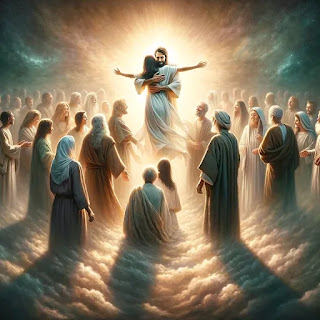
Comments
Post a Comment