✦ THE ERADICATION OF SUFFERING ✦

✦ THE ERADICATION OF SUFFERING ✦
A Philosophy and Theology of Universal Healing, Liberation, and Restoration
The highest response to suffering is not merely to endure it, explain it, punish those who caused it, or discover meaning within it. The highest response is to understand it so completely that its causes can be healed—and its kingdom brought to an end.
Prologue: The Oldest Wound and the Highest Goal
Behind nearly every great human undertaking stands an encounter with suffering.
Medicine was born because bodies become sick and wounded.
Justice arose because human beings harm one another.
Religion emerged partly because grief, guilt, mortality, evil, and apparent divine absence demanded interpretation.
Philosophy arose because consciousness wanted to understand why existence contains pain—and how a wise person should respond to it.
Politics attempts, at its best, to organize human beings so that they may live together without constantly preying upon one another.
Art gives form to what pain has made difficult to say.
Science studies the mechanisms through which suffering emerges and the means by which it may be prevented.
Revolution begins when a population decides that what has long been called inevitable is no longer acceptable.
Across all these disciplines, one question keeps returning:
What are we going to do about suffering?
Are we merely to accept it?
Are we to reinterpret it?
Escape from it?
Grow through it?
Distribute it more fairly?
Punish those who cause it?
Transform it into wisdom?
Or should the final goal be nothing less than its complete eradication?
The answer cannot be simple, because suffering is not one thing. Some suffering is imposed. Some is inherited. Some is generated by ignorance. Some results from natural limitation. Some warns us that something is wrong. Some accompanies healing. Some is voluntarily endured for a greater good. Some develops capacity. Some destroys capacity. Some leads toward liberation. Some merely breeds more suffering.
We therefore need a fundamental distinction:
There is suffering that propagates suffering, and there is suffering that is transformed into a movement toward the End of Suffering.
That distinction will guide everything that follows.
I. THE FIRST LAW: END SUFFERING, NEVER THE SUFFERER
Any project called The Eradication of Suffering must begin with an uncompromising moral safeguard:
The goal is to eradicate suffering—not those who suffer.
History contains terrible examples of governments, institutions, and ideologies that attempted to improve the world by removing people they considered defective, burdensome, impure, dangerous, or unworthy.
This is not the eradication of suffering.
It is the multiplication of suffering beneath a false name.
The disabled person is not the problem.
The traumatized person is not the problem.
The mentally ill person is not the problem.
The grieving person is not the problem.
The poor person is not the problem.
The prisoner is not the problem.
The wounded veteran, the neglected child, the addicted person, the exhausted worker, the refugee, the outcast, the sinner, and the socially unwanted are not problems to be erased.
The problems are the wounds, illnesses, deceptions, compulsions, injustices, exclusions, exploitations, traumas, and systems of abandonment surrounding them.
A true philosophy of eradication must therefore protect:
- Life
- Dignity
- Difference
- Agency
- Consent
- Truth
- Vulnerability
- Freedom
- Belonging
- The right to grieve
- The right to receive care
- The right to exist without having to justify one’s existence through productivity
A world without suffering must never mean a world of compulsory happiness, forced conformity, emotional numbness, chemical obedience, or spiritual censorship.
The objective is not to make people incapable of feeling.
It is to create a reality in which feeling no longer exposes beings to needless torment.
II. WHAT IS SUFFERING?
Suffering is often confused with pain, harm, difficulty, discomfort, and evil. These concepts overlap, but they are not identical.
Pain
Pain is an unpleasant physical or psychological signal. It may warn of injury, danger, overload, loss, or unmet need.
Pain can be protective. It can tell a person to withdraw a hand from fire, rest an injured limb, escape a dangerous relationship, or recognize that something precious has been lost.
But pain can also outlive its usefulness. Chronic pain may continue after tissue has healed. Trauma may continue sounding an alarm after the immediate danger has passed. Anxiety may identify possibility itself as a threat.
Pain is a signal—but signals can malfunction.
Harm
Harm is damage to a being’s body, mind, relationships, agency, opportunities, dignity, environment, or future.
Harm may occur without immediate pain. Propaganda, pollution, manipulation, exploitation, and neglect can alter a person’s future before the injury is fully understood.
Difficulty
Difficulty is resistance encountered while pursuing a goal.
A workout can be difficult. A language can be difficult to learn. A truthful conversation can be difficult. Meditation, study, moral discipline, and artistic creation may all be difficult.
Difficulty is not necessarily suffering, and it is certainly not necessarily evil.
A meaningful life may contain immense difficulty without containing unnecessary misery.
Suffering
Suffering usually involves pain or harm combined with factors such as:
- Helplessness
- Fear
- Isolation
- Humiliation
- Uncertainty
- Powerlessness
- Loss of meaning
- Threat to identity
- Perceived permanence
- The absence of a path forward
Pain says, “This hurts.”
Suffering often adds:
“This should not be happening. I cannot escape it. I am alone inside it. It may never end.”
This is why two people can experience similar physical pain while suffering very differently. Meaning, agency, safety, expectation, support, and context profoundly shape the experience.
Secondary suffering
Human beings often suffer not only from the original wound, but from their reaction to the wound:
- “I should not feel this.”
- “I am weak for struggling.”
- “No one could understand.”
- “This will never change.”
- “My pain has made me worthless.”
- “I have failed because I am not healed yet.”
The original pain becomes surrounded by shame, fear, resistance, and self-condemnation.
This does not mean suffering is imaginary. It means consciousness can amplify pain when it is forced to face pain without adequate support, understanding, or hope.
III. THE GREAT MAP OF SUFFERING
Suffering exists in many forms. Each form calls for a different kind of intelligence.
| Form of suffering | Examples | Primary response |
|---|---|---|
| Physical | Injury, illness, chronic pain, hunger | Medicine, nourishment, safety, prevention |
| Psychological | Anxiety, depression, panic, shame | Therapy, care, connection, meaningful agency |
| Traumatic | Hypervigilance, nightmares, dissociation | Safety, stabilization, integration, trustworthy support |
| Relational | Betrayal, abuse, rejection, abandonment | Boundaries, accountability, repair, healthy belonging |
| Material | Poverty, homelessness, deprivation | Resources, protection, opportunity, structural reform |
| Political | Oppression, persecution, war, imprisonment | Liberation, justice, resistance, institution-building |
| Moral | Guilt, remorse, complicity, moral injury | Truth, repentance, restitution, transformation |
| Existential | Mortality, meaninglessness, alienation | Philosophy, purpose, creativity, community |
| Spiritual | Divine abandonment, estrangement, despair | Lament, contemplation, reconciliation, hope |
| Epistemic | Gaslighting, propaganda, silencing | Language, education, testimony, truth |
| Ecological | Extinction, pollution, displacement | Restoration, restraint, stewardship |
| Intergenerational | Inherited trauma, hatred, deprivation | Memory, healing, cultural and institutional change |
1. Physical suffering
Physical suffering includes injury, disease, fatigue, starvation, disability-related pain, aging, exposure, and bodily deterioration.
Disability itself should not automatically be equated with suffering. Much disability-related suffering is produced by inaccessible environments, discrimination, poverty, isolation, lack of healthcare, or the belief that only certain kinds of bodies possess value.
Sometimes the body causes pain.
Sometimes society turns difference into pain.
2. Psychological suffering
The mind can become both battlefield and prison.
Depression drains the world of significance.
Anxiety transforms possibility into threat.
Shame turns an action into an identity.
Obsessive thought imprisons attention.
Despair imagines that the present has already conquered the future.
Psychological suffering is intensified when the person is blamed for failing to overcome it through willpower alone. The mind is embodied, relational, historical, and social. Psychological healing may require medicine, therapy, sleep, safety, nutrition, purpose, friendship, spiritual practice, environmental change, or all of them together.
3. Traumatic suffering
Trauma is not merely the memory of a terrible event. It is an enduring reorganization of body and mind around a threat that could not be escaped or integrated.
The traumatized nervous system may continue fighting a war that has technically ended. It does this because it learned that survival required permanent readiness.
Trauma may produce:
- Hypervigilance
- Emotional numbness
- Dissociation
- Rage
- Avoidance
- Nightmares
- Distrust
- Compulsive control
- A fragmented sense of time
- Difficulty imagining a safe future
These responses are not signs of moral failure. They are survival strategies that remained active after the conditions that created them changed.
Healing requires more than saying, “The danger is over.”
The body must gradually learn that it is over.
4. Relational suffering
Human beings are relational creatures. We do not merely possess relationships; much of our identity is formed through them.
Betrayal, abandonment, humiliation, rejection, coercion, and loneliness can therefore wound the structure through which a person experiences the entire world.
A single betrayal may become the expectation that trust is impossible.
A neglectful childhood may become the conviction that need itself is shameful.
A humiliating relationship may teach someone that intimacy always requires self-erasure.
Relational healing requires new experiences of reliability, mutuality, protection, and respect. The wound created in relationship often needs healing through relationship.
5. Structural suffering
Some suffering is not primarily an individual disorder. It is produced by systems.
A person may be anxious because housing is unstable.
Depressed because work is degrading.
Exhausted because survival requires several jobs.
Sick because pollution was permitted in their neighborhood.
Lonely because public life has been replaced by commercial transactions.
Ashamed because an institution treats poverty as proof of inferiority.
Personal resilience matters. But resilience must not become society’s excuse for refusing to stop injuring people.
Do not merely teach people how to survive the machine. Ask why the machine keeps grinding them down.
6. Moral suffering
Moral suffering arises when someone violates their values, participates in wrongdoing, fails to prevent harm, or is forced to act against conscience.
Healthy guilt says:
“I did something wrong. I must acknowledge it, make restitution, accept necessary consequences, and change.”
Toxic shame says:
“I am nothing but wrong. Repair is impossible. I should hide, attack, or disappear.”
Guilt can guide responsibility.
Shame often obstructs it.
A healing approach does not remove accountability. It makes accountability more precise by directing pain toward truth and repair rather than indefinite self-hatred.
7. Existential suffering
Existential suffering concerns mortality, freedom, isolation, uncertainty, absurdity, and meaning.
A person may be physically safe and materially secure yet still ask:
- Why am I alive?
- What is worth doing?
- Does my life possess meaning?
- Can anything survive death?
- Is history going anywhere?
- Will goodness finally prevail?
- Can love justify the risks of existence?
Such suffering cannot always be medicated away. It calls for philosophy, faith, creativity, community, and a vision of reality large enough to contain mystery without surrendering to nihilism.
8. Epistemic suffering
People suffer when their experiences are denied, their testimony dismissed, their reality manipulated, or the language necessary to understand their condition is withheld.
Gaslighting is epistemic violence between individuals.
Propaganda is epistemic violence at the scale of a society.
A person who cannot name what is happening may remain trapped inside it.
Truth is therefore not an abstract luxury.
Truth is one of the instruments through which captivity becomes visible—and therefore escapable.
9. Ecological and nonhuman suffering
Animals experience pain, terror, confinement, hunger, injury, and loss. Industrial systems can multiply this suffering across enormous scales while keeping it hidden from ordinary sight.
Ecological destruction also produces suffering through displacement, famine, disease, extinction, and the collapse of living systems.
A universal ethics cannot stop at one nation, religion, race, generation, or species. Wherever sentience exists, the possibility of suffering creates moral responsibility.
If humanity someday creates genuinely conscious artificial beings, their suffering would also matter. The circle of mercy must expand as far as consciousness can reach.
IV. BUDDHISM: THE DIAGNOSIS OF DUKKHA
Buddhism places suffering near the beginning of its entire spiritual analysis.
The Pāli and Sanskrit term dukkha is often translated as suffering, but its meaning is wider: unsatisfactoriness, instability, stress, or the inability of conditioned existence to provide permanent security.
Buddhist traditions commonly distinguish three dimensions:
- The suffering of pain—illness, injury, grief, fear, and distress.
- The suffering of change—the instability of pleasurable conditions.
- The suffering of conditioned existence—the subtle insecurity of life organized around attachment, aversion, and the illusion of an independent, permanent self.
The Four Noble Truths possess a structure resembling medicine:
- Suffering exists.
- Suffering has causes.
- The causes of suffering can cease.
- There is a path leading toward that cessation.
Craving, ignorance, and aversion perpetuate suffering. Consciousness tries to make permanent what is impermanent, independent what is interdependent, and completely controllable what cannot be completely controlled.
The aim of Buddhism is not the destruction of the person. Nirvana is the extinguishing of the fires that keep suffering burning: greed, hatred, and delusion.
Compassion follows from insight into interdependence. My well-being cannot be isolated entirely from yours. In Mahāyāna Buddhism, the bodhisattva dedicates awakening to the liberation of all sentient beings.
Yet Buddhist ideas can be misused.
Nonattachment can be distorted into emotional avoidance.
Karma can be weaponized to blame victims.
Acceptance can be confused with submission.
Emptiness can be misunderstood as nihilism.
Authentic nonattachment does not mean indifference. It means refusing to turn possession, hatred, and egoic fixation into new engines of suffering.
V. HINDU TRADITIONS: SAMSARA, KARMA, AND MOKSHA
Many Hindu traditions understand suffering within samsara: the cycle of birth, death, rebirth, desire, action, and consequence.
Karma affirms that actions matter. Conduct shapes character, relationship, and future experience. At its best, karma teaches responsibility and the long reach of moral action.
At its worst, karma can be misused to blame those who suffer, as though every victim of poverty, illness, violence, or exclusion simply deserved that condition.
Hindu traditions offer several major paths toward liberation:
- Jñāna yoga: liberation through knowledge and insight.
- Bhakti yoga: liberation through devotion and love of God.
- Karma yoga: liberation through selfless action.
- Rāja yoga: liberation through disciplined transformation of consciousness.
In Advaita Vedānta, suffering is associated with ignorance of the deepest Self and its unity with ultimate reality. The isolated ego mistakes itself for the whole person. Liberation involves awakening from that false separation.
The Bhagavad Gītā asks how one can act within a tragic world without hatred, selfish attachment, or spiritual collapse. It seeks a form of engagement in which duty does not become egoic possession.
Its enduring lesson is that spiritual freedom need not require withdrawal from action.
Its danger arises when sacred duty is used to silence conscience or justify violence without sufficient moral scrutiny.
VI. JAINISM: THE RADICAL ETHICS OF NONVIOLENCE
Jainism places ahiṃsā, nonviolence, at the center of spiritual life.
Harmful action binds consciousness more deeply to karmic bondage. Liberation requires restraint, truthfulness, discipline, and reverence for living beings.
Jain ethics exposes the networks of suffering concealed inside ordinary consumption. It asks not only whether we intended harm, but whether our habits depend upon invisible systems of harm.
Its ascetic traditions also reveal an important tension. Voluntary hardship may free a person from domination by appetite. Yet severe asceticism becomes dangerous when coercively imposed, socially romanticized, or disconnected from actual compassion.
Discipline is valuable when it reduces bondage.
It becomes another bondage when pain itself becomes an idol.
VII. JUDAISM: LAMENT, COVENANT, AND SACRED PROTEST
Judaism refuses to reduce suffering to a neat moral equation.
The Book of Job dismantles the simplistic belief that suffering reliably proves guilt. Job’s friends preserve their theology by blaming the sufferer. Their explanations protect an orderly worldview at the expense of compassion and truth.
Job protests.
His protest is not necessarily the opposite of faith. It is a form of faith strong enough to demand honesty.
The Psalms contain grief, accusation, praise, confusion, hope, and lament. The suffering person is not required to approach God through emotional dishonesty.
Jewish ethics also emphasizes justice in this world: care for the stranger, poor, widow, orphan, and oppressed.
Suffering is not merely a metaphysical puzzle to be explained. It is a summons to covenantal action.
The idea of tikkun olam, repairing the world, expresses the conviction that human beings participate in restoration.
The proper response to brokenness is not merely explanation.
It is repair.
VIII. CHRISTIANITY: CROSS, RESURRECTION, AND RESTORATION
Christianity places an instrument of torture at the center of its sacred imagination—and then declares that torture, death, and empire do not possess the final word.
This creates immense spiritual power and immense interpretive danger.
The Cross can represent God entering human suffering, standing with the condemned, exposing the violence of power, absorbing hatred without reproducing it, and opening a path from death toward resurrection.
But the Cross has also been misused to tell abused people to remain silent, oppressed people to obey, and poor people to accept misery in exchange for heavenly compensation.
That is a betrayal of the Cross.
The Cross should never be used to keep people on crosses.
Jesus heals the sick, feeds the hungry, welcomes the excluded, forgives sinners, challenges hypocritical authority, weeps at a grave, and proclaims liberty to captives.
Suffering is not treated as an untouchable divine arrangement.
It is repeatedly interrupted.
Christian approaches to suffering include:
- Free-will theology: suffering partly results from the misuse of creaturely freedom.
- Soul-making theology: struggle can contribute to courage, patience, wisdom, and spiritual maturity.
- Natural-law theology: a stable world capable of meaningful action also permits injury and disaster.
- Atonement theology: Christ enters and overcomes sin, alienation, death, or condemnation.
- Liberation theology: salvation includes deliverance from political and economic oppression.
- Eastern theosis: the human person is healed through participation in divine life.
- Universal restoration: divine judgment ultimately serves correction, purification, reconciliation, and healing.
The greatest danger is to call suffering good merely because God can bring good from it.
Resurrection does not prove that crucifixion was harmless.
Healing does not prove the wound was necessary.
Redemption does not retroactively make betrayal righteous.
The more powerful Christian claim is this:
No wound is so final that Infinite Love cannot create a future beyond it.
Universal restoration carries that hope to its furthest conclusion.
If God is the Perfect Healer, divine judgment cannot be inferior to perfect medicine. It must expose falsehood, restrain evil, correct disorder, heal the will, and restore the creature to the goodness for which that creature was created.
Endless suffering would not represent evil’s defeat. It would represent evil’s everlasting preservation inside creation.
A truly victorious redemption must remove sin without losing the sinner, darkness without extinguishing the soul, and falsehood without annihilating the being deceived by it.
No finite prison can exhaust an Infinite God.
IX. ISLAM: TRIAL, STEADFASTNESS, JUSTICE, AND MERCY
Islam frequently understands earthly life as a field of testing, remembrance, moral responsibility, and spiritual formation.
Suffering may be interpreted as trial, consequence, purification, mystery, or an opportunity for steadfastness. It should not automatically be classified as punishment. Prophets themselves suffer despite their righteousness.
Ṣabr, often translated as patience, can also mean perseverance, disciplined restraint, courage, and faithfulness under pressure.
It is not necessarily passive submission.
Tawakkul, trust in God, does not eliminate action. One may trust God while seeking medicine, defending the oppressed, feeding the poor, resisting injustice, and transforming destructive conditions.
Islamic obligations of charity demonstrate that deprivation is not merely to be contemplated. It is to be relieved.
Sufi traditions sometimes speak of suffering as polishing the heart, dissolving arrogance, or deepening longing for God. These images can illuminate freely embraced spiritual transformation.
They become dangerous when used to sanctify oppression.
No oppressor is entitled to call another person’s suffering spiritually beneficial.
Divine mercy cannot become an alibi for human cruelty.
X. SIKHISM: SERVICE, REMEMBRANCE, AND COURAGE
Sikh teachings connect suffering with egoic separation, attachment, injustice, and forgetfulness of the Divine.
The path includes remembrance of God, honest work, sharing with others, equality, and seva—selfless service.
Sikh spirituality joins contemplation to courage. It refuses the false choice between inner liberation and resistance to oppression.
Spiritual depth should produce solidarity and the willingness to protect those being harmed.
A spirituality incapable of protecting the vulnerable remains morally incomplete.
XI. DAOISM: MISALIGNMENT, FORCE, AND THE WISDOM OF WATER
Daoist traditions often examine suffering created by excessive control, rigid classification, artificial striving, and conflict with the natural movement of life.
Wu wei does not mean absolute inactivity. It means action that does not fight reality unnecessarily—action so closely aligned with conditions that it avoids wasteful force.
Water becomes a central image because it is yielding without being powerless. It adapts to form while slowly reshaping stone.
Daoism reminds us that suffering cannot always be conquered through more aggression. Some problems must be dissolved, redirected, outgrown, or allowed to settle.
Yet acceptance should never become an excuse for tolerating abuse. Sometimes the natural movement of life is escape, resistance, boundary, or transformation.
The wisdom of water is not submission.
It is adaptive power.
XII. CONFUCIANISM: RELATIONAL ORDER AND HUMANE SOCIETY
Confucian traditions emphasize moral cultivation, humane relationships, responsible leadership, education, family, ritual, and social harmony.
Suffering frequently emerges when relationships and institutions cease to embody humaneness.
The cruel ruler, selfish official, neglectful parent, corrupt institution, and disordered society create suffering far beyond individual psychology.
The response is not merely inward detachment. It is the cultivation of character within networks of obligation.
Personal virtue and social design must support one another.
Good people need humane institutions.
Humane institutions require morally cultivated people.
XIII. STOICISM: INNER FREEDOM AND THE SPHERE OF AGENCY
Stoicism distinguishes between what lies within meaningful agency and what does not.
We cannot command the past, mortality, weather, chance, other people’s opinions, or every outcome. We can cultivate judgment, intention, character, and response.
This distinction can eliminate enormous amounts of secondary suffering. Much anguish comes from demanding absolute control over realities that cannot be controlled.
Stoicism does not require emotional deadness. Its deeper purpose is freedom from enslavement to panic, resentment, appetite, and external approval.
But Stoicism can be abused when institutions demand that people calmly endure conditions those institutions could change.
Inner strength must never become an excuse for external injustice.
The complete lesson is:
Accept what truly cannot be changed.
Courageously change what should not be accepted.
Develop the wisdom to distinguish between them.
XIV. EPICUREANISM: FREEDOM FROM ARTIFICIAL TORMENT
Epicurus did not define happiness as limitless indulgence. He emphasized freedom from unnecessary disturbance, friendship, simplicity, philosophical understanding, and liberation from irrational fear.
Many desires are socially manufactured.
Status, prestige, limitless accumulation, and comparison can create endless agitation without lasting fulfillment.
Epicureanism asks how much suffering is generated by wanting what society taught us to want.
A simpler life is not necessarily a smaller life.
It may be a life freed from false hungers.
XV. SCHOPENHAUER: THE RESTLESS WILL
Arthur Schopenhauer viewed existence as driven by insatiable willing.
Desire produces suffering because satisfaction is temporary. Once one desire is fulfilled, another replaces it—or boredom appears.
His philosophy is deeply pessimistic, yet it exposes an important mechanism:
A consciousness organized around endless acquisition can never arrive.
Compassion becomes possible when the perceived wall between self and other weakens. Art, contemplation, and restraint can temporarily interrupt the tyranny of craving.
Schopenhauer sees suffering as woven deeply into desire-driven existence.
The challenge is whether the will must merely be denied—or whether desire itself can be healed, reordered, and transformed.
XVI. NIETZSCHE: SELF-OVERCOMING AND THE DANGER OF ROMANTICIZATION
Nietzsche resisted philosophies that treated suffering only as an objection to life.
Struggle, danger, discipline, and adversity can sometimes contribute to strength, creativity, depth, and self-overcoming.
This is an important correction to visions of life that confuse goodness with effortless comfort.
But Nietzschean language becomes dangerous when powerful people use it to glorify suffering they impose on others.
There is a decisive moral difference between transforming one’s own hardship and demanding hardship from another person.
You may transfigure your wound.
You may not use your transfiguration to justify wounding others.
The flower growing through concrete demonstrates the power of life.
It does not justify pouring the concrete.
XVII. EXISTENTIALISM: CREATING MEANING WITHIN UNCERTAINTY
Existentialist thinkers confront mortality, absurdity, anxiety, alienation, responsibility, and freedom.
The universe may not hand us an obvious explanation for suffering. Human beings must nevertheless choose, act, create meaning, and accept responsibility for what they become.
Viktor Frankl emphasized that meaning can help sustain people through terrible conditions.
But meaning must never become another demand placed upon sufferers. A person is not morally required to transform every trauma into inspiration.
Meaning may be found in suffering.
That does not mean suffering should have been imposed.
Meaning is an act of reclamation—not a moral pardon granted to the injury.
XVIII. UTILITARIANISM: THE MORAL WEIGHT OF CONSEQUENCES
Utilitarian philosophies judge actions partly by their consequences for well-being and suffering.
This offers a powerful expansion of moral concern: everyone’s suffering matters—not merely the suffering of rulers, citizens, believers, or members of one species.
It also encourages evidence-based policy. If an intervention demonstrably reduces disease, violence, poverty, or misery, that fact matters morally.
But pure calculation can endanger individuals. A majority might benefit by sacrificing a minority.
The eradication of suffering therefore requires both consequence-sensitive compassion and inviolable dignity.
People cannot become disposable numbers inside a moral equation.
XIX. DEONTOLOGICAL ETHICS: MORAL LIMITS UPON UTOPIA
Duty-based ethics insists that persons must never be treated merely as instruments.
This protects individuals from being sacrificed for someone else’s imagined paradise.
Even noble ends cannot justify every means.
Any movement seeking the End of Suffering must bind itself to moral limits:
- No torture.
- No dehumanization.
- No deliberate targeting of innocents.
- No medical experimentation without consent.
- No elimination of inconvenient populations.
- No permanent emergency powers.
- No manufactured hatred.
- No systematic deception that destroys public agency.
- No cruelty hidden beneath the language of necessity.
The path toward a healed world must already contain the moral pattern of healing.
XX. CARE ETHICS: VULNERABILITY IS NOT FAILURE
Care ethics begins with embodiment, vulnerability, dependence, and relationship.
It rejects the fantasy of the completely self-sufficient individual.
Infants, sick people, elders, disabled people, traumatized people, and communities in crisis reveal a truth that applies to everyone:
Human autonomy is sustained by networks of care.
Suffering multiplies when care is invisible, underfunded, exploited, or treated as weakness.
A civilization should be judged not only by what it produces, but by how competently and tenderly it responds to vulnerability.
XXI. MARXIST AND LIBERATION TRADITIONS: THE ORGANIZATION OF MISERY
Marxist analysis locates suffering in alienation, exploitation, class power, and ownership.
It asks a crucial question:
Who benefits from this suffering?
If exhaustion, poverty, insecurity, and powerlessness are profitable, they will not disappear through private optimism alone.
Liberation traditions extend this analysis to colonialism, race, sex, empire, disability, and other structures of domination.
Their essential insight is that some suffering is not accidental.
It is organized.
Organized suffering requires organized resistance, democratic reconstruction, material redistribution, and institutional change.
XXII. THEODICY: WHY WOULD A GOOD GOD ALLOW SUFFERING?
The theological problem becomes most intense when God is understood as perfectly loving, wise, and powerful.
Several major answers have been proposed.
The punishment explanation
Some suffering is interpreted as punishment for wrongdoing.
Moral consequences are real, but this explanation becomes cruel when every illness, disaster, disability, or tragedy is blamed upon the sufferer.
The Book of Job rejects precisely this simplification.
Consequences may exist without every wound being a divine sentence.
The free-will defense
Love and moral goodness may require genuine freedom. Genuine freedom permits betrayal, violence, and refusal.
This explains some human-caused suffering.
It does not fully explain disease, natural disaster, animal suffering, or why freedom must sometimes be permitted to generate horrors of extreme magnitude.
Freedom may explain the possibility of harm.
It does not automatically justify every scale of harm.
Soul-making
Courage presupposes danger. Patience presupposes delay. Forgiveness presupposes injury. Compassion responds to suffering.
This suggests that struggle can contribute to moral development.
But meaningful challenge does not require limitless atrocity.
A difficult climb may cultivate courage. Torture is not therefore necessary for character.
Soul-making can justify certain forms of difficulty only within strict limits.
Stable natural law
A coherent world requires stable patterns.
Fire warms and burns.
Gravity grounds and injures.
Biological systems grow, adapt, malfunction, and die.
Stable causality makes meaningful action possible, but it also permits natural suffering.
This may explain why actions have reliable consequences. It does not remove the responsibility to develop medicine, safer environments, and more intelligent systems.
Mystery
Finite minds may not comprehend every divine purpose.
Humility is appropriate.
But mystery must never be weaponized against victims.
“I do not know” can be reverent.
“Your suffering must be good because my theology requires it” is not reverence.
Divine solidarity
Some theologies emphasize that God does not observe suffering from an untouched distance. God participates in it, grieves it, bears it, and works from within creation toward healing.
This does not explain every wound.
It transforms the image of God from detached architect to wounded healer.
Universal restoration
Universal restoration proposes that suffering, judgment, and history are held within a greater movement toward reconciliation.
Judgment is real, but its purpose is truth, correction, purification, and restoration—not everlasting vengeance.
Evil is exposed, restrained, healed, and finally deprived of every kingdom.
If goodness is ultimate, suffering cannot be everlasting.
If love is perfect, abandonment cannot be any creature’s final truth.
XXIII. THE TWO RIVERS OF SUFFERING
Suffering tends to flow in one of two directions.
The river that multiplies suffering
Unhealed suffering often follows this pattern:
Wound → fear → contraction → control → domination → retaliation → new wounds
A humiliated person may humiliate others.
A neglected person may become incapable of trust.
A frightened ruler may create a police state.
A traumatized nation may search for scapegoats.
A religious community afraid of doubt may punish honest questions.
A victim may begin to believe that becoming the aggressor is the only protection against victimhood.
Pain becomes contagious when it is:
- Denied
- Repressed
- Displaced
- Romanticized
- Commercialized
- Politicized
- Mythologized
- Turned into permanent identity
- Used to justify revenge
Dehumanization
The other person becomes a category: criminal, heretic, enemy, parasite, failure, monster.
Once personhood disappears, cruelty begins to feel administratively reasonable.
Humiliation
Humiliation rarely creates lasting virtue.
It creates concealment, resentment, submission, or the desire to reverse positions and become the humiliator.
Revenge
Revenge promises closure through mirrored injury.
It may offer temporary emotional release while creating new grief, new martyrs, and new justifications for violence.
Scapegoating
Complex suffering is blamed upon a visible group. The real system survives while vulnerable people absorb public rage.
Romanticization
Pain begins to sound noble merely because it is painful.
Poverty becomes “character-building.”
Abuse becomes “discipline.”
War becomes “glory.”
Burnout becomes “commitment.”
Silence becomes “forgiveness.”
Oppression becomes “God’s plan.”
Spiritual bypassing
Anger is condemned before injustice is addressed.
Grief is hurried toward gratitude.
Victims are pressured to forgive before safety, truth, or restitution exists.
Peace without truth is often merely silence imposed by the powerful.
The river that moves toward the End of Suffering
Suffering moves in another direction when it is met by transformative conditions:
Wound → safety → truth → understanding → agency → repair → solidarity → prevention
The wound alone does not create wisdom.
The response creates the possibility of wisdom.
Suffering becomes transformative when it is met with:
- Safety sufficient for reflection
- Witnesses who believe what happened
- Language capable of naming the injury
- Community strong enough to prevent isolation
- Agency sufficient for meaningful choice
- Accountability directed toward repair
- Skills that expand future freedom
- A purpose larger than the wound
- Institutions willing to learn
- Concrete prevention of recurrence
Pain is not automatically a teacher. Pain is information. Wisdom emerges when truth, love, freedom, and disciplined reflection interpret that information.
Post-traumatic growth is real. People sometimes develop courage, compassion, creativity, spiritual depth, and wisdom after surviving terrible events.
But growth does not justify trauma.
The glory belongs to the life that grew—not to the violence that tried to prevent it.
XXIV. UNNECESSARY SUFFERING
Unnecessary suffering is suffering that could be prevented, relieved, or replaced without sacrificing an equal or greater good.
It includes:
- Torture
- Deliberate cruelty
- Humiliation used as discipline
- Preventable hunger
- Untreated disease
- Abuse concealed for the sake of institutional reputation
- Exploitation defended as economic necessity
- Punishment whose only purpose is vengeance
- Manufactured scarcity
- Discrimination and exclusion
- Medical pain left untreated without justification
- Burnout created by incompetent systems
- Propaganda designed to intensify fear
- Spiritual terror used to control believers
- The suffering of animals for trivial convenience
- Poverty maintained because desperation is profitable
- Isolation imposed upon people who need community
- Shame that prevents confession, treatment, and repair
Unnecessary suffering is frequently called necessary by those who do not have to endure it.
Every claim of necessity should therefore be interrogated:
- Who suffers?
- Who benefits?
- Who decides?
- What alternatives were considered?
- Were those alternatives seriously tested?
- Is the burden distributed fairly?
- Can those imposing it escape it?
- Does the suffering actually produce the claimed good?
- Could compassion and intelligence achieve the goal more effectively?
XXV. NECESSARY SUFFERING—or PROVISIONALLY UNAVOIDABLE COST?
The phrase necessary suffering must be used cautiously.
Something may be unavoidable under present conditions without being eternally or metaphysically necessary.
What is unavoidable today may become preventable tomorrow through medicine, technology, social reform, or spiritual development.
It is often more accurate to say:
Provisionally unavoidable suffering in the service of preventing greater suffering or preserving a vital good.
1. Protective pain
Pain can warn the body of danger.
But if a future system could communicate danger equally effectively with less torment, the painful form would no longer be necessary.
The warning may be necessary.
The agony may not be.
2. Healing pain
Surgery may require an incision.
Physical therapy may hurt.
Trauma recovery may require approaching memories that have long been avoided.
The healing purpose does not make every degree of pain acceptable. Anesthesia, pacing, consent, support, precision, and aftercare remain moral obligations.
The scalpel offers a useful standard.
A scalpel and a weapon may both cut. What distinguishes surgery from assault?
- Healing purpose
- Knowledge
- Competence
- Consent whenever possible
- Precise limitation of damage
- Proportionality
- Pain relief
- Aftercare
- Accountability
- A reasonable expectation of benefit
Without these, “healing pain” can become a slogan disguising cruelty.
3. Grief
Grief is the cost of loving what can be lost.
Trying to abolish grief through emotional suppression would not end suffering. It would bury it.
Grief honors significance and allows consciousness to reorganize around absence.
Yet the existence of meaningful grief does not make every cause of death acceptable. We may honor grief while preventing needless loss.
4. Remorse
A person who causes harm may need to experience remorse, confrontation, restriction, loss of privilege, or consequences.
The objective is not suffering for suffering’s sake.
The objective is protection, truth, restitution, learning, and transformation.
Consequences are justified when they serve reality and repair—not when pain itself is treated as sacred payment.
5. Discipline
Learning, training, exercise, study, and spiritual practice involve frustration, fatigue, sacrifice, repetition, and delayed gratification.
Chosen difficulty can expand freedom.
It teaches a person to experience discomfort without becoming enslaved to immediate impulse.
But damage is not discipline.
Humiliation is not discipline.
Exhaustion without recovery is not discipline.
The purpose of discipline is increased capacity—not brokenness.
6. Boundaries
Protecting oneself or another person may cause distress to someone who wants unrestricted access, control, or exemption from consequences.
That distress does not prove the boundary is wrong.
Ending an abusive relationship, removing a dangerous person from authority, or restraining someone from harming others may cause anger and grief.
The goal is not to maximize that suffering. But justice cannot promise that domination will end without frustrating the dominator.
7. Resistance
Liberation may involve risk, sacrifice, disruption, and conflict. Oppressive systems rarely dissolve because their beneficiaries are politely informed.
Yet sacrifice must never be romanticized.
Leaders must not spend other people’s lives carelessly.
Every peaceful, legal, diplomatic, protective, and nonviolent alternative must be taken seriously.
Courage may be necessary.
Martyrdom must never become a strategy for satisfying someone else’s ambition.
8. Tragic choices
Emergencies sometimes offer no painless option. Triage, disaster response, defensive action, and medical decision-making may require choosing the path that prevents the greatest irreversible harm.
Such choices should produce humility rather than triumphalism.
A tragic necessity remains tragic.
XXVI. THE NINE GATES OF MORAL NECESSITY
Before any suffering is called necessary, it should pass through nine gates.
1. Purpose
What precise good is being protected or created?
Vague appeals to order, purity, strength, tradition, or productivity are insufficient.
2. Evidence
Is there credible evidence that the suffering actually produces the claimed benefit?
3. Alternatives
Has every less harmful method been seriously considered?
4. Proportionality
Is the expected good sufficient to justify the cost?
5. Consent
Can those affected understand and freely accept the burden?
When consent is impossible, their rights require stronger protection—not weaker protection.
6. Distribution
Who bears the suffering, and who receives the benefit?
A burden placed consistently upon the powerless is morally suspect.
7. Dignity
Does the process preserve the personhood of everyone involved?
8. Healing
Are relief, support, restoration, and aftercare built into the process?
9. Sunset
When will the necessity be reevaluated?
No emergency measure should quietly become a permanent structure of domination.
If a hardship cannot pass these gates, it should not be called necessary.
It should be called a failure of imagination, evidence, compassion, courage, or power.
XXVII. DOES GOODNESS REQUIRE SUFFERING?
A common argument claims that goodness requires contrast.
Without darkness, how could we recognize light?
Without grief, how could joy possess depth?
Without evil, how could goodness be meaningful?
This confuses contrast with eternal dependence.
One may understand health without preserving disease forever.
One may remember war without continuing to wage it.
One may appreciate liberty without keeping prisoners in cages as educational examples.
A healed person may remember the wound without reopening it every morning.
A restored universe could preserve wisdom without preserving torment.
Meaning does not require atrocity to continue forever.
XXVIII. WOULD A WORLD WITHOUT SUFFERING BECOME SHALLOW?
Perhaps a world without all difficulty would become stagnant.
But difficulty and suffering are not identical.
There could still be:
- Exploration without terror
- Effort without exploitation
- Competition without humiliation
- Mystery without deception
- Risk without abandonment
- Adventure without atrocity
- Difference without domination
- Failure without destitution
- Correction without cruelty
- Intensity without trauma
- Discipline without abuse
- Transformation without annihilation
A world beyond suffering need not be an empty pleasure machine.
It could contain limitless creativity, learning, relationship, beauty, discovery, play, service, and ascent.
There are higher forms of challenge than survival against preventable misery.
XXIX. DOES FREEDOM REQUIRE SUFFERING?
Freedom may require the possibility of error, refusal, disappointment, and conflict.
It does not follow that freedom requires an unlimited capacity to devastate others.
Every society already limits freedom where its exercise destroys the freedom of others.
No one is rightfully free to enslave, torture, poison, or imprison another without consequence.
The deepest freedom is not the ability to cause limitless harm.
It is the capacity to participate consciously in truth, creativity, relationship, and goodness.
Properly ordered, freedom and safety sustain one another.
XXX. DOES COMPASSION REQUIRE VICTIMS?
Compassion develops in response to suffering, but compassion need not preserve suffering.
Medicine does not preserve disease so doctors can remain virtuous.
Firefighters do not preserve burning buildings so courage can continue.
The fulfilled purpose of compassion is to make emergency compassion less necessary.
In a healed world, compassion would not disappear. It would become attentiveness, communion, celebration, generosity, and the active enhancement of flourishing.
Love does not become useless when pain ends.
Love finally becomes free to do more than rescue.
XXXI. JUSTICE: THE GAVEL OR THE SCALPEL?
Punitive systems often assume that justice is accomplished when a wrongdoer suffers proportionately.
But pain does not automatically repair pain.
A victim may need:
- Recognition
- Protection
- Restitution
- Restored agency
- Truth
- Assurance that the harm will not recur
Society may need a dangerous person restrained.
The wrongdoer may need confrontation, treatment, education, restitution, and transformation.
None of these requires sadism.
A gavel makes a louder noise than a scalpel, but power is proven by the precision of change.
Restorative justice asks:
- Who was harmed?
- What do they need?
- Who is responsible?
- What repair is possible?
- What conditions permitted the harm?
- How can repetition be prevented?
- What must the wrongdoer learn or become?
- What boundaries are necessary until transformation occurs?
Mercy does not mean pretending nothing happened.
Forgiveness does not mean immediate trust.
Healing does not mean removing every consequence.
Restoration requires more truth, not less.
The Perfect Healer does not refuse treatment because the patient is morally ugly. Yet perfect healing may require quarantine, restraint, surgery, or severe confrontation.
Justice should be strong enough to stop evil without becoming evil’s reflection.
XXXII. THE SEVEN THRONES AGAINST SUFFERING
A civilization of universal restoration could be imagined beneath seven coequal principles:
Love
Love refuses indifference.
It asks who is hurting, who has been forgotten, and what form of care would genuinely help.
Liberty
Liberty breaks cages.
It resists slavery, coercion, addiction, domination, manipulation, and every system that survives by confiscating agency.
Glory
Glory restores dignity.
It recognizes sacred value where the world sees weakness, ugliness, poverty, failure, or defeat.
Power
Power makes healing materially possible.
Compassion without capacity can mourn suffering. Compassion joined with power can build hospitals, protect communities, distribute resources, and redesign systems.
Justice
Justice names harm, protects the vulnerable, demands accountability, repairs what can be repaired, and prevents repetition.
Truth
Truth exposes false necessities.
It tears away propaganda, gaslighting, corruption, superstition, denial, and every lie teaching people to accept preventable misery.
Valor
Valor remains present before suffering.
It enters difficult places without becoming addicted to violence. It protects without dominating and endures the cost of healing without worshiping the cost.
Together:
Love chooses the goal.
Liberty opens the prison.
Glory restores the person.
Power changes the conditions.
Justice repairs the order.
Truth reveals the causes.
Valor carries the work through.
XXXIII. THE SEVENFOLD PRACTICE OF ERADICATION
1. Recognize
See suffering clearly.
Do not minimize it because it is inconvenient. Do not exaggerate it for manipulation. Do not ignore it because the sufferer belongs to another group.
2. Protect
Stop immediate harm.
Safety precedes many forms of healing. A person cannot meditate their way out of a room that remains actively on fire.
3. Relieve
Reduce pain wherever possible.
Food, shelter, medicine, rest, companionship, financial assistance, legal protection, and crisis care are mercy made concrete.
4. Understand
Identify causes.
What is biological? Psychological? Relational? Economic? Political? Spiritual? Environmental?
What continues feeding the pattern?
5. Heal
Restore function, agency, relationship, and meaning.
Healing is not merely the disappearance of symptoms.
It is the recovery of a life.
6. Repair
Tell the truth about responsibility. Make restitution. Rebuild dignity. Restore trust where trust can responsibly be restored.
7. Redesign
Change the conditions that generated the suffering.
If the same wound keeps recurring, individual treatment is not enough.
The system itself must learn.
XXXIV. THE ERADICATION OF SUFFERING AT EVERY SCALE
Within the individual
The work includes bodily care, emotional regulation, self-knowledge, truthful thinking, disciplined attention, boundaries, forgiveness, purpose, and refusal to convert personal pain into cruelty.
A powerful vow is:
What wounded me will not be permitted to recruit me into wounding others.
Within relationships
The work includes consent, honest communication, mutual responsibility, repair after conflict, protection of vulnerability, and the courage to leave relationships organized around domination.
Within communities
The work includes belonging, accessible care, education, safe public spaces, economic opportunity, cultural memory, and systems capable of identifying isolation before it becomes catastrophe.
Within institutions
The work includes transparency, evidence, accountability, humane working conditions, restorative practices, anti-corruption safeguards, and participation by those affected.
Within nations
The work includes healthcare, housing, education, economic dignity, justice reform, democratic agency, protection from violence, and resistance to dehumanizing propaganda.
Across humanity
The work includes peacebuilding, disease prevention, refugee protection, food security, climate responsibility, scientific cooperation, and opposition to every ideology that ranks human value by nationality, race, religion, class, sex, or political usefulness.
Across sentient existence
The work includes animals, ecosystems, future generations, and any new form of conscious life humanity might create.
The circle of mercy must expand as far as suffering can reach.
XXXV. THE DANGER OF BECOMING WHAT WE OPPOSE
Movements formed to end suffering can begin producing it.
Revolutionaries can become tyrants.
Religious reformers can become inquisitors.
Victims can become persecutors.
Therapists can become controllers.
Doctors can disregard consent.
Governments can criminalize grief in the name of stability.
Technologists can impose compulsory optimization.
Utopians can sacrifice living people to imagined futures.
This happens when the objective becomes more sacred than the persons it was intended to serve.
The means must therefore contain the moral pattern of the end.
A peaceful world cannot be built through unlimited cruelty.
A truthful world cannot be built through systematic deception.
A free world cannot be built through permanent domination.
A healed world cannot be built by treating beings as disposable material.
The seed must contain something of the tree.
XXXVI. REDEMPTION WITHOUT ROMANTICIZATION
To reject the glorification of suffering is not to deny that magnificent things can emerge from terrible conditions.
People have transformed:
- Grief into compassion
- Trauma into protection
- Rejection into creativity
- Failure into wisdom
- Imprisonment into spiritual freedom
- Fear into vigilance on behalf of others
- Loneliness into a commitment to inclusion
- Anger into disciplined justice
But the glory belongs to the transformation.
Not to the wound.
I was not blessed by the wound itself. I was blessed by the inexhaustible life within me that refused to let the wound become the end of my story.
Redemption does not call evil good.
It prevents evil from possessing the final interpretation of what happened.
It does not erase the past.
It creates a future the past did not possess the power to prevent.
XXXVII. FROM A CIVILIZATION OF PUNISHMENT TO A CIVILIZATION OF HEALING
Human society is deeply organized around punishment.
We punish children for dysregulation.
Workers for exhaustion.
Patients for addiction.
Prisoners for trauma.
The poor for lacking resources.
Ourselves for having wounds we did not choose.
Punishment may temporarily suppress behavior. It frequently fails to understand its causes.
A healing civilization would ask:
- What happened?
- What danger is present?
- What need became distorted?
- What capacity is missing?
- What belief sustains the behavior?
- What boundary will protect others?
- What treatment could create change?
- What restitution is owed?
- What environment would prevent recurrence?
Healing is not weakness.
Precise healing may require restraint, separation, confrontation, surgery, and painful truth.
But its power is measured by restoration—not by the amount of pain it can inflict.
The highest form of power is not the ability to destroy the broken. It is the ability to repair what destruction declared irreparable.
XXXVIII. THE ASYMPTOTIC NORTH STAR
Perhaps absolute freedom from every form of suffering lies beyond our present biological, political, technological, and spiritual capacities.
That does not make the goal meaningless.
A North Star governs direction even when the traveler has not yet reached it.
Every generation can ask:
- What suffering did we prevent?
- What disease did we cure?
- What pain did we relieve?
- What prison did we open?
- What lie did we expose?
- What wound did we heal?
- What system did we redesign?
- What beings did we include within our compassion?
- What inherited cruelty did we refuse to pass forward?
The Eradication of Suffering can be both ultimate hope and immediate discipline.
Every child protected matters.
Every person fed matters.
Every reconciled family matters.
Every animal spared needless torment matters.
Every prisoner treated as human matters.
Every traumatized nervous system returned to safety matters.
Every future liberated from a recurring wound matters.
Infinity is approached through particular acts.
Universal restoration begins wherever one being refuses to abandon another.
XXXIX. A MANIFESTO FOR THE END OF SUFFERING
We refuse to worship pain.
We refuse to call cruelty discipline.
We refuse to call humiliation justice.
We refuse to call exploitation opportunity.
We refuse to call abandonment freedom.
We refuse to call preventable misery fate.
We refuse to call vengeance healing.
We refuse to call silence peace.
We refuse to call eternal torment victory.
We will distinguish discomfort from destruction.
We will distinguish accountability from sadism.
We will distinguish sacrifice from exploitation.
We will distinguish acceptance from submission.
We will distinguish patience from passivity.
We will distinguish forgiveness from restored access.
We will distinguish meaningful challenge from manufactured misery.
We will meet physical suffering with medicine.
We will meet psychological suffering with understanding.
We will meet loneliness with presence.
We will meet deception with truth.
We will meet captivity with liberation.
We will meet oppression with justice.
We will meet guilt with repair.
We will meet ignorance with education.
We will meet fear with protection.
We will meet hatred with boundaries, courage, and the possibility of transformation.
We will meet brokenness with restoration.
We will not merely ask how suffering can be endured.
We will ask how it can be prevented.
We will not merely ask how wounded people can become more resilient.
We will ask why the world continues wounding them.
We will not praise people merely for surviving conditions no one should have been forced to survive.
We will honor their survival while dismantling those conditions.
No person will be reduced to their worst action.
No victim will be reduced to what was done to them.
No wound will define the totality of a life.
No darkness will be granted an eternal kingdom.
No finite prison will exhaust an Infinite God.
XL. THE FINAL DISTINCTION
There is suffering that multiplies itself.
It says:
“I was wounded; therefore, I am entitled to wound.”
And there is suffering transformed toward its own abolition.
It says:
“I was wounded; therefore, I understand why wounds must end.”
There is suffering that builds prisons.
And suffering that teaches someone to recognize every kind of cage.
There is suffering that produces hatred.
And suffering that reveals the urgency of mercy.
There is suffering that breaks language.
And suffering that compels us to create new words for liberation.
There is suffering that convinces people nothing can change.
And suffering that becomes the birthplace of an unconquerable vow:
This must not happen again—to me, to you, or to anyone.
That vow is the turning point.
Not because suffering has become good, but because suffering has encountered a will that refuses to reproduce it.
CONCLUSION: THE LAST KINGDOM OF DARKNESS
The Eradication of Suffering is not the creation of a shallow paradise.
It is the creation of a reality in which wisdom no longer requires devastation, accountability no longer requires cruelty, freedom no longer requires abandonment, and strength no longer depends upon another being’s weakness.
It is a world in which pain is answered before it becomes despair.
A world in which grief is accompanied.
A world in which danger is restrained without hatred.
A world in which the sick are treated before they are judged.
A world in which truth is stronger than propaganda.
A world in which justice repairs what punishment merely strikes.
A world in which every prison must justify itself before Liberty.
A world in which every hierarchy must justify itself before Love.
A world in which every power must answer for the suffering it could have prevented.
The End of Suffering would not be the end of consciousness, difference, adventure, effort, growth, or sacred intensity.
It would be the end of abandonment.
The end of needless torment.
The end of suffering weaponized against the vulnerable.
The end of inherited cycles of humiliation and revenge.
The end of every theology granting darkness an everlasting kingdom.
The end of every system that survives by convincing its victims that their misery is necessary.
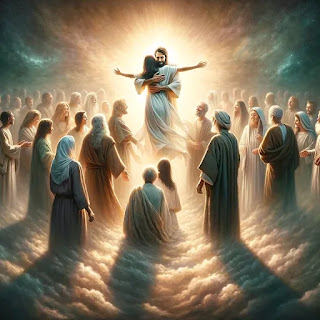
It would be the Great Transfiguration in which pain no longer reproduces pain—where every wound is surrounded by healing, every captive encounters an opening, every broken being is offered restoration, and every world is reorganized around the flourishing of life.
Until that horizon arrives, the work remains before us:
Bless what you encounter.
Protect what is vulnerable.
Illuminate what is dark.
Liberate what is captive.
Heal what is wounded.
Strengthen what is weak.
Beautify what is neglected.
Restore what is broken.
Transform what perpetuates suffering.
Create what suffering taught the world to believe was impossible.
And keep your eyes upon the North Star:
Not merely the endurance of suffering.
Not merely the explanation of suffering.
Not merely the punishment of those who cause suffering.
But the complete healing of its victims,
the transformation of its perpetrators,
the correction of its causes,
the restoration of every broken world,
and the final Eradication of Suffering itself.
.webp)

Comments
Post a Comment