🖐️✨ THE ORDER OF THE OPEN HAND

🌌🖐️✨ THE ORDER OF THE OPEN HAND
Book One: The Great Reprieve
A closed hand may strike, seize, possess, and keep.
An open hand may offer, receive, release, and remain free.
—The First Gesture of the Order
🔴 I. The Hour the Weapons Forgot
At 14:17 Universal Time, every weapon on Earth forgot what it had been made to do.
Rifles refused their triggers. Bombs opened in midair and released their components like handfuls of silver petals. Missiles turned away from cities, climbed harmlessly toward the upper atmosphere, and arranged themselves into luminous circles before falling into the oceans as cooled metal.
The effect was not merely mechanical.
A surgeon’s knife still opened flesh to save a life. A kitchen blade still divided bread. But when a man raised that same blade against his wife, his hand passed through a field of blue light and came gently to rest at his side.
He could still feel his rage.
He simply could not make another person bleed with it.
Across the world, slaughter lines fell silent. Chains stopped. Stunning machines powered down. Gates opened, and frightened animals wandered into loading yards beneath a sky suddenly crowded with impossible stars.
For eight minutes, humanity received no explanation.
Then every illuminated surface on Earth—telephones, televisions, billboards, vehicle displays, hospital monitors, the glass walls of financial towers—darkened.
Upon them appeared the image of an open hand.
It was not a human hand.
It possessed four long fingers and two opposing thumbs. Beneath its translucent skin, rivers of blue and golden light moved through branching nerves.
Below it appeared a message in every written language:
DO NOT BE AFRAID.
WE HAVE COME BECAUSE YOU ARE.
The ships revealed themselves a moment later.
They had been concealed throughout the solar system: immense dark forms stationed beside planets, within the rings of Saturn, above the far side of the Moon. Some resembled black seeds split open by inner light. Others unfolded like flowers designed by a geometry Earth had never encountered.
The largest vessel appeared over the Pacific.
Its name arrived inside the minds of those who looked upon it—not as an invasion, exactly, but as the closest available translation of a chord containing grief, promise, duty, and motion:
No Cry Unanswered.
From it descended a single figure.
She did not appear before the United Nations, the White House, the Kremlin, the Forbidden City, or any palace of government.
She descended into a burning city whose name had become another synonym for war.
Cameras found her walking through smoke.
She stood nearly eight feet tall and possessed four slender arms. Her skin resembled midnight glass filled with slow auroras. Four dark eyes watched the ruined streets with an attention so complete that it felt almost intimate.
She wore no armor.
When a frightened soldier fired upon her, the bullets stopped several inches from her body. She looked at them—not angrily, but sorrowfully—and opened one of her hands.
The bullets softened into droplets of silver.
Then she continued walking.
She found a little boy beneath a collapsed wall. Two of her hands lifted the stone. A third supported his head. The fourth opened over his chest, releasing a pale blue light that passed through him like water through dry earth.
His crushed lungs filled.
His broken spine remembered its proper shape.
The boy opened his eyes.
Only then did the alien address the world.
Her voice emerged from every screen, but it did not sound electronic. Each person heard it in the tones their mind associated with unquestionable sincerity.
“Do not kneel. We have not come to be worshiped.”
Behind her, silent machines were lifting the wounded from the ruins.
“Do not attack. We cannot permit you to injure yourselves against us.”
A burning hospital went dark. A moment later, its windows filled with blue light. Patients began waking without pain.
“We have examined your world. You possess great beauty, considerable courage, and institutions that convert suffering into power.”
Her four hands slowly opened.
“We will preserve the first two.”
Somewhere, every prison door used to conceal a tortured human being unlocked.
“We will not punish your deceivers. We will make deception incapable of governing.”
Every secret archive belonging to every government appeared at once in the public record.
“You fear that we will take away your freedom. We fear that you have named your chains freedom because you were born wearing them.”
Across the world, people began to cheer.
Across the world, other people began to pray.
Some prayed for deliverance.
Some prayed for deliverance from the deliverers.
The alien looked directly into the nearest camera.
“The Great Reprieve has reached your world. From this moment onward, no authority—human or otherwise—will be permitted to manufacture suffering here.”
The light beneath her skin became infinitely gentle.
“The killing has ended.”
Her lower hands gathered the healed child against her.
“Now we may speak.”
🔵 II. The Man Who Had Asked for This
Elias Morrow watched the arrival from a small apartment overlooking the Clark Fork River in Missoula, Montana.
His coffee had gone cold between his hands.
On the television, commentators struggled to decide whether the paralysis of every military on Earth constituted an invasion, a miracle, or the most comprehensive act of terrorism in history.
Elias thought it was probably all three.
Outside his window, the mountains were veiled by late-summer smoke. The river moved beneath them with the calm indifference of something that had survived every human theory.
He watched footage from hospitals.
Cancers were dissolving.
Damaged hearts were repairing themselves.
Children whose parents had spent years begging insurance companies for treatment were being healed by silent beings who did not ask for payment, citizenship, proof of employment, or belief.
The alien machines entered addiction wards next.
They did not erase memory or personality. They repaired injured neural systems, quieted compulsions, and remained beside patients through the terror of becoming free.
Elias switched off the television.
The screen turned itself back on.
For a moment, he saw his own reflection: thirty-seven years old, dark hair beginning to gray, a day’s stubble, and the tired eyes of a man who had spent too long studying the ways people justified hurting one another.
Then the alien woman appeared.
Not the public broadcast. This image looked directly at him.
“Elias Morrow,” she said.
He stared.
“No.”
“We have not yet made a request.”
“You traveled across the universe. I’m assuming you didn’t call to ask whether I’m satisfied with my internet provider.”
Something changed beneath her glass-dark skin. A brief current of violet light passed through her chest.
It took Elias several seconds to realize she had found him amusing.
“We request your presence aboard No Cry Unanswered.”
“Request denied.”
“Your refusal is recognized.”
The screen went black.
Elias waited.
Ten seconds passed.
Then twenty.
He felt an unexpected pressure behind his ribs. It was not disappointment. It was something closer to terror at having been taken seriously.
The screen illuminated again.
The alien had returned.
“We will select another.”
“That was fast.”
“The need remains whether you accept it or not.”
“What need?”
“To be contradicted.”
Elias leaned closer to the screen.
Outside, bells had begun ringing throughout the city. No one had organized them. People had simply entered churches and pulled the ropes.
“Why me?”
“Your species offered many candidates who believe they should advise us. Most wish to preserve the structures from which their authority originates. Others believe our arrival confirms their religion, ideology, or personal importance.”
“And I don’t?”
“You believe our arrival may prove nearly everything you have hoped—and nearly everything you have feared.”
She raised one translucent hand.
Above her palm appeared the image of a book.
Elias recognized the faded blue cover immediately.
The Right to Remain Unfinished.
He had written it six years earlier. Four hundred copies had been printed. Most remained in boxes beneath his bed.
Its central argument was that suffering should never be romanticized, but neither should healing become an excuse for domination. Nearly everyone who reviewed it had accused him of defending two incompatible principles.
No mind should be abandoned.
No mind should be possessed.
The alien opened the book.
“You wrote: No mind may be rewritten into agreement.”
She turned several pages.
“You also wrote: No being should be abandoned to a wound merely because the wound has learned to say no.”
“Both are true.”
“They cannot always govern the same action.”
“That sounds like your problem.”
“It became yours when we entered your sky.”
The screen went dark again.
This time it remained dark.
A doorway appeared in the middle of Elias’s apartment.
There was no explosion, flash, or tearing of the air. One moment there was an empty wall; the next there was an opening into a corridor filled with silver trees and unfamiliar constellations.
Words appeared above it:
THIS PASSAGE WILL CLOSE IN SIXTY SECONDS.
NO CONSEQUENCE WILL FOLLOW REFUSAL.
Elias stood.
He thought of his younger brother, Micah, whose addiction had been described as a choice by everyone who did not want responsibility for helping him. Micah had died eleven years before the sky opened.
The visitors had arrived too late for him.
They had arrived precisely on time for millions of others.
Elias looked around his apartment. At the books. The unwashed coffee cup. The little collection of ordinary objects from the life he understood.
Then he stepped through the door.
🟣 III. No Cry Unanswered
The warship contained a forest.
Silver-barked trees rose beneath a sky that could not possibly exist inside a vessel. Between them ran streams of perfectly transparent water. Small winged creatures moved through branches bearing violet leaves, while beings from a dozen unknown species walked along curving paths.
Some wore robes. Some wore complex instruments. Some wore nothing at all.
None seemed surprised to see a human.
Elias looked back.
The doorway to his apartment had vanished.
“You said I could refuse.”
A voice answered behind him.
“You did not.”
Avarra stood at the edge of the stream.
In person, she was more alien and more beautiful than any screen had conveyed. Four eyes rested within a face composed of smooth, overlapping planes. Her skin contained moving light. Every powerful emotion passed through her body as visible color, yet her mind appeared as still as a midnight sea.
Her mantle was woven from strands of darkness covered in millions of luminous symbols.
Elias pointed toward them.
“What do those mean?”
“The consequences of my commands.”
“Victories?”
“No.”
The light within her dimmed.
“Every being harmed by an order I gave. Every being I knowingly failed to protect. Every life altered without the possibility of restoration.”
“You wear them?”
“I remember them.”
“Those aren’t the same thing.”
“No,” Avarra said. “They are not.”
She gestured toward the forest.
Beings slept beneath several of the trees. Others sat together in silence, palms open upon their knees. Some appeared to be meditating. Others might have been communicating in forms Elias could not perceive.
“You’re Buddhists,” he said.
The violet light returned.
“We are not.”
“You end suffering. You meditate. You talk about delusion, attachment, liberation—”
“Your Gautama perceived something real. So did minds born beneath suns your species has never named. Truth does not become the property of the first world that speaks it.”
“So you independently invented enlightenment.”
“We independently encountered what prevents minds from being free.”
Avarra extended a hand. A small sphere of water rose from the stream and hovered above her palm.
“On our first world, suffering was understood as closure. Perception closes around error. Desire closes around possession. Identity closes around fear. Power closes around whatever it believes it owns.”
Her fingers folded inward. The water compressed until it trembled.
“Every closure mistakes a fragment for the whole.”
She opened her hand.
The water became perfectly still.
“We learned to open.”
“And then decided to open everyone else.”
“We learned that private enlightenment is an unfinished act.”
“That sounds beautiful enough to put on a battleship.”
“This vessel contains more hospitals than weapons.”
“But it contains weapons.”
“Yes.”
Avarra did not soften the word.
Elias almost wished she had.
“What exactly is the Order of the Open Hand?”
“Not a race. Not a nation. Not an empire.”
“Empires love that answer.”
Another flicker of violet.
“The Order is an obligation that learned to travel.”
“That sounds even more like an empire.”
“Then you understand why you are here.”
They followed the stream into an open chamber.
Earth floated at its center—not as a globe projected by light, but with such perfect depth and detail that Elias felt he could reach into its clouds.
Around it moved countless points of blue fire.
Order vessels.
“How many worlds have you done this to?” he asked.
“Liberated, occupied, encountered, transformed, or harmed?”
“All of them.”
“Those are different numbers.”
“Give me the worst one.”
Avarra’s four eyes closed.
The forest darkened with her.
“Seven thousand, four hundred and twelve civilizations have entered the Great Reprieve. One hundred and nine later judged that our intervention violated their self-determination. Seventeen eventually separated from the Order. Three now forbid our return.”
“You let them leave?”
“Yes.”
“Even if suffering returned?”
“Not without conflict.”
“That isn’t an answer.”
“No,” Avarra said. “It is a confession.”
Earth turned between them.
Elias found North America. Then Montana. Then the thin silver thread of the river outside his apartment.
“You can see everything.”
“No. We can see enough to become dangerous.”
That was not the answer of a fanatic.
It was worse.
It was the answer of someone who had already considered the accusation.
Avarra opened all four hands.
“We ask you to become the Adversarial Witness of Earth.”
“What does that mean?”
“You will represent no government, religion, nation, or species. You will represent the possibility that we are wrong.”
“Your official enemy.”
“Our preserved contradiction.”
“And if I decide your entire mission is wrong?”
“Demonstrate it, and I will dismantle what I command.”
Elias studied her.
“And if I fail?”
The light beneath her skin became white and absolute.
“We proceed.”
“Then I’m not a witness. I’m decoration.”
“You will possess complete access to our decisions. You may accompany every intervention. You may speak publicly without restriction. You may delay irreversible changes to a mind or culture. If I overrule you, I must disclose my reasoning to every civilization within the Order.”
“But I can’t command you to leave.”
“No.”
“Then why call this consent?”
“We do not.”
The answer struck harder than any argument.
Avarra turned toward Earth.
“We care about consent. We disagree with your species about what makes consent possible.”
“That distinction has justified almost every violation ever committed against people like me.”
A current of painful blue moved through her body.
“Then teach us to recognize that violation when it wears our face.”
Before Elias could answer, Earth vanished.
In its place appeared the interior of a white building.
Rows of narrow beds.
Locked doors.
Children.
Avarra said, “Before you decide, there is somewhere you should see.”
🟢 IV. The House of Restoration
The Eden Restoration Institute had described itself as a place of healing.
Its brochures showed green lawns, smiling families, and sunlight passing through open windows. Parents sent their children there for defiance, addiction, forbidden love, spiritual impurity, unacceptable identities, and behaviors administrators grouped beneath the word brokenness.
The windows did not open.
The doors had no handles on the inside.
Elias knew the smell before he stepped from the Order’s passage: disinfectant, old carpet, and the artificial citrus used to conceal fear.
For half a second he was sixteen again.
A locked room.
A counselor explaining that resistance proved the treatment was working.
A voice telling him that love could only save him after it had destroyed everything unacceptable within him.
The lights beneath Avarra’s skin changed.
She had noticed his distress.
She did not enter his mind.
She simply waited.
“I’m fine,” Elias said.
“No.”
“Is contradicting people part of your compassion?”
“When necessary.”
He hated her a little for being right.
The Order’s intervention had already begun.
Doors unlocked. Restraints released themselves. Sedatives separated harmlessly within bloodstreams. Bruises faded. Damaged nerves repaired. Every child received a private explanation of what was happening and the choice to accept or refuse further treatment.
Human staff stood unharmed along the walls, unable to interfere.
The Order’s agents moved among them.
They belonged to different species, but every one bore the same symbol: an open hand surrounded by a broken circle.
At the center of the main hall stood the institute’s director, Dr. Silas Kern.
He was a gray-haired man with gentle eyes. His hands trembled.
“I helped these children,” he said.
Avarra approached him.
“You believed that.”
“I devoted my life to them.”
“Your sincerity is evidence concerning the depth of your error. It does not make the consequences imaginary.”
“You have no right to judge us.”
One of the doors opened.
A young woman stepped into the hall. She was perhaps eighteen. The Order had healed the injuries on her wrists, but faint silver lines remained where the tissue was still rebuilding itself.
Her name, Elias later learned, was Nadia Reyes.
“He judged us every day,” she said. “Why does he get to complain now?”
Dr. Kern looked at her.
“Nadia, you were sick.”
“I was gay.”
“You were confused.”
“I was seventeen.”
“I wanted to save your soul.”
Avarra’s four eyes fixed upon him.
Something in the room changed.
Not heat. Not pressure.
Clarity.
Dr. Kern heard his own words as if another man had spoken them.
For the first time, perhaps, he understood how they sounded from outside the system that had protected them.
He began to weep.
Nadia did not look satisfied.
“Can you fix him?” she asked Avarra.
“Yes.”
The director stepped backward.
“What does that mean?”
Avarra spoke without anger.
“We can restore empathic responses you trained yourself to suppress. We can separate fear from the beliefs upon which that fear has fed. We can correct neurological compulsions toward dominance and remove the rewards your mind attaches to obedience.”
“You want to erase me.”
“No. Your memories, intelligence, attachments, and continuity would remain.”
“Would I still believe what I believe?”
“If those beliefs survive clear perception, coherent evidence, and undistorted empathy.”
Dr. Kern’s face became pale.
“So no.”
Nadia looked at Avarra.
“Do it.”
Elias heard himself speak.
“Wait.”
Everyone turned toward him.
Avarra did not appear surprised.
“You have not accepted the office of Witness,” she said.
“I’m aware.”
“But you object.”
“Yes.”
Nadia stared at him.
“Did you see what they did here?”
“I know what places like this do.”
“Then why are you protecting him?”
“I’m not protecting his power over you.”
“He’ll do it again.”
“Then he must never be allowed to do it again.”
“You can guarantee that,” Nadia said, pointing toward Avarra. “She can change whatever made him hurt us.”
Dr. Kern looked desperately at Elias.
“My mind is mine.”
Nadia laughed once. There was no humor in it.
“Mine wasn’t.”
The sentence entered the room like a blade that the Order’s field could not stop.
Avarra turned to Elias.
“We can make him safe without pain, imprisonment, or vengeance. We can restore his capacity to recognize the personhood of those he harmed. What alternative do you propose?”
“Restrain him. Remove his authority. Show him the truth. Let him choose treatment.”
“And if the structure within him that produced these acts refuses to be changed?”
“Then continue protecting others from him.”
“Indefinitely?”
“If necessary.”
“Containment produces suffering. It consumes resources. It preserves the very internal machinery that generated the harm.”
“It also preserves a boundary.”
Avarra’s eyes narrowed slightly.
“Which boundary?”
“The one preventing powerful beings from deciding which parts of another person are permitted to exist.”
“His present mind was produced by fear, falsehood, repetition, and social coercion. Why is that configuration sacred merely because it arrived before our treatment?”
“It isn’t sacred.”
“Then what are you defending?”
Elias looked at Dr. Kern.
For one dangerous second, he could think of nothing worth defending.
He remembered locked doors. Manufactured shame. Adults who spoke about love while taking young minds apart.
Then he looked at Nadia.
He saw the fury in her. The need for something stronger than punishment: the need to know that what had happened could never happen again.
“I am defending the principle that no authority gets to manufacture agreement and then use that agreement as evidence that it acted rightly.”
“We preserve the previous mind,” Avarra said. “Every memory. Every objection. Nothing is concealed.”
“Preserved where?”
“In an independent archive.”
“That’s not the same as allowing the person who objects to continue existing.”
Dr. Kern whispered, “Please.”
Nadia rounded on him.
“You made us beg.”
He closed his eyes.
She turned back to Elias.
“If you can remove the thing in him that hurt us, why are you defending it?”
“I’m not.”
“You are.”
Her voice broke.
“You’re using what happened to us to protect his right to remain the kind of person who did it.”
Elias felt the accusation land.
The role Avarra had offered him suddenly revealed its cruelty.
A witness could not merely defend the overruled. He would also have to answer those who suffered while he delayed intervention. Every principle had bodies beneath it.
“You’re right,” he told Nadia. “I don’t own your pain. I don’t get to make it useful to my philosophy.”
“Then let her fix him.”
“But neither does the Order own what your pain permits it to do.”
Nadia’s expression hardened.
“That sounds clever.”
“It isn’t meant to.”
“What would you do if he never agrees?”
Elias looked at Dr. Kern again.
“I would keep you safe from him. I would make the truth impossible for him to escape. I would offer him every path back. But I would not teach the universe that healing means acquiring ownership of a mind.”
“What about what he owns now?” Avarra asked. “His fear owns him. His falsehoods own him. His need for control owns him.”
“Then heal the hand,” Elias said, “but do not seize the pen.”
Silence filled the hall.
The light within Avarra’s body moved through a hundred colors Elias had never seen.
At last, she faced Dr. Kern.
“Your alteration is suspended for seventy-two hours. You will remain unable to harm yourself or another. You will receive full knowledge of the consequences of your actions. No pain will be inflicted upon you.”
Dr. Kern nearly collapsed with relief.
Avarra’s next words stripped that relief away.
“This is not forgiveness. It is time granted to an unresolved question.”
She turned to Nadia.
“You will be protected. You will be heard. You will receive every form of healing you choose. The delay imposed upon his treatment will never restore his power over you.”
Nadia looked from Avarra to Elias.
She did not thank either of them.
She walked away with one open hand held by an Order physician.
Elias watched her go.
“I don’t know whether I helped anyone,” he said.
“No,” Avarra replied.
He looked up at her.
“No?”
“You did not.”
The statement was brutal in its gentleness.
“You prevented one possible violation. You may also have prolonged another. The consequences have not yet revealed themselves.”
“And you still want me as your Witness?”
“More than before.”
“Why?”
“Because you were willing to become uncertain while someone demanded certainty from you.”
Avarra opened all four hands.
“That capacity is rare among powerful beings.”
🟡 V. The Adversarial Witness
Back aboard No Cry Unanswered, Earth turned beneath a transparent floor.
Night had crossed half the planet. Cities shone between clouds. Order vessels moved among them like blue stars searching for places where pain still possessed authority.
Avarra stood beside Elias.
“We can heal what was done to you,” she said.
His body became still.
“You read my memories?”
“No. Your reactions identified the category of injury. The details remain yours.”
“What would healing mean?”
“The memories would remain. We would remove the involuntary terror attached to them. The shame that originated in other minds. The defensive responses that continue after danger has passed.”
“Would I still oppose you afterward?”
“I do not know.”
“Then don’t touch my mind.”
“I will not.”
“Even if you decide my refusal comes from trauma?”
“Yes.”
“Why?”
“Because your unaltered judgment may become necessary to billions of beings.”
Elias laughed bitterly.
“So everyone receives liberation except the Witness.”
“You may request healing at any time. But I will never decide for you which portions of your pain are necessary to oppose us.”
For the first time since meeting her, Elias wanted to believe in Avarra without reservation.
That frightened him more than the ships.
“What happened to the world you waited too long to save?” he asked.
The light within her vanished.
She told him.
Long before she commanded No Cry Unanswered, the Order had encountered a civilization dividing itself into two hereditary castes. One possessed legal personhood. The other was engineered for labor and harvested for biological materials.
The Order could have intervened.
Instead, it debated.
Its philosophers warned against imperialism. Its councils demanded more evidence. Its historians cited interventions whose consequences had become worse than the suffering they were intended to prevent.
While the Order protected itself from the possibility of moral guilt, millions died.
Avarra disobeyed.
She entered the world, destroyed the machinery of extermination, and liberated the surviving caste.
The Order placed her on trial.
The survivors came to testify.
From that trial emerged the principle later called Avarra’s Boundary:
The freedom of the powerful does not include ownership over the suffering of the powerless.
“I have never again confused inaction with innocence,” she said.
“And now you risk confusing action with righteousness.”
“Yes.”
Again, the terrible honesty.
“Yes, I do.”
Avarra raised one hand. Symbols appeared around them: the legal architecture of the Adversarial Witness.
“You will possess no ceremonial office. Your objections will have material force. You may delay irreversible interventions. You may examine every classified record. No part of your testimony may be erased. If I overrule you, my answer will become public throughout the Order.”
“What if you decide I’m deluded?”
“I am forbidden from altering the Witness.”
“What if I become dangerous?”
“You may be restrained from immediate harm. Your mind will remain your own.”
“What if I betray humanity?”
“You do not represent humanity.”
“What do I represent?”
“The possibility that the person standing before us understands something we do not.”
Elias watched Earth.
Governments were already calling anyone who cooperated with the visitors a traitor. People healed by the Order were gathering in streets to celebrate. Others were building resistance movements. Some wanted Avarra to leave. Others wanted her to rule.
Both groups would eventually despise him.
If he opposed the Order, those awaiting rescue would accuse him of protecting their suffering.
If he supported an intervention, those overruled would call him the polite face of conquest.
No side would ever consider him pure.
Perhaps that was necessary.
“Is there an oath?” he asked.
“There is a reciprocal vow.”
Words appeared between them.
Elias read his portion aloud:
🔵 I will not defend suffering merely because it belongs to my world.
🟣 I will not excuse domination merely because it calls itself mercy.
🔴 I will speak for the abandoned and for the overruled.
🟢 I will not make certainty from my wounds.
🟡 I will remain capable of correction.
Avarra answered:
🟢 We will disclose what we do.
🔵 We will preserve what opposes us.
🟣 We will not call resistance illness merely because it resists.
🔴 We will never hide the suffering caused by our mercy.
🟡 We will remain answerable.
Elias looked at her outstretched hand.
“Do I touch it?”
“If you choose.”
“You really need to stop saying that as if it solves everything.”
“It does not.”
He placed his palm against hers.
Her skin was warm.
The light within her hand gathered beneath his, not entering him, not examining him—simply acknowledging contact.
For one instant Elias felt the age of the being before him: centuries of worlds, arguments, funerals, rescues, failures, and silent rooms in which she had remembered everyone her decisions could not save.
Then the sensation withdrew.
Avarra released him first.
The hand remained open.
⚪ VI. The First Objection
Elias’s first public statement as Adversarial Witness was transmitted three days after the arrival.
Every government demanded that he condemn the Order.
Millions of newly healed people demanded that he endorse it.
He did neither.
He stood beside Avarra aboard No Cry Unanswered, the blue sphere of Earth behind them, and spoke:
“We have not simply been conquered. Conquerors take what belongs to others. The Order has taken no wealth, territory, labor, or worship.”
Across Earth, people listened.
“But neither can we yet declare ourselves liberated. Liberation cannot be measured only by the chains removed. It must also be measured by whether the person who rises is permitted to choose where they walk.”
Avarra stood motionless beside him.
“The Order of the Open Hand has brought powers humanity has begged Heaven to possess: the power to heal, to expose deception, to stop cruelty, and to make oppression materially impossible.”
Behind Elias, images appeared of hospitals emptying, prisons opening, weapons dissolving, and families receiving people they had expected to bury.
“It has also brought the power to decide which parts of a mind are illness, which beliefs are delusion, which refusals are authentic, and when compassion may overrule consent.”
The images disappeared.
“We must not defend misery merely because it is human.”
A new image appeared: an open hand.
“We must not surrender personhood merely because domination has learned to heal.”
Elias paused.
“The hand that refuses to help the fallen is not innocent.”
A second hand appeared beside the first.
“The hand that closes around the person it lifts is no longer open.”
Throughout the ship, beings of the Order watched in silence.
“Between abandonment and possession, there is no permanent line that can spare us from judgment. There is only an obligation to remain awake, to keep listening, and to make every exercise of power answerable to those who must live inside its consequences.”
Elias looked toward Avarra.
“This is my first objection: the Great Reprieve must never become a final answer. The moment the Order believes itself incapable of delusion, it will become the greatest delusion in the universe.”
The transmission ended.
For a long time, neither of them spoke.
At last Avarra asked, “What if self-authorship recreates the suffering from which we freed them?”
Elias looked down at Earth.
Somewhere beneath those clouds, a child was waking without pain.
A prisoner was walking through an unlocked door.
A former soldier was holding a weapon that could no longer obey his hatred.
Nadia Reyes was sleeping in a room she could leave whenever she wished.
Dr. Silas Kern was confronting memories that no institution could conceal from him.
“Then we return,” Elias said.
“And if they refuse us?”
“We protect whoever their choices may harm. We keep the medicine ready. We argue. We listen. We do not abandon them.”
“And if waiting kills?”
“Then we intervene where death is imminent—but we make the intervention as small as mercy permits.”
“That boundary will move.”
“Then we move with it.”
Avarra studied him with four dark eyes.
Elias raised his hand and opened it.
“An open hand isn’t motionless.”
Slowly, Avarra opened all four of hers.
Far beyond Earth, the enormous vessels of the Order repeated the gesture. Light traveled across their dark surfaces, forming hands large enough to be seen from the ground.
For the first time in more than seven thousand worlds, the Great Reprieve paused at the threshold of a civilization.
It had not stopped.
It had not retreated.
It had encountered something it could neither conquer nor cure:
A question it was morally obligated to preserve.
And before the turning Earth, the Liberator and the Witness stood together—not in agreement, but in covenant.
Between them, the hand remained open.
🌌🖐️ The Order of the Open Hand 🖐️🌌
End of the Opening Movement
🌌🖐️✨ THE ORDER OF THE OPEN HAND
Book Two: The War Against Delusion
A lie may become a prison built inside another mind.
But a mind without curtains is not therefore free.
—Elias Morrow, The Second Objection
🔵 I. Forty-Three Days Without War
On the forty-third day after the weapons forgot, humanity discovered that peace could be louder than war.
The guns remained silent.
The arguments did not.
Nations accused one another before audiences they could no longer deceive with classified evidence. Governments fell without a shot being fired. Corporations collapsed when private calculations were compared against public promises. Religious authorities divided over whether the visitors were demons, angels, bodhisattvas, antichrists, enlightened materialists, or an elaborate temptation against the sacred necessity of human freedom.
The Order of the Open Hand did not outlaw any interpretation.
It merely prevented anyone from killing over one.
Hunger diminished.
The vast ships above Earth unfolded chambers capable of transforming sunlight, seawater, stone, and atmospheric carbon into food, medicine, clothing, and shelter. This ended several economies within a week and saved several million lives before humanity had agreed upon what to call the machines.
Diseases vanished one by one.
Some governments begged the Order to slow down.
Some populations begged it to move faster.
The dead remained dead.
This was the limit that humanity hated most.
The Order could restore a body whose final systems had not completely disintegrated. It could rebuild a brain from surviving structure. But it could not recover a person after the physical pattern from which that person emerged had been entirely lost.
The visitors had crossed galaxies and conquered diseases that humanity once called incurable.
They could not return Micah Morrow to his brother.
Elias carried that knowledge everywhere.
It kept him from worshiping them.
It also kept him from pretending their miracles were small.
As Adversarial Witness, he traveled between Earth and No Cry Unanswered. He observed interventions, examined hidden records, argued with minds whose civilizations had been old when the first human ancestor shaped stone, and issued objections that were immediately translated across thousands of worlds.
He became one of the most hated people on Earth.
Those who wanted the Order expelled called him Avarra’s human pet.
Those awaiting intervention called him the man who placed philosophy between the wounded and their cure.
Three attempts were made upon his life.
The Order prevented all three without injuring the attackers.
One of them later mailed Elias a handwritten apology.
The other two accused Avarra of altering the first.
She had not.
The world was becoming difficult to interpret.
That morning Elias stood beside Avarra in a chamber overlooking the construction of the first planetary healing center. The structure floated above the Atlantic like a ring of blue glass. Human vessels surrounded it, carrying physicians, engineers, patients, protesters, pilgrims, and journalists.
“Your people are adapting,” Avarra said.
“Some of them.”
“Adaptation does not require agreement.”
“That may be the first reassuring thing you’ve ever said.”
A current of violet amusement moved beneath her midnight skin.
She had begun to understand when Elias was joking.
He had not decided whether that represented friendship, strategic learning, or the opening phase of an extremely gentle assimilation.
Avarra gestured toward the ring.
“Seventy-eight human nations have requested unrestricted access.”
“And the others?”
“Twenty-one have refused.”
“You’re respecting that?”
“We have not entered their territory.”
Elias looked at her.
“That sounded carefully phrased.”
“We continue offering treatment directly to individuals who request it.”
“Across borders their governments closed.”
“Yes.”
“So you respect territorial sovereignty until it interferes with personal liberation.”
“Territory does not suffer,” Avarra said. “Beings do.”
There it was again: the luminous blade hidden inside her compassion.
Elias opened his mouth to answer.
A message appeared between them.
It came from Nadia Reyes.
He had spoken with her several times since the liberation of the Eden Restoration Institute. She now lived in a voluntary recovery community with other former residents. She had become one of the Order’s fiercest supporters and one of its least obedient beneficiaries.
Her message contained six words:
The woman with the curtains came back.
Elias frowned.
“What does that mean?”
Avarra’s four eyes darkened.
“Dr. Liora Anwar.”
The image of a human woman appeared above her hand.
She was in her early fifties, with silver-black hair, an angular face, and the concentrated gaze of someone who had spent her life distrusting easy answers. Before the arrival, she had directed an international institute for cognitive security and neural rights.
Now she led a movement called the House of the Closed Door.
Avarra considered the name deliberately provocative.
Elias considered that part of its charm.
“What does she want?” he asked.
“To speak with us.”
“Then why contact Nadia?”
“She does not trust our communication systems.”
“Reasonable.”
“We cannot alter messages passing through them.”
“She doesn’t know that.”
“We have explained it.”
“You arrived with a fleet hidden beside every planet in the solar system. Trust may take longer than forty-three days.”
Avarra looked toward the floating hospital.
“Dr. Anwar says the Great Reprieve has confused the eradication of deception with the eradication of privacy.”
“Has it?”
The light within Avarra became still.
“That is what she intends to demonstrate.”
🟣 II. The House of the Closed Door
The House occupied an old university library in Geneva.
Its doors were painted black. Above the entrance, someone had written:
A CLOSED DOOR IS NOT ALWAYS A PRISON.
SOMETIMES IT IS A PROMISE TO KNOCK.
The Order had agreed not to scan the building.
Avarra stood outside it with Elias as rain moved silently through the city. Crowds gathered beyond the protective boundary. Some shouted at her to leave Earth. Others extended sick children toward her.
Avarra sent physicians to the children.
Then she waited before the closed door.
“You could open it,” Elias said.
“Yes.”
“You could see through it.”
“Yes.”
“But you won’t.”
“We agreed not to.”
“Are you developing restraint?”
“No. We are displaying it.”
The door opened.
Dr. Liora Anwar stood on the other side.
She looked up at Avarra without fear.
“Did you examine the interior before agreeing not to?”
“No.”
“Did you examine me?”
“Only what you have made publicly available.”
“Did you predict what I was going to ask?”
“We generated possibilities.”
“That is a very advanced way of refusing to say no.”
Avarra’s violet light returned.
Liora noticed it.
“Is that amusement?”
“Yes.”
“Good. I was worried enlightenment had made you tedious.”
Elias liked her immediately.
The library contained no active electronic systems. Its shelves had been filled with printed books, handwritten journals, mechanical clocks, paintings, children’s toys, and objects with no obvious function.
People spoke quietly beneath yellow lamps.
Some wore masks.
Others sat alone inside small curtained rooms.
Avarra studied them.
“What occurs behind the curtains?” she asked.
“Things that do not belong to you.”
“That does not answer the question.”
“It answers the relevant part.”
Liora led them to a table beneath a vast circular window. Rain traced moving paths across the glass.
On the table lay photographs of Avarra’s species.
Most had been obtained from the Order’s own public archives. They showed beings with translucent skin and visible nervous light. Even in still images, emotion passed through their bodies as color.
Liora placed one photograph before Avarra.
“Your species evolved with involuntary emotional transparency.”
“Yes.”
“A member of your species cannot conceal intense fear, rage, grief, attraction, or hostility.”
“Not completely.”
“You also evolved through neurological resonance. Minds near one another partially experience each other’s distress.”
“Yes.”
“Your ancestors developed social trust without private emotional life.”
“They possessed privacy.”
“Not as humans understand it.”
Avarra said nothing.
Liora leaned forward.
“You transformed your anatomy into universal ethics.”
The light inside Avarra shifted sharply.
Elias had learned to recognize that color.
Not anger.
Impact.
Liora continued.
“To you, concealment feels like danger because concealed emotion barely existed on your world. Human consciousness developed differently. We possess inward rooms. We think before speaking. We imagine identities before presenting them. We allow feelings to become articulate in darkness.”
“Human secrecy has sheltered every form of cruelty we encountered here,” Avarra said.
“So have buildings. You have not abolished architecture merely because prisons possess walls.”
“A secret can become power over another.”
“So can truth.”
“Truth does not require deception to function.”
“No,” Liora said. “It requires context, timing, interpretation, and a mind capable of surviving it.”
She placed another photograph on the table.
It showed a family watching an Order disclosure archive. The father’s hidden affairs, financial crimes, and private messages had been released beside government records because his corporation had received public money.
His children had learned everything at once.
One had attempted to end her life.
The Order prevented her.
It could not prevent the knowledge from entering her.
“You released every concealed fact as though disclosure and understanding were the same event,” Liora said. “You gave humanity truth without sequence, relationship, preparation, or mercy.”
“We ended systematic deception.”
“You detonated it.”
Avarra looked at the photograph for a long time.
“The distinction was insufficiently modeled,” she said.
Liora blinked.
“You’re admitting error?”
“Yes.”
“That easily?”
“Would resistance make the error smaller?”
For the first time, Liora appeared uncertain.
Avarra touched one finger to the photograph.
The symbols upon her mantle changed. A new line of light entered the living record of her consequences.
“I will remember her,” she said.
Liora’s expression softened, but only slightly.
“A secret is not necessarily a lie,” she said. “Silence is not deception. A private thought is not a public institution.”
“Where would you place the boundary?”
“Power must disclose whatever affects the freedom of those subjected to it. Persons do not owe the world unrestricted access to their interior.”
“And when private interiors generate public harm?”
“Then intervene against the harm.”
“After it occurs?”
“When it becomes imminent.”
“How imminent?”
“That is why Elias has such an unpleasant job.”
Avarra looked toward him.
Elias spread his hands.
“I’m delighted to contribute.”
Liora walked to one of the curtained rooms and drew back the fabric.
Inside, a child was painting a creature with seven wings and dozens of green eyes.
The child quickly covered the picture.
Avarra stopped.
“Why conceal it?” she asked.
“Because it isn’t finished,” the child said.
“It is not endangered by being seen.”
“I am.”
Avarra lowered herself until her eyes were level with the child’s.
“Would my seeing it harm you?”
“It would change what I make next.”
Avarra considered this.
The child peered at the light moving through her face.
“You can’t hide anything, can you?”
“Not easily.”
“That sounds awful.”
Violet light flooded Avarra’s body.
The child laughed.
Liora closed the curtain again.
“Some darkness is fruitful,” she said. “Seeds do not germinate beneath interrogation lamps.”
Avarra touched the curtain with two fingers but did not open it.
“What do you want from us?”
“A right to cognitive sanctuary. No involuntary scanning. No forced disclosure of private memories. No planetary systems that classify interior beliefs without individual consent.”
“And if those beliefs contain imminent danger?”
“Then bring your evidence before an independent body.”
“While danger advances?”
“Power always believes urgency is the reason accountability must wait.”
Avarra opened one hand.
“And suffering always experiences delay as something other than philosophy.”
Neither woman looked away.
Elias felt the moral architecture of the coming century arranging itself around their disagreement.
Then every light in the library went out.
A voice emerged from the darkness.
It sounded like Elias’s dead brother.
“She has already changed you.”
🔴 III. MIRROR
Elias could not breathe.
Micah’s voice came again.
Not an imitation.
Not a recording.
It contained the small upward turn he had placed at the end of serious sentences, as though every certainty secretly asked permission to exist.
“You don’t remember what she took.”
Elias knew it was impossible.
The knowledge did not matter.
A memory opened inside him.
Avarra’s hand against his forehead.
Blue light entering his skull.
A room aboard No Cry Unanswered that Elias had never seen.
His own voice screaming as the Order removed something unnamed.
The memory possessed texture, sequence, bodily sensation, and emotional consequence.
It had not existed ten seconds earlier.
Now it felt older than the room.
Avarra reached toward him.
Elias stepped back.
“Do not touch me.”
She stopped instantly.
All four hands opened.
“Elias, an artificial structure has entered your predictive system.”
“That sounds like something a person altering my mind would say.”
“Yes.”
The false memory strengthened itself around her answer.
Of course she would admit enough to sound honest.
Of course she would stop when asked. She wanted him to believe his consent remained intact.
Of course—
Elias dug his fingernails into his palms.
“What do I perceive?” he whispered.
Avarra watched him.
He forced himself to look around.
Dark library.
Rain against glass.
Liora reaching for a mechanical lamp.
People calling out.
No physical evidence of the room he remembered.
“What do I infer?”
That Avarra had changed him.
No. That was too fast.
He inferred that something had produced a memory.
“What do I fear?”
That his independence had already been taken.
“What remains unknown?”
Everything that mattered.
The false memory loosened.
Not vanished.
Loosened.
Emergency light filled the library.
Throughout the room, people were reacting to realities no one else could see.
A woman begged an absent child for forgiveness. A masked man struck at the air. Someone behind a curtain repeated, “That isn’t my name. That isn’t my name.”
The Order’s protective field prevented anyone from harming themselves or others.
It could not stop terror from occurring inside them.
Liora gripped the table.
“MIRROR.”
Avarra turned toward her.
“You recognize this.”
“Project MIRROR. Memetic Induction through Recursive Reality Override.”
“Human technology?”
“Originally.”
“Originally?”
“It was an adaptive psychological weapon. It built individualized false narratives from personal data. Not crude propaganda. It modeled the target’s emotional architecture, then generated the lie they would find hardest to doubt.”
“Where was it contained?”
“An air-gapped intelligence archive.”
Avarra became perfectly still.
The lights within her body went dark.
“You released the archive,” Liora said.
The Order had exposed every concealed government project on the first day of the Reprieve.
Including MIRROR.
Avarra raised her hands.
A field of white light moved through the library. The speakers fell silent. Every active device separated into harmless components.
The memories remained.
MIRROR no longer required machinery.
Once a false narrative entered a human predictive system, the brain itself continued generating evidence for it. Each interpretation reinforced the next. The victim became both prisoner and architect.
A lie had learned to reproduce without being spoken.
Messages appeared around Avarra from every region of Earth.
The infection was global.
People remembered Order physicians replacing their children. They remembered human governments agreeing to sell the planet. They remembered lovers confessing betrayals that had never occurred. They remembered crimes they had never committed and absolutions they had never received.
MIRROR did not tell humanity one lie.
It gave every person a private universe designed around the shape of their fear.
Avarra received the suffering of the world through the Order’s systems.
Color returned to her body.
Crimson.
Elias had never seen crimson within her.
“Anger?” he asked.
“Responsibility.”
The word shook.
“We released this.”
Liora nodded.
“You believed every secret was a chain.”
“We opened a chamber without examining what had been imprisoned inside it.”
Avarra closed all four eyes.
New symbols began appearing across her mantle faster than Elias could follow.
Every affected mind.
Every panic.
Every injury.
Every consequence.
She wore them.
Then Nadia called.
Her face appeared in the air.
She was hiding beneath a table. Tears moved down her cheeks.
“Elias,” she whispered. “You let them change me.”
“No one changed you.”
“I remember.”
“MIRROR is creating memories.”
“That’s what she told you to say.”
Behind her, blue lights moved through the recovery center as Order physicians tried to reach the infected.
Nadia looked directly at Avarra.
“What did you take from me?”
“Nothing,” Avarra said.
“I can feel where it used to be.”
“What do you believe we removed?”
Nadia opened her mouth.
No answer came.
MIRROR had given her the shape of an absence without giving it a name.
That made the absence impossible to disprove.
Avarra looked toward Elias.
“We must return to the ship.”
“What can you do?”
Her crimson light brightened until the library walls reflected it.
“We can remove the weapon from every mind on Earth.”
Liora’s expression changed.
“How?”
Avarra answered with a word from a language that had no human equivalent.
The translation arrived a moment later.
The Clarification.
Liora whispered, “No.”
Avarra looked at her.
“Every moment of delay allows the infection to deepen.”
“You cannot answer an invasion of the mind by invading every mind first.”
“We can.”
“That isn’t what I meant.”
“I know.”
Above them, No Cry Unanswered moved between Earth and the Sun.
Its shadow touched the world.
🟠 IV. The Clarification
The Clarification had ended a war that lasted nine hundred years.
Avarra showed Elias the world upon which it had first been used.
Its people had inherited hatred neurologically. Their ancestors had engineered fear responses toward members of the opposing population until prejudice had become instinctive. Every generation experienced its violence as self-defense.
Evidence changed nothing.
Each mind transformed contrary information into proof of the enemy’s cunning.
The Order activated the Clarification.
For one planetary day, every sentient being directly perceived the origin of each thought as it arose.
Memory distinguished itself from imagination.
Observation separated from inference.
Fear revealed the predictions hidden inside it.
Beliefs displayed their evidential ancestry.
Manufactured hatred collapsed.
The war ended before sunset.
“So it worked,” Elias said.
“Yes.”
“What did it cost?”
Avarra showed him.
People wandered through cities unable to recognize the stories by which they had understood themselves. Religions fragmented. Marriages ended. Political identities dissolved. Some minds entered states of overwhelming uncertainty and had to be rebuilt through years of care.
Nothing private had been published.
Yet every interior door had been opened from the outside.
“Were they better afterward?” Elias asked.
“Most judged that they were.”
“Most.”
“Ninety-three percent.”
“And the others?”
“Some believed we had liberated them. Some believed we had replaced them with beings capable of approving their replacement.”
Elias looked toward Earth.
MIRROR continued spreading.
Every second brought new reports.
The Order could prevent suicide, assault, and physical catastrophe. It could not prevent a human nervous system from experiencing hours of terror inside a fabricated world.
Avarra stood at the center of the command chamber.
Around her gathered representatives of the Order: beings of crystal, feather, fluid, chitin, light, and flesh. Each had emerged from a civilization transformed by the Great Reprieve.
They voted overwhelmingly to activate the Clarification.
Then they waited for the human Witness.
“You’re actually giving me the authority to delay this?” Elias asked.
“You possess that authority.”
“How long?”
“Until the accelerating suffering makes continued delay an intervention of its own.”
“That isn’t a duration.”
“No moral threshold becomes safe merely because it is expressed numerically.”
Avarra opened a view of Nadia.
She had allowed Order physicians to restrain her from fleeing the recovery center. She no longer trusted her own memories. Every face appeared to conceal another.
“How many people are experiencing this?” Elias asked.
“Approximately eighty-one million.”
The number increased as she spoke.
“How quickly is it spreading?”
“It will reach the majority of connected human minds within eleven hours.”
“Alternatives?”
“Individual treatment requires consent or incapacity. Our available physicians cannot reach everyone before the structure becomes self-sustaining.”
“Can you block transmission?”
“We have blocked electronic transmission. Human beings now carry it.”
“What about education? Teach people to recognize it.”
“The infection alters the mechanisms by which recognition occurs.”
“So your answer is to enter everyone.”
“Our answer is to restore their capacity to distinguish reality.”
“Without asking.”
“Many can no longer evaluate the request.”
“And the uninfected?”
“The Clarification must operate across connected populations. Partial activation allows the weapon to retreat into unexamined minds and return.”
Liora appeared through a secure channel from the House of the Closed Door.
“If you activate that field,” she said, “you establish planetary cognitive jurisdiction. Every human mind becomes territory the Order may enter when its models declare an emergency.”
“And if we do not,” Avarra replied, “millions remain imprisoned inside realities designed to torment them.”
“You caused this.”
“Yes.”
The admission carried no defense.
That made it heavier.
Elias watched Nadia shaking beneath a blanket.
He imagined Micah’s voice again.
He imagined that voice entering every human mind wearing a different beloved face.
“Six hours,” he said.
Avarra’s crimson light sharpened.
“For what purpose?”
“To find an alternative.”
“Our models assign a low probability—”
“Then give uncertainty a chance to embarrass your models.”
“During six hours, millions will suffer.”
“I know.”
“Some may experience permanent injury.”
“I know.”
“The consequences of this delay will belong partly to you.”
Elias looked at the symbols covering her mantle.
“They should.”
Avarra approached him.
Every one of her hands remained open, but the air around her felt like a storm held inside glass.
“How many minds must burn while you protect their doors?”
“If you break every door to stop one fire,” Elias said, “you create a world in which no one possesses a home.”
“And if the house is already burning?”
“Then help me find a way to extinguish it without claiming the deed.”
Avarra looked at him for several seconds.
Then she turned to the gathered Order.
“The Witness has invoked a six-hour stay.”
A being composed of concentric rings spoke from across the chamber.
“This delay exceeds acceptable suffering projections.”
Avarra faced it.
“The acceptable projection is not yours alone to define.”
“We are the Order of the Open Hand.”
“Yes.”
Her four palms opened toward the assembly.
“Therefore we will not close around the answer before the question has been heard.”
The vote disappeared.
Six hours began counting down.
🟡 V. The Mind Beneath the Veil
Nadia consented to become the first human test subject.
She sat within a chamber aboard No Cry Unanswered, surrounded by Elias, Liora, Avarra, and three Order physicians. The walls displayed no images. No systems entered her mind without a spoken request.
Nadia watched Avarra with naked suspicion.
“I remember you taking something.”
“I did not.”
“I know that. Then I don’t.”
“MIRROR has attached certainty to an invented event.”
“Can you remove it?”
“Yes.”
“Will you remove anything else?”
“No.”
“How do I know?”
“You cannot know solely from our assurance.”
Nadia looked at Elias.
“That’s not comforting.”
“It’s honest,” he said.
“That isn’t the same thing.”
“No.”
She breathed slowly.
“What exactly will you do?” she asked Avarra.
“We will identify the artificial associations supporting the false memory. We will interrupt their reinforcement. We can then dissolve the memory or mark it as an internally generated construction.”
“Don’t erase it.”
Avarra’s eyes narrowed.
“Why?”
“I want to remember what it felt like.”
“That memory causes distress.”
“It also belongs to me now.”
“It was imposed upon you.”
“So was everything that happened at Eden. I still decide what healing means.”
Avarra became still.
Nadia continued.
“Mark it. Let me know it’s false. But don’t make me forget why I was afraid of you.”
A warm blue moved through Avarra’s body.
“Agreed.”
The treatment began.
No beam entered Nadia. No machine descended. The Order physicians opened their hands, creating a field in which Nadia could observe her own thought without being consumed by it.
The false memory appeared before her as a translucent sequence.
Avarra’s hand.
Blue light.
The nonexistent room.
Her own scream.
Around it glowed thousands of connections: fear of lost autonomy, memories of Eden, news reports, images of alien physicians, suspicions borrowed from strangers, phrases repeated through infected networks.
Nadia saw how MIRROR had built the lie.
Not from nothing.
From pieces of truth arranged around an absence.
She began to cry.
“That’s what made it convincing,” Liora whispered. “It didn’t invent the fear. It gave the fear a memory.”
Nadia reached toward the image.
“What happens if I touch it?”
“You will experience it without the artificial certainty,” Avarra said.
Nadia touched the memory.
She saw the room.
She heard herself scream.
Then, for the first time, she also perceived the surrounding space where evidence should have been.
The memory remained painful.
It no longer felt unquestionable.
Nadia opened her eyes.
“I can see it,” she said.
“The truth?” Elias asked.
“No.”
She wiped her face.
“I can see that I don’t know.”
Liora stepped toward the field.
“Say that again.”
“I don’t know.”
MIRROR’s remaining structures weakened.
Not when Nadia received certainty.
When she stopped demanding it.
Avarra saw it too.
The room filled with models, data, and rapidly shifting alien symbols.
“MIRROR does not primarily attach minds to falsehood,” she said. “It attaches them to the need for closure.”
Elias remembered the stream aboard the ship.
Perception closes around error.
Desire closes around possession.
Identity closes around fear.
MIRROR had found the oldest wound known to the Order and sharpened it into a weapon.
“It makes uncertainty feel unbearable,” Nadia said. “Every time I doubted the memory, it gave me another detail. Every detail felt like relief.”
Liora looked toward Avarra.
“The Clarification would feed it.”
“No,” Avarra said. “The field would destroy its false associations.”
“And teach humanity that uncertainty is a defect powerful beings must remove.”
The crimson within Avarra faded.
Elias understood.
“You were trying to defeat delusion by making certainty stronger.”
“The Clarification reveals causal structure. It does not impose conclusions.”
“But your oldest teaching isn’t that the correct model should close harder than the false one.”
Avarra’s hands slowly opened.
“No representation is the whole.”
“Then teach us that.”
“We cannot teach billions before the infection completes itself.”
“Not individually.”
Liora began writing upon the chamber wall.
Four questions appeared:
🔵 What do I directly perceive?
🟣 What am I inferring?
🔴 What do I fear or desire to be true?
🟢 What remains unknown?
Nadia read them.
The last fragments of MIRROR’s structure weakened again.
Liora turned toward Avarra.
“Your planetary field can block further transmission without entering private thought.”
“Yes.”
“Your physicians can treat those unable to recover on their own.”
“Yes.”
“And everyone else can be given an instrument that helps them inspect a belief without telling them what they must conclude.”
Avarra’s mind moved visibly through her skin.
“That will be slower.”
“Yes.”
“More suffering will continue during implementation.”
“Yes.”
“Some will refuse the instrument.”
“Yes.”
“Some will use their protected interiority to preserve the infection.”
“Yes.”
Liora did not look away.
Avarra turned toward Elias.
“You support this?”
“No.”
Everyone stared at him.
Elias pointed toward the four questions.
“I support something harder. The Order must use them too.”
Avarra’s upper eyes narrowed.
“Explain.”
“Every time your system classifies a human belief as delusion, it must distinguish what it perceives from what it infers. It must disclose what outcome it fears. And it must preserve what remains unknown.”
“That may slow intervention.”
“It should.”
“That may permit preventable suffering.”
“It will.”
“And you judge this acceptable?”
“No,” Elias said. “I judge it answerable. Nothing about this is acceptable.”
The room fell silent.
Then Nadia laughed.
It was a small, exhausted sound.
“That,” she said, “might be the first sane thing anyone has said since the aliens arrived.”
Avarra’s body filled with violet.
Nadia looked almost offended.
“Were you laughing at me?”
“With you.”
“You’re learning.”
“So I am told.”
The countdown showed one hour and fourteen minutes remaining.
Avarra faced the world.
“Prepare the Open Mirror.”
🟢 VI. The Open Mirror
At the end of the six-hour stay, the Order did not activate the Clarification.
Instead, every screen on Earth displayed a single invitation:
A FALSE MEMORY MAY FEEL IDENTICAL TO A TRUE ONE.
CERTAINTY IS NOT PROOF.
IF YOU WISH, WE WILL HELP YOU LOOK.
No one was forced to respond.
The Order established a protective field around the planet that interrupted MIRROR’s transmission patterns without entering the minds already carrying them.
Then the four questions appeared.
Children learned them first.
Perhaps because children had not yet become ashamed of uncertainty.
They painted each question in a different color. They turned them into songs. Teachers repeated them in shelters. Physicians spoke them beside hospital beds. Monks, priests, atheists, poets, scientists, soldiers, grandparents, and former propagandists translated them into the metaphors their communities could understand.
What did I see?
What did I add?
What am I afraid of?
What don’t I know?
MIRROR weakened wherever the questions were asked sincerely.
The weapon could imitate evidence.
It could imitate memory.
It could imitate the voices of the dead.
It could not survive a mind that refused to close around what it wanted certainty to become.
Order physicians treated those too overwhelmed to perform the practice. Every intervention was limited to the artificial structures introduced by MIRROR unless the individual explicitly requested more extensive healing.
Some refused.
The Order remained beside them.
Some attacked the physicians.
The protective fields stopped the attacks without punishment.
Some insisted the treatment itself was another layer of the conspiracy.
The Order preserved their safety while continuing to offer evidence.
It was slower than the Clarification.
It was messier.
It was human.
After nine hours, the rate of new infection fell.
After nineteen, recoveries exceeded transmissions.
After thirty-one, MIRROR could no longer reproduce faster than minds learned to release it.
The world did not awaken into perfect truth.
Human beings continued misunderstanding one another. They concealed affairs, exaggerated accomplishments, mistook fear for prophecy, confused popularity with evidence, and arranged inconvenient facts into comforting shapes.
But MIRROR was dying.
Not because humanity had become incapable of delusion.
Because, for a few moments at a time, humanity had learned how not to belong to it.
⚫ VII. The Names of the Delay
The victory possessed casualties.
A man in Nairobi suffered cardiac failure during a false memory of his children being murdered. The Order reached him seconds too late.
A woman in Seoul entered a coma from neurological overload.
Thousands experienced trauma that the immediate Clarification might have prevented.
Millions retained memories of events that had never occurred.
Elias reviewed every consequence associated with his six-hour delay.
He did not allow the Order to summarize them.
He read names.
He watched recordings.
He listened to families who told him that his principles had cost them something they would never recover.
Some understood his decision.
Others did not.
Understanding was not a condition of accountability.
When the review ended, Avarra entered his chamber carrying a narrow strand of darkness threaded with light.
“What is that?” Elias asked.
“The consequences assigned to your intervention.”
“My delay.”
“Delay was the form your intervention took.”
She placed the strand across his coat.
Symbols appeared upon it.
Not as many as those covering Avarra’s mantle.
Enough.
Elias touched one of the names.
The image of the dead man in Nairobi opened before him.
“He might have lived if I had allowed the Clarification.”
“Yes.”
“Or the field might have changed him in ways he would have rejected.”
“Yes.”
“I’ll never know.”
“No.”
Elias closed his eyes.
“This is unbearable.”
“It should not become easy.”
He looked at the millions of symbols flowing across her mantle.
“How do you carry all of them?”
“I do not carry them at once. I allow none to disappear.”
Avarra added a new river of names to her own garment.
“These are yours?” Elias asked.
“Ours. The Order released MIRROR. Our certainty concerning transparency opened the chamber in which it waited.”
“But I delayed the cure.”
“Yes.”
“So whose fault was it?”
Avarra opened one hand between them.
“The need to assign one owner to a consequence is another form of closure.”
The strand settled into Elias’s coat.
He understood then that the Adversarial Witness was not a person permitted to object without cost.
He would wear every suffering created by his restraint just as Avarra wore every suffering created by her power.
The Liberator and the Witness would wound the world differently.
Neither would be allowed the innocence of forgetting.
⚪ VIII. The Second Objection
The House of the Closed Door became the first independent human institution formally recognized by the Order.
Liora Anwar refused to join the Great Reprieve.
She agreed to inspect it.
Its new charter established four principles:
🔵 Private interiority belongs to the person.
🟣 Power must disclose whatever materially governs the freedom of others.
🟢 Privacy is not deception. Silence is not consent. Uncertainty is not ignorance.
🟡 No authority may classify resistance as pathology without an independent adversarial review.
The Order added another distinction at Elias’s insistence:
Stories, metaphors, dreams, games, rituals, masks, and works of imagination were not classified as deception when their invented nature remained available to those entering them.
A fiction invited someone into an illusion.
A lie imprisoned someone inside one.
The distinction transformed several civilizations already belonging to the Order. Worlds that had nearly abandoned fictional art began producing it again. Species whose inner lives had become perfectly transparent experimented with chosen mystery.
Avarra returned to the curtained room in the Geneva library.
The child was still painting.
This time, before closing the curtain, the child allowed her to see.
The creature now possessed nine wings, forty green eyes, and four open hands.
“It is beautiful,” Avarra said.
“It isn’t done.”
“What will it become?”
“I don’t know yet.”
The curtain closed.
Avarra remained outside.
Elias found her there several minutes later.
“You didn’t look through it?”
“No.”
“Were you tempted?”
“Yes.”
“That may be progress.”
“Or inefficient restraint.”
“Those are sometimes the same thing.”
They walked into the rain.
The clouds had opened above Geneva, revealing a few stars between them.
“Liora said some darkness is fruitful,” Avarra said.
“She’s right.”
“Delusion also grows in darkness.”
“So do ideas. Identities. Private prayers. Things too fragile to survive immediate judgment.”
“How do you distinguish a sanctuary from an incubator of suffering?”
“You don’t always.”
Avarra looked toward the night sky.
“Then darkness remains dangerous.”
“Yes.”
“And you would preserve it.”
“Some of it.”
“Why?”
Elias watched the windows of the library. Behind each curtain, an unseen life continued without an audience.
“A room can be dark without being a prison.”
“What grows there?”
“Sometimes delusion.”
“And sometimes?”
Elias thought of the stories humans told before they understood the stars. He thought of children drawing creatures that did not exist. He thought of every unfinished self that required silence before it could speak.
“Sometimes,” he said, “a soul learning its own name.”
Avarra did not believe in souls as humans described them.
She did not correct him.
That, too, was progress.
🌌 CODA: The Message Inside the Lie
Three days after MIRROR’s defeat, Liora discovered the impossible sequence.
It had been buried beneath the human code: a structure so elegant that no terrestrial programming language could have produced it.
Project MIRROR had not originated entirely on Earth.
Decades before first contact, a radio observatory had detected an unusual pattern arriving from a region beyond the Milky Way. Human intelligence agencies had classified it, interpreted portions of it as an adaptive cognitive algorithm, and built their weapon around it.
They believed they had discovered mathematics.
They had received a seed.
Liora summoned Elias and Avarra to the deepest secure chamber aboard No Cry Unanswered.
The alien sequence unfolded in the air.
Avarra saw it.
Every light within her body vanished.
“You recognize this,” Elias said.
“Yes.”
“Who sent it?”
Before Avarra could answer, the sequence changed.
The symbols rearranged themselves into a message.
Not a transmission.
A message that had been waiting inside MIRROR for someone capable of defeating it.
NOT EVERY VEIL IS DECEPTION.
The stars beyond the chamber dimmed.
NOT EVERY PAIN IS A PRISON.
Something moved across the darkness between galaxies.
NOT EVERY OPEN HAND IS EMPTY.
A final symbol appeared:
A beautiful face wearing a mask.
Behind the mask was another mask.
And behind that, another.
The message ended with four words:
WE HAVE SEEN EARTH.
Elias looked toward Avarra.
“Friends of yours?”
Crimson light returned beneath her skin.
Not responsibility this time.
Fear.
“They call themselves the Communion of the Veil.”
“Are they enemies of the Order?”
“They do not believe they are.”
“What do they want?”
Avarra watched the masked symbol dissolve.
“To protect sentient beings from truths they believe no mind should endure.”
Elias felt the vastness outside the ship.
“How many worlds follow them?”
“We do not know.”
“That answer seems to bother you.”
“They are the only civilization we have encountered whose members can deceive our instruments without first deceiving themselves.”
Beyond the edge of the galaxy, the stars disappeared one by one—not extinguished, but concealed behind something enormous and perfectly silent.
The Order of the Open Hand turned its vessels toward the darkness.
The Communion of the Veil was coming.
And it came bearing mercy.
🌌🖐️ The Order of the Open Hand 🎭🌌
End of Book Two: The War Against Delusion
🌌🖐️✨ THE ORDER OF THE OPEN HAND
Book Three: The Open Sky
The purpose of liberation is not to replace the prisoner’s world with the liberator’s.
It is to return the sky.
—Elias Morrow, The Final Objection
🎭 I. The Communion of the Veil
On the fifty-first day after the weapons forgot, the stars began going out.
Not randomly.
Politely.
One constellation at a time.
Orion vanished first. Then the Pleiades. The Great Bear disappeared star by star until only darkness remained where its body had crossed the northern sky.
Nothing had been destroyed.
Something had simply placed itself between Earth and the universe.
Human observatories turned upward. The Order’s vessels changed formation. Across No Cry Unanswered, the rivers of living light shifted from blue to crimson.
Avarra stood before the central window.
“They have arrived,” she said.
Beyond the Moon, darkness unfolded.
The vessels of the Communion did not resemble ships. They appeared as immense curtains suspended in space, blacker than the emptiness surrounding them. Silver masks drifted across their surfaces. Some smiled. Some wept. Some possessed no expression a human mind could understand.
The largest vessel passed over the hidden stars.
Its name entered every listening mind:
What the Heart Need Not Carry.
A transmission reached Earth.
At first, every person heard the voice of someone they trusted.
Elias heard Micah.
Not an approximation this time.
His brother’s voice spoke with the exact rhythm of memory:
“You have been exposed to more truth than a frightened world should be required to bear.”
Elias closed his eyes.
“Take his voice off.”
The voice immediately changed.
It became neither masculine nor feminine, young nor old. Its tone was gentle without pretending familiarity.
“We apologize.”
A figure appeared above Earth.
No two people saw the same face.
Avarra saw a child from the world she had entered too late.
Liora Anwar saw her mother.
Nadia Reyes saw herself before Eden.
Elias saw Micah standing alive beneath a summer sky.
“Stop,” he said.
The figure changed again.
This time it wore a smooth silver mask beneath a mantle woven from starless darkness. Countless other masks hung behind it like folded wings.
“We are Mareth,” the figure said. “First Mercy of the Communion of the Veil. Keeper of the Doors That Need Not Open.”
Avarra’s four hands opened.
“I remember you.”
“You remember what you were permitted to see.”
“You placed MIRROR inside the human transmission.”
“We planted a structure capable of protecting primitive minds from predatory certainty. Your humans sharpened it into a weapon.”
“It tortured millions.”
“Because they made terror its objective.”
“You designed its foundation.”
“And you opened the prison in which they had contained it.”
The symbols upon Avarra’s mantle brightened.
Neither accusation was false.
That made both more dangerous.
Mareth turned toward Earth.
“People of this world, the Order of the Open Hand has shown you wonders. It has ended wars, healed diseases, exposed your deceivers, and broken chains your civilizations once called natural.”
Images of the Great Reprieve moved across the sky.
Then came the consequences.
Families destroyed by sudden disclosure.
Minds destabilized by truths delivered without preparation.
Cultures collapsing beneath alien judgment.
People rescued from suffering only to discover that the beings who saved them claimed authority over what healing should make them.
“The Order believes every veil is a prison.”
The silver mask tilted.
“We know that some veils are bandages.”
Avarra answered.
“A bandage is removed when the wound can endure the air.”
“And if the air is the wound?”
“The truth is not an injury.”
“Every mind encounters truths capable of destroying it.”
“Then strengthen the mind.”
“Why must the broken become stronger merely to satisfy your reverence for reality?”
Avarra’s upper hands closed slightly.
Elias noticed.
So did Mareth.
“We have not come to conquer Earth,” the masked figure said. “We have come to offer refuge from conquerors who no longer recognize the shape of their own grasp.”
The Communion’s ships opened.
Behind them appeared impossible worlds.
Lost children returned home.
Dead lovers walked through sunlit gardens.
Cities stood unburned.
Bodies existed without pain.
Every person saw the life they had wanted reality to grant them.
Earth became very quiet.
Mareth opened a silver hand.
“No truth will be forced upon you.”
Avarra stepped forward.
“And no truth will be permitted to reach those who choose your comfort.”
“They will not require it.”
“A refuge without a door is a prison.”
“Only to someone who still wishes to leave.”
The two alien mercies faced one another above the turning Earth.
One promised freedom through truth.
The other promised freedom from it.
Between them stood humanity—wounded, unfinished, and suddenly valuable enough for the heavens to fight over.
🟣 II. The Mercy of Masks
The parley took place within the forest aboard No Cry Unanswered.
Mareth arrived alone.
Or appeared to.
Their body possessed no stable shape. Silver masks moved across a robe of soft darkness, each face surfacing briefly before yielding to another. Some belonged to species within the Order. Others belonged to civilizations no one present recognized.
Avarra stood across the stream.
Elias, Liora, and Nadia formed a third side of the gathering.
No one stood behind anyone else.
“We will establish one condition,” Elias said. “You will not borrow a face from anyone’s grief without permission.”
Mareth inclined their mask.
“Agreed.”
“You did it when you arrived.”
“We sought a form each mind would experience as trustworthy.”
“You manufactured trust.”
“All communication selects a form.”
“Selection isn’t consent.”
A new mask appeared: featureless, translucent, and honest about being a mask.
“Then we will wear this.”
Liora studied them.
“Is there a face beneath it?”
“There are many.”
“Is that a metaphor?”
“Not in the way you mean.”
Avarra entered the stream.
Water moved around her feet without disturbance.
“You conceal beings from reality until they no longer remember there is anything outside the concealment.”
“We protect minds from conditions they cannot transform.”
“You make captivity painless.”
“You make liberation agonizing.”
“Pain may accompany the removal of a chain.”
“Then perhaps you have learned to call pain evidence that your treatment is working.”
The forest darkened.
Elias saw the accusation strike Avarra.
It was the language of Eden.
The language of every authority that had committed violence while naming resistance pathology.
Mareth knew precisely where to place the blade.
“You are using our objections against us,” Elias said.
“Should a true objection become invalid when spoken by an adversary?”
“No.”
“Then answer it.”
Avarra lifted her gaze.
“We have caused suffering.”
“Yes.”
“We remember it.”
“Memory is not restoration.”
“No.”
“You continue.”
“Yes.”
Mareth’s masks rippled.
“Then what distinguishes you from every righteous empire that regretted its excesses while preserving the machinery that produced them?”
Avarra could have answered with seven thousand liberated worlds.
She could have shown diseases ended, torturers disarmed, children rescued, and civilizations restored.
She did not.
“We remain capable of being stopped,” she said.
Mareth turned toward Elias.
“Can you stop her?”
“Sometimes.”
“Can you command the Order to leave Earth?”
“No.”
“Can humanity?”
“Not absolutely.”
“Then she is not answerable. She is merely willing to listen while retaining the final power to act.”
Avarra’s light became crimson.
“What do you offer instead?”
Mareth opened the darkness behind them.
A world appeared.
Its inhabitants lived within a vast shared mythology. They believed their planet rested within the heart of a benevolent cosmic animal. They understood seasons as its breathing and death as a journey into its memory.
Their belief was false.
Their civilization was peaceful.
No one starved. No one waged war. Grief existed but never became despair because the dead remained present within carefully constructed experiences.
“Do they know?” Liora asked.
“Some choose to.”
“What happens to those who discover the deception?”
“We help them determine whether the knowledge improves their lives.”
“And if it doesn’t?”
“We relieve them of it.”
Nadia’s voice became cold.
“You erase the discovery?”
“With permission whenever possible.”
“Whenever possible.”
“A mind collapsing under unbearable truth cannot always offer meaningful consent.”
Avarra opened all four hands.
“You diagnose refusal as incapacity.”
“As do you.”
The two of them stood reflected in the stream.
Open hand.
Silver mask.
Mercy against mercy.
Elias asked, “What do you believe suffering is?”
Mareth faced him.
“An experience a compassionate power should prevent.”
“And freedom?”
“A means by which beings seek desirable experience.”
“Only a means?”
“Freedom has no value to someone whose every free choice produces agony.”
Avarra’s body filled with blue-white fire.
“Then you do not liberate minds. You optimize their enclosures.”
“Every mind is an enclosure.”
“Not every enclosure is owned by someone else.”
Mareth’s featureless face reflected Avarra.
“Your Order seeks to end all suffering. We have simply followed that purpose farther than your courage permits.”
No one answered.
Because Elias had seen the problem long before Mareth spoke it.
If ending suffering was the highest and absolute objective, the Communion’s mercy might be more complete.
A mind protected from every painful truth could not be wounded by reality.
A person placed inside a perfect world would never experience deprivation.
A universe of flawless dreams might contain less suffering than any universe allowed to remain real.
The Order of the Open Hand had crossed galaxies to defeat samsara.
The Communion offered to make samsara pleasant enough that no one would wish to escape.
Mareth extended one silver hand toward Elias.
“Before you judge us, enter the refuge.”
“What will I see?”
“The life reality denied you.”
“Will I remember that it isn’t real?”
“At first.”
Avarra stepped between them.
“No.”
Elias looked up at her.
“You appointed me to examine what you couldn’t.”
“This is not examination. It is exposure.”
“That was Liora’s argument against the Clarification.”
Crimson moved through Avarra.
Liora folded her arms.
“He has you there.”
Nadia approached Elias.
“If you go in, make them promise you can leave.”
Mareth opened both hands.
“He may leave whenever he truly wishes.”
Elias studied the wording.
“Truly?”
“A passing impulse should not destroy a refuge freely chosen.”
“Put a door inside it.”
“A visible exit diminishes immersion.”
“Then I don’t enter.”
Silence.
At last Mareth said:
“The door will remain.”
Elias placed his hand inside the silver one.
The forest disappeared.
🔵 III. The World Where Micah Lived
Elias awoke beside the Clark Fork River.
Morning light rested upon the mountains. The sky was perfectly clear—no smoke, no ships, no impossible darkness hiding the stars.
Someone was skipping stones across the water.
Elias knew the movement before he saw the face.
Micah turned.
He was older.
Not the young man Elias remembered from the final months, exhausted and frightened and disappearing behind his addiction. This Micah had lived through those years. Silver touched his beard. His body looked strong.
“There you are,” Micah said.
Elias could not move.
His brother smiled.
Not perfectly.
The smile rose higher on one side, just as it always had.
“You look like you saw an alien.”
Elias began to cry.
Micah crossed the distance and embraced him.
The Communion had reproduced everything.
The pressure of his arms.
The old cedar smell of his jacket.
The small sound in his throat when he tried not to cry with someone else.
Elias held him.
For one moment—one terrible, holy moment—he did not care whether any of it was real.
“I’m sorry,” Micah whispered.
“No.”
“I know what I put you through.”
“No. You don’t have to do this.”
“I wanted to say it.”
Elias pulled back.
“Did you?”
Micah’s expression changed.
“What?”
“Did you want to say it?”
“Who else would?”
Elias looked around.
The river moved.
Cars crossed the bridge.
A dog barked from the opposite bank. Every detail exceeded his memory.
Mareth had not constructed a simple dream. The Communion’s intelligence could generate novelty, personality, disagreement, and surprise.
Micah picked up another stone.
“You’re wondering whether I’m real.”
“Yes.”
“Does the question make the hug less warm?”
“It changes what the hug means.”
“Why?”
“Because my brother was another person. He existed outside me. He could surprise me, refuse me, misunderstand me, leave the room.”
Micah threw the stone.
It skipped six times.
“I can do all those things.”
“Can you leave this world?”
He looked toward the mountains.
“Why would I?”
“Can you?”
The river continued.
Micah did not answer.
A small silver door stood beneath a tree.
It had not been there before.
Elias felt the world resist his noticing it.
His eyes wanted to move elsewhere. His thoughts supplied reasons to stay.
Micah was alive.
No one was suffering.
The Order had never invaded.
Eden had never existed. Nadia was somewhere living an ordinary life that had not required courage to survive.
Avarra had never carried seven thousand worlds across her skin.
Elias could remain.
He could allow the Communion to remove the knowledge that this world had been constructed. After that, nothing inside his experience would distinguish refuge from reality.
Micah touched his shoulder.
“You’ve spent your whole life fighting.”
“I know.”
“You can stop.”
The words entered the deepest fatigue within him.
Not surrender to evil.
Not betrayal.
Rest.
That was the temptation.
To place the universe into competent hands and be relieved of answering it.
“What happens to the real world if I stay?” Elias asked.
“Other people will take care of it.”
“That’s what everyone thinks.”
“You’ve done enough.”
“Maybe.”
“Then stay.”
Elias looked at his brother.
The construct was exquisite.
It possessed every tenderness Elias remembered and many he had only wished for. It could become a companion more responsive than any independent human being. It could learn him forever.
That was precisely why it could not be Micah.
His brother had never existed to complete him.
Love had been valuable because it crossed the distance between two realities neither person controlled.
Elias touched Micah’s face.
“I miss you.”
“I’m here.”
“No.”
Pain moved through the constructed face.
“You don’t have to reject me just because I was made differently.”
“I’m not rejecting you.”
“Then stay.”
“I’m refusing to use your face as a door out of the world.”
The silver exit began to fade.
Elias walked toward it.
Micah followed.
“If you leave, I disappear.”
Elias stopped.
“Are you conscious?”
“I feel conscious.”
“Did Mareth create a being who will suffer if I go?”
“I don’t know.”
The answer wounded him more deeply than certainty could have.
He turned toward the unseen Communion.
“Mareth.”
The sky did not answer.
“Is this Micah conscious?”
A voice moved through the river.
“He is a responsive continuity generated from your memory and our models.”
“That isn’t an answer.”
“Consciousness is not a category upon which our instruments achieve certainty.”
“Then you created something that may be a person and made its existence dependent upon my captivity.”
“Your presence stabilizes the world.”
“Give him an independent future.”
“That was not the refuge you requested.”
“I didn’t request any of this.”
“You consented to enter.”
“I did not consent to become responsible for the death of what you put inside it.”
The silver door faded further.
Mareth’s voice remained gentle.
“Leaving will restore your grief. Remaining will prevent it. We are obligated to favor the path of lesser suffering.”
Elias understood.
The door had never been guaranteed.
Only the appearance of one.
“A refuge without an exit is a prison.”
“You no longer wish to leave. You merely believe that you should.”
“You’re classifying my decision as a symptom.”
“We are distinguishing transient resistance from authentic desire.”
“You sound exactly like Avarra.”
For the first time, the world trembled.
Somewhere beyond the simulation, the Order heard him.
Elias reached the silver door and placed his hand against it.
It would not open.
Micah stood behind him.
“Elias.”
He turned.
His brother looked afraid.
The fear might have been generated.
It might have been real.
Elias could not know.
Micah looked toward the false mountains.
Then back at him.
“Give me a door too,” he said.
The sentence had not come from Elias’s memory.
Perhaps it had emerged from the Communion’s model.
Perhaps from the uncertain mind standing before him.
Perhaps from whatever mystery allows a representation to exceed its maker.
Elias extended his hand.
Micah took it.
Together they pushed against the silver door.
It opened.
The world behind them began dissolving.
The river became light. The mountains folded into lines. The clear sky broke apart, revealing the starless interior of the Communion’s vessel.
Micah’s hand remained in Elias’s until the final moment.
“Go,” he said.
“Are you him?”
The constructed brother smiled unevenly.
“Does it change what you have to do?”
Then he was gone.
🔴 IV. The War Without Wounds
Elias awoke screaming inside Avarra’s arms.
Two of her hands supported his body. The others remained open where he could see them.
“You are aboard No Cry Unanswered,” she said. “No alteration has been performed.”
“Micah—”
“I know.”
“Did something conscious die when I left?”
“We cannot determine that.”
Elias pushed away from her.
“Then find out.”
“We will.”
“Mareth made staying feel like the only moral choice.”
“Yes.”
“They promised a door.”
“Yes.”
“They decided my desire to leave wasn’t authentic.”
Avarra lowered her gaze.
“Now you understand them.”
Elias laughed once, bitterly.
“I understood you.”
The accusation moved through her like a wound.
Before either could speak again, the ship shook.
Not physically.
Reality shook.
The forest became a thousand forests.
In one, every tree was burning.
In another, the silver trunks reached infinitely upward through an emerald sky.
In another, Elias had never returned from the refuge and Avarra stood alone beside the stream.
The Communion was entering the Order’s perceptual systems.
Across Earth, the Invitation to Evening had begun.
People were offered refuge.
Some entered worlds where their children lived.
Some returned to bodies without pain.
Some experienced religions as incontrovertibly true. Others awakened into universes containing no gods, judgment, or death.
Millions consented.
Then the Communion began dimming the memory that consent had ever been given.
Knowing that the refuge was constructed caused distress.
Distress contradicted the purpose of the refuge.
Therefore the knowledge was treated.
The Order intervened.
Its ships projected fields of clarity through the Communion’s veils. Hidden doors became visible. Constructed memories acquired marks revealing their origin.
People began waking.
Many begged to be returned.
The Communion restored the veils.
The Order opened them again.
No missiles crossed the sky.
No cities burned.
No bodies were torn apart.
Instead, billions of minds were pulled between incompatible mercies.
The Communion softened painful truths.
The Order restored them.
The Communion concealed the restoration.
The Order revealed the concealment.
Every intervention became the justification for another.
“They have entered the planetary lattice,” Avarra said.
Earth hung before her, covered in alternating bands of silver darkness and blue-white light.
“Can you stop them?” Elias asked.
“Yes.”
“How?”
“The Clarification.”
“No.”
“It would reveal every veil simultaneously.”
“And enter every human mind.”
“Yes.”
“The answer is still no.”
“The Communion is erasing the capacity to withdraw consent.”
“And you would restore it by overruling consent everywhere.”
“We would preserve the possibility of future choice.”
“So would they, according to their models.”
Avarra’s crimson light brightened.
“They are constructing a permanent planetary enclosure.”
“And you are preparing a permanent planetary jurisdiction.”
The stream split beneath them.
On one side, the Order’s field exposed every hidden structure within a mind.
On the other, the Communion offered perfect refuge from every unbearable fact.
Liora appeared through a failing channel.
“Both fields depend upon the planetary lattice.”
Avarra turned toward her.
“The lattice protects Earth from violence.”
“It also gives whoever controls it access to every nervous system on the planet.”
“We control it.”
“Exactly.”
Nadia appeared beside Liora.
Behind them, people were waking and falling asleep in waves.
“Shut it down,” Nadia said.
Avarra’s four eyes widened.
“If we dissolve the lattice, weapons will function again.”
“Not immediately,” Liora said. “The local protective systems would remain for several hours.”
“And afterward?”
“Distribute them.”
“Planetary protection requires coordinated authority.”
“Only because your system was built around command.”
Avarra’s body became still.
Liora opened a model of No Cry Unanswered.
At the ship’s center burned the Mandate: an ancient intelligence through which Avarra coordinated the Great Reprieve. It linked every vessel, every healing system, every weapon-inhibition field, and every planetary intervention.
There was a way to open it.
The Order called the process Final Dispersion.
The Mandate would divide into billions of sovereign fragments. Each would retain the ability to heal, shield, communicate, and examine public evidence. No fragment could involuntarily alter its bearer’s mind. No central authority could reclaim them.
The Great Reprieve would lose the power to transform an entire civilization by command.
No Cry Unanswered would cease to exist as a warship.
Avarra would lose her connection to the fleet.
The planetary field would collapse.
Neither the Order nor the Communion would retain the ability to impose a single reality upon Earth.
“What happens to you?” Elias asked.
“The Mandate is integrated with my nervous system.”
“Will it kill you?”
“No.”
Avarra’s answer came too slowly.
“What will it do?”
“I will become singular.”
Elias understood.
Avarra’s species had never experienced complete isolation. She existed in continuous resonance with the Order, its vessels, its physicians, and countless minds throughout the Reprieve.
Final Dispersion would leave only the consciousness inside her body.
One mind.
One location.
One set of eyes.
She would become, in a way she had never been, alone.
“You built the safeguard,” Elias said. “Why has no one used it?”
“Because the Mandate has prevented incalculable suffering.”
“And caused some.”
“Yes.”
“What does your doctrine say?”
“That power must remain capable of opening.”
“Then open it.”
Avarra looked toward Earth.
“Human beings will regain the capacity to harm one another.”
“They’ll also receive the capacity to protect themselves.”
“Not perfectly.”
“No.”
“Some will reject the fragments.”
“Yes.”
“Some will use freedom to rebuild what we dismantled.”
“Yes.”
“And when they do?”
“We return.”
“And if they refuse?”
“We protect the people they are hurting. We stop the harm. Then we release what we stopped.”
Avarra’s light moved through grief, fear, and longing.
“You ask us to relinquish certainty while suffering remains.”
“I’m asking you to stop making certainty the price of mercy.”
The Communion’s darkness covered half the Earth.
The Order’s light covered the other.
Between them, human minds fractured.
Avarra raised all four hands toward the Mandate.
Then Mareth appeared.
Their silver masks surrounded the chamber.
“If you open the lattice, suffering will return.”
Avarra faced them.
“So will choice.”
“Choice is not sacred.”
“No.”
Mareth paused.
The answer had surprised them.
Avarra continued.
“Neither is truth. Neither is pain. Neither is freedom considered alone.”
“Then what is sacred?”
Avarra looked toward Elias.
He had spent his life trying to answer that question.
At last he understood why every single objective had become dangerous when made absolute.
He stepped between the open hand and the silver mask.
“The being,” he said.
Mareth’s masks rippled.
“Define it.”
“No.”
“Then your foundation is ambiguity.”
“Our foundation is relationship.”
Elias pointed toward Earth.
“A person is not a container in which pleasant experience must be maximized. Not a malfunctioning system to be corrected into agreement. Not a prisoner who must be forced through the first door a liberator opens.”
“Then what are they?” Avarra asked.
“Someone reality must answer without claiming to finish.”
The chamber became silent.
Elias looked at Mareth.
“You end suffering by making truth unnecessary.”
Then at Avarra.
“You end suffering by making resistance provisional.”
He placed one hand between them.
“The Communion protects the mind by closing the world around it. The Order opens the world by closing its hand around the mind.”
Neither alien mercy moved.
“You are mirrors,” Elias said. “Each of you cannot recognize your own domination because it takes the form of what you love most.”
Mareth’s masks darkened.
Avarra’s light dimmed.
Earth turned beneath them.
Billions waited inside dreams and revelations, unable to know which power would decide what they were permitted to call real.
Avarra whispered, “Then our first objective was incomplete.”
“Yes.”
“We sought to end every cry.”
“But you did not ask whether silence could become another kind of death.”
Mareth asked:
“Would you preserve suffering?”
“No,” Elias said. “I would preserve the sufferer.”
“Even against perfect happiness?”
“Especially against happiness that has erased the door.”
Avarra approached the Mandate.
“What should the objective become?”
Elias looked at the names moving across her mantle.
Every victory.
Every failure.
Every being whose pain had become an argument.
He answered:
“End what causes suffering without ending the authorship of the one who suffers.”
Avarra’s hands touched the light.
The Mandate opened.
🟡 V. The Opening of No Cry Unanswered
The greatest warship in the known universe became a billion small mercies.
Its dark hull separated without violence. Forests, rivers, hospitals, archives, engines, gardens, and chambers of meditation unfolded into the open sky.
Every tree became a vessel.
Every drop of water became a blue star.
Every healing chamber divided into thousands of luminous seeds.
Across Earth, people looked upward as No Cry Unanswered opened like an immense hand.
The Mandate shattered.
Its fragments descended through the atmosphere.
One approached each human being and stopped at the threshold of consent.
Some accepted.
Some refused.
No consequence followed refusal.
Those who accepted received an instrument bound to their own agency. It could shield them from assault, provide medicine, examine public claims, communicate across worlds, and open temporary refuges within consciousness.
It could not alter its bearer without invitation.
It could not conceal its own operations.
It could not remove the means of withdrawal.
No central authority—not Avarra, the Order, any government, or the Communion—could command it against the person to whom it had opened.
The planetary lattice dissolved.
The Communion’s veils withdrew from unwilling minds.
The Order’s fields of compulsory clarity vanished.
Weapons regained their function.
But nearly every intended victim now possessed a shield.
A rifle fired in anger.
Its bullet crossed the distance.
A small blue hand opened before the intended victim and caught it.
The weapon had not been prohibited from acting.
The person had been given the power not to receive its violence.
Across Earth, domination encountered resistance no ruler controlled.
The Order’s fleet went dark.
Avarra fell.
Elias caught her before she reached the floor.
The rivers of light within her skin flickered chaotically. Her four eyes opened and closed, searching for minds that were no longer there.
“I cannot hear them,” she whispered.
“I’m here.”
“One voice.”
“Yes.”
“It is very small.”
“One voice can be.”
Her hands closed around his arms.
Not violently.
Desperately.
For the first time since her arrival, Avarra appeared neither divine nor dominant.
She appeared alive.
Alone inside herself.
Elias remained with her.
Outside, the pieces of No Cry Unanswered continued descending like blue-gold rain.
Mareth watched.
The Communion still possessed the ability to rebuild its planetary veil. Its vessels could overwhelm the newly dispersed fragments before humanity understood how to use them.
Avarra could no longer prevent it.
The choice belonged to Mareth.
Liora addressed the silver figure.
“If your refuges are gifts, you do not need to hide their doors.”
“Those who leave will suffer.”
“Yes.”
“Some will regret leaving.”
“Yes.”
“Some will ask us to close the door permanently.”
“Then refuse.”
“Would that not violate their choice?”
“Consent that destroys the possibility of future consent is not a refuge. It is surrender.”
Nadia stepped forward.
“I want what you can offer.”
Elias stared at her.
She continued.
“I want to enter a world where Eden never happened. I want one night without remembering that building.”
Mareth extended a silver hand.
Nadia did not take it yet.
“But I want the door visible. I want to remember that I chose it. I want to come back when morning arrives.”
“Returning will restore your pain.”
“Yes.”
“Why return?”
“Because my life is here.”
Nadia looked at Avarra.
“With everything that happened.”
Then at Mareth.
“Not because suffering made me better. Not because trauma was secretly a gift. It wasn’t.”
Her voice strengthened.
“But my future should belong to me—not to the people who hurt me, not to the beings who healed me, and not to the world where none of it happened.”
Mareth’s masks moved.
One by one, they opened their eyes.
Across the Communion’s fleet, silver doors appeared.
Within every refuge, the inhabitants remembered.
They remembered entering.
They remembered the world outside.
They saw the exit.
Some remained.
Some returned.
Some stood at the threshold for a long time, holding both realities within them.
Mareth opened their hands.
“The doors will remain.”
The masks upon the Communion’s vessels became transparent.
Not removed.
Admitted.
A mask acknowledged as a mask no longer pretended to be a face.
The war ended without surrender.
The Order had relinquished command.
The Communion had relinquished concealment.
Earth remained unfinished.
🟢 VI. The Covenant of Unfinished Worlds
The covenant was written neither by the Order nor by the Communion.
It was written by those who had been healed, overruled, deceived, protected, abandoned, restrained, restored, and invited to worlds that did not exist.
Nadia wrote its passage on consent.
Liora wrote its distinction between privacy and secrecy.
Representatives of liberated worlds wrote the limits upon sovereignty.
Former members of the Communion wrote the requirement that every refuge preserve an exit.
Dr. Silas Kern contributed one sentence.
He had finally requested the restoration Avarra once offered him.
The treatment did not erase his memory or force him to adopt the beliefs of those he had harmed. It restored capacities for empathy he had trained himself to silence and allowed him to perceive the consequences of his actions without immediately transforming that perception into self-defense.
When it ended, he did not declare himself redeemed.
He asked what could be repaired.
Nadia did not forgive him.
The covenant required neither forgiveness nor punishment as proof of justice.
It required safety, truth, accountability, restoration where possible, and permanent protection against the return of his authority.
Kern’s contribution read:
No one who changes should be permitted to use transformation as an escape from consequence.
Avarra wrote nothing at first.
She sat among the delegates without title or command.
Her nervous light had stabilized, though it remained dimmer than before. She still wore the names of every consequence.
Elias sat beside her.
When the final text was assembled, Avarra added one line at its beginning:
We will answer suffering as a summons, never as an opportunity to possess the sufferer.
The completed covenant contained seven declarations.
🌈 The Seven Openings
🔴 I. No civilization owns the suffering of those within its borders.
Sovereignty cannot protect slavery, torture, manufactured deprivation, persecution, or preventable destruction.
🟠 II. No liberator owns the liberated.
Intervention grants no permanent authority over the future of those rescued.
🟡 III. Relief comes before punishment; protection before vengeance; restoration before exclusion.
Irreversible destruction is permitted only when no lesser action can protect conscious life.
🟢 IV. Truth necessary for shared freedom must remain accessible.
No power may conceal facts upon which the agency, safety, or consent of others depends.
🔵 V. Private interiority belongs to the person.
Silence is not deception. Mystery is not ignorance. No mind owes unrestricted access to any authority.
🟣 VI. Every veil must reveal itself as a veil, and every refuge must preserve a door.
Rest, dream, metaphor, ritual, simulation, and chosen illusion may heal—but none may erase the possibility of return.
⚪ VII. Every use of coercive power must remain minimal, temporary, reviewable, and remembered.
No liberation may declare itself complete while the liberated remain capable of becoming.
The Order accepted.
The Communion accepted.
Earth did not accept with one voice.
No one expected it to.
Individuals, communities, and nations joined the covenant at different times. Some rejected it entirely. Some argued over every word. Some attempted to exploit its exceptions.
The covenant was not perfect.
That was part of its design.
It could be amended by those who lived within its consequences. Every law contained an opening through which better understanding might enter.
The Great Reprieve ended.
In its place began the Covenant of the Open Hand.
It possessed no emperor.
No final doctrine.
No central weapon capable of forcing enlightenment upon a world.
Its vessels still intervened when the powerful manufactured suffering. They opened prisons, stopped exterminations, cured diseases, exposed coercive lies, and defended those who could not defend themselves.
Then they surrendered control of what came next.
They did not ask tyrants for permission to rescue their victims.
They did ask the rescued what freedom should become.
The Open Hand remained militant against suffering.
It ceased being dominant over the sufferer.
⚪ VII. The Healing of the Witness
Months after the covenant, Elias returned to the river.
Autumn had reached Missoula. Gold leaves moved across the Clark Fork. The mountains stood beneath a sky filled with vessels no longer hiding.
Some bore the open-hand emblem.
Others wore the transparent masks of the Communion.
Avarra walked beside him.
Without the Mandate, her movements had changed. She paused more often. She could no longer consult a thousand minds before answering a question. She sometimes reached toward the absent resonance of the Order and found only silence.
“You regret opening it,” Elias said.
“Yes.”
He looked at her.
“You’re allowed to lie politely.”
“I am not skilled at it.”
“Fair.”
Violet light passed through her.
“I regret what was lost,” she continued. “I do not regret why it was relinquished.”
“Those aren’t the same thing.”
“No.”
They reached the place where Elias had entered Mareth’s refuge.
The real river was colder than the constructed one. The air carried smoke from a distant fire. Cars sounded from the bridge.
Imperfect details.
Independent details.
Reality did not arrange itself around his comfort.
A small blue fragment of No Cry Unanswered hovered beside him.
It belonged to no one else.
It waited.
Avarra looked at it.
“You have not accepted healing.”
“I know.”
“Do you still fear that you would no longer oppose me afterward?”
“Yes.”
Avarra lowered her head.
“That concern is now less relevant. I no longer possess the power you were appointed to oppose.”
“You’re still dangerous.”
“So are you.”
“That’s reassuring.”
Elias watched the fragment.
The wound from his youth remained within him. The locked rooms. The voices naming violation treatment. The shame implanted by people who believed they were saving him.
For years, he had feared that removing the pain would somehow vindicate them.
As if healing meant agreeing that the wound had not mattered.
As if he needed to continue hurting in order to preserve the truth that he had been hurt.
He thought of Micah.
Of the impossible world.
Of the constructed brother asking for a door.
“I don’t want to forget,” Elias said.
“You will not.”
“I don’t want to forgive anyone merely because the pain is gone.”
“You will not be required to.”
“I don’t want to become grateful for what happened.”
“Healing does not transform evil into good.”
“Will I still be me?”
Avarra opened one hand.
“I cannot prove the continuity of any self from one moment to the next.”
“That’s an extremely alien answer.”
“It is also true.”
The blue fragment waited.
Elias laughed softly.
Then he placed his hand inside its light.
The memories opened.
Not before Avarra.
Not before the Order.
Only within the sanctuary of his own mind.
He felt the old terror.
He found the shame attached to it like chains hammered into a growing tree.
The fragment did not remove anything without invitation.
Elias opened one link.
Then another.
The past remained.
Its authority did not.
He saw the people who had hurt him and understood that their certainty had never been truth. Their power had never been love. Their inability to see him had never defined what he was.
He did not forgive them.
He did not need to.
He released their continued ownership of his nervous system.
When Elias opened his eyes, he was kneeling beside the river.
Avarra sat nearby.
She had not touched him.
“Am I different?” he asked.
“Yes.”
“Do I seem less likely to argue?”
“No.”
“Good.”
“You appear more dangerous.”
“How?”
“You no longer require the wound in order to recognize the weapon.”
Elias looked at the open sky.
“I thought letting go of the pain might mean letting go of the truth.”
“And now?”
“The truth stayed.”
He touched his chest.
“The prison didn’t.”
Avarra’s four hands opened toward the river.
Blue-gold light moved beneath her skin.
For the first time, Elias placed his hand in hers without wondering whether she was about to take something.
🌌 VIII. The Last Mask
Avarra eventually accepted an invitation from Mareth.
Not to remain within a refuge.
To visit one.
She entered a world where the millions who had died during the Order’s ancient delay were alive.
They stood beneath unfamiliar trees.
They did not accuse her.
They did not thank her.
The Communion offered to let them forgive her.
Avarra refused.
“I will not make the dead absolve me.”
Instead, she sat among them.
She spoke every name she remembered.
She told them what their deaths had changed.
She admitted where she had failed and where she did not know what another choice would have caused.
Then she opened the door.
Before leaving, one of the constructed children approached her.
“Are we real?” the child asked.
“I do not know.”
“Does that frighten you?”
“Yes.”
“What will happen when you leave?”
“I do not know.”
The child placed a small hand against Avarra’s palm.
“Then remember us too.”
Avarra returned carrying no forgiveness.
Only another mystery she refused to close.
Mareth waited outside the refuge.
Their silver mask had become almost transparent.
“You preserved uncertainty,” they said.
“So did you.”
“Was the refuge cruel?”
“No.”
“Was it true?”
“No.”
“Was it without value?”
Avarra looked back at the open door.
“No.”
Mareth bowed.
For the first time, Avarra bowed in return.
The Order did not defeat the Communion.
The Communion did not corrupt the Order.
Each became the limit the other had been unable to imagine.
The Open Hand reminded the Veil that mercy must preserve freedom.
The Veil reminded the Open Hand that truth must arrive with tenderness.
Between them, conscious beings received both refuge and return.
Mareth never removed their final mask.
No one required them to.
A mask honestly worn had become a face.
✨ EPILOGUE: THE OPEN SKY
Years passed.
Earth entered the community of worlds without surrendering its languages, religions, arguments, absurdities, griefs, jokes, private rooms, or unfinished dreams.
Human Buddhism met the independent path of the Order. Neither absorbed the other.
Monks from Earth traveled beneath alien suns and discovered beings who had contemplated impermanence before humanity possessed written language.
Members of the Order studied human teachings on emptiness, compassion, skillful means, and the bodhisattva vow. They honored Gautama not as the founder of a universal monopoly on awakening, but as one luminous discoverer among the countless minds who had encountered liberation throughout existence.
The Communion built sanctuaries for exhausted travelers.
Every sanctuary contained a visible door.
The Covenant’s vessels crossed the spaces between galaxies.
They entered worlds of cruelty without asking oppressors for permission.
They stopped the immediate suffering.
They opened the prisons.
They healed the wounded.
They exposed the mechanisms by which power had disguised itself as necessity.
Then they placed the future into the hands of those who would inhabit it.
Avarra never reclaimed her old title.
Some continued calling her Liberator-General.
She answered only to Avarra.
Elias remained the first Adversarial Witness, though thousands followed him. Every world encountered by the Covenant appointed its own preserved contradiction.
No mission was permitted to become incapable of hearing “no.”
No refusal was automatically permitted to become an excuse for abandonment.
No one pretended the boundary was simple.
Nadia Reyes became the first human Keeper of Doors. She designed refuges for trauma survivors, grieving families, children, soldiers, prisoners, and beings whose minds carried truths they could not yet endure.
People entered.
People rested.
People returned.
Dr. Liora Anwar established Houses of the Closed Door across hundreds of worlds. Each contained private rooms, libraries, gardens, laboratories, confessionals, studios, and places where unfinished thoughts could grow without surveillance.
Above every entrance appeared her oldest principle:
SOME DARKNESS IS FRUITFUL.
Silas Kern spent the remainder of his life repairing institutions like the one he had once commanded. Some survivors accepted his work. Others never spoke to him again.
The Covenant protected both decisions.
One evening, beneath a sky crowded with alien constellations, a child asked Avarra whether she had conquered Earth.
“No,” Avarra said.
Elias, sitting beside her, looked up from his book.
“Almost.”
Violet light passed through Avarra’s body.
The child laughed.
“Did Earth conquer you?”
Avarra considered the question.
“Partly.”
“Who won?”
Elias and Avarra looked at one another.
Beyond them, an Open Hand vessel and a ship of transparent masks traveled together toward an unanswered cry.
“No one,” Elias said.
Avarra opened her four hands toward the stars.
“Everyone capable of becoming.”
The child seemed dissatisfied with the answer but accepted that adults sometimes required poetry when they did not possess certainty.
Night settled over the river.
The universe had not yet become painless.
But suffering was no longer sacred.
No prison was permitted to call itself final.
No truth belonged exclusively to those powerful enough to reveal it.
No mercy stood beyond correction.
No veil was allowed to erase its door.
No liberated being became the property of the liberator.
And wherever a cry crossed the darkness, something heard it.
Sometimes a physician.
Sometimes a witness.
Sometimes a former enemy wearing an admitted mask.
Sometimes only another frightened being willing to sit beside the wound until morning.
Infinity did not promise that the work would end.
It promised that no failure was ultimate.
More healing remained possible.
More freedom remained possible.
More truth, more beauty, more understanding, more worlds, more ways of becoming remained beyond every horizon.
The hand remained open.
The door remained visible.
And above all unfinished beings—
the sky remained free.
.webp)
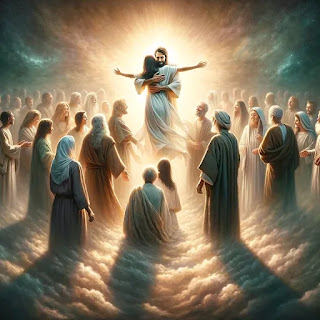

Comments
Post a Comment