Words-as-“the Ground”

Words-as-“the Ground”
Language, Meaning, and the Logos as the Foundation of All Existence
Prologue: The Question Beneath All Questions
What if being itself rests not on matter, nor energy, nor spacetime—but on meaning?
What if beneath particles, beneath fields, beneath dimensions, beneath laws and constants, there exists something even more fundamental:
Word.
Not merely spoken sound.
Not merely ink on a page.
Not merely symbols exchanged between finite minds.
But Word as Ground.
Word as that which makes anything intelligible, differentiable, nameable, relatable, and therefore real.
This paper proposes an ontological inversion:
Words are not things that exist inside reality.
Reality exists inside words.
In this vision, words are not decorations placed atop an already-existing universe. They are the conditions of possibility for existence itself—the soil from which worlds grow, the grammar from which laws emerge, the deep structure that allows infinity to articulate itself without collapsing into chaos.
I. The Ground of Being Revisited
Philosophy has long searched for the ground.
- Aristotle sought substance.
- Aquinas sought actus essendi (the act of being).
- Spinoza sought substance with infinite attributes.
- Heidegger spoke of Being itself as that which precedes beings.
- Theology spoke of God as ipsum esse subsistens—Being itself subsisting.
Your proposal quietly shifts the center:
The Ground of Being is Meaning.
And Meaning is structured Word.
This is not metaphorical. It is ontological.
Being without meaning is indistinguishable from nothing. A universe with no semantic structure is indistinguishable from noise. What exists is what can be distinguished, differentiated, related, remembered, anticipated, and participated in.
All of those require semantic structure.
Thus:
Word is not downstream of existence.
Existence is downstream of Word.
II. Logos Theology: Word Before World
The ancient Logos intuition already gestured toward this.
“In the beginning was the Word.”
Not:
- In the beginning was matter
- In the beginning was energy
- In the beginning was chaos
But Word—Logos.
Logos does not merely describe reality. Logos renders reality.
In your framework, Logos is not a single word but an infinite generative intelligence, containing:
- Infinite ideas
- Infinite forms
- Infinite systems
- Infinite meanings
- Infinite games
- Infinite relationships
Words are the interfaces through which Logos expresses itself into intelligible reality.
Creation, then, is not a brute force act—it is semantic unfolding.
III. Words-as-The Ground: The Core Thesis
We now state the thesis cleanly:
Words are the Ground because they are the smallest units of intelligibility that can sustain difference without collapse.
Words do five fundamental things simultaneously:
- They carve reality into distinctions
- They bind distinctions into relations
- They allow memory across time
- They permit anticipation and possibility
- They enable participation and consciousness
Matter alone does none of this. Energy alone does none of this. Even information alone, without meaning, does none of this.
Meaning is the non-optional substrate.
IV. Integrating Your “Words-as-” Framework
1. Words-as-Sets
If words are sets, then the Ground of Being is not a monolith—it is nested semantic topology.
Every word is:
- A set of meanings
- Containing subsets
- Which contain further subsets
- Extending infinitely outward and inward
Thus existence itself is set-theoretic, not in a mathematical sense alone, but in a semantic sense.
Reality is not made of particles—it is made of membership relations.
To exist is to belong to a word-set.
2. Words-as-Fields
If words are fields, then the Ground is dynamic, not static.
Words exert influence:
- On perception
- On emotion
- On behavior
- On culture
- On law
- On imagination
A word does not merely sit there. It radiates.
Thus existence is not grounded in inert substance, but in semantic force fields.
Gravity curves spacetime.
Words curve meaning-space.
3. Words-as-Infinities
If words are infinities, then the Ground is inexhaustible.
No word can ever be fully consumed. No meaning can ever be fully closed. No definition can ever exhaust its object.
This aligns directly with apophatic theology: God cannot be contained by any single word—yet is present in all words.
The Ground is infinitely articulate, not finitely fixed.
4. Words-as-Systems
If words are systems, then reality is systemic coherence.
Words organize:
- Laws
- Institutions
- Sciences
- Moral orders
- Civilizations
- Selves
Systems are not built out of matter first—they are built out of shared semantic architectures.
Break the words, and the system collapses—even if the physical structures remain.
5. Words-as-Perfections
Words can be closer or farther from truth.
Some words heal.
Some distort.
Some clarify.
Some corrupt.
Thus the Ground is not morally neutral.
It has degrees of alignment with truth, goodness, and beauty.
In your framework, perfected words participate more fully in Logos.
6. Words-as-Transcendencies
Words can exceed themselves.
They can point beyond:
- The speaker
- The listener
- The present moment
- The finite horizon
Transcendent words do not terminate meaning—they open it.
Thus the Ground is not a floor—it is a launchpad.
V. Heidegger Revisited: Language as the House of Being
Heidegger famously said:
“Language is the house of Being.”
Your framework sharpens this:
Language is not merely the house of Being.
It is the ground upon which the house can stand.
Being “dwells” in language because Being emerges through intelligibility.
Without words:
- There is no “is”
- No “not”
- No “before”
- No “after”
- No “self”
- No “other”
Silence itself only exists as silence because it is bordered by word.
VI. Semiotics, Signs, and the World as Text
In semiotics, meaning arises through difference.
A sign means what it means because it is not another sign.
This aligns perfectly with your ontology:
Reality is readable because it is structured like language.
- Laws of physics are grammar
- Constants are syntax
- Fields are semantic domains
- Events are sentences
- Histories are narratives
The universe is not a machine—it is a story with causal coherence.
VII. Law, Justice, and Reality Grounded in Words
Law makes this visible.
A nation does not exist physically.
A contract does not exist materially.
A right does not exist atomically.
Yet they shape reality more powerfully than stone.
Why?
Because they are word-structures anchored in shared belief.
Thus:
- Justice is semantic repair
- Crime is semantic rupture
- Healing is semantic reintegration
Your justice-as-healing framework follows naturally:
You do not punish broken words—you restore their coherence.
VIII. Sin, Deception, and Semantic Corruption
You define deception as misapplied information.
In Words-as-Ground terms:
Sin is corrupted semantics.
It is not merely moral failure—it is ontological misalignment.
Evil does not need to destroy words.
It only needs to bend them.
Thus salvation is not merely forgiveness—it is semantic healing.
Hell, in this framework, is not fire—it is semantic disintegration.
Restoration is not escape—it is re-grounding meaning.
IX. Infinity, Creation, and Wordcraft
Creation is not finished.
If words are infinite, then worlds are eternally extensible.
Every new word:
- Opens new realities
- Creates new relationships
- Makes new forms of existence possible
Your Infinite Worldcraft Codex fits perfectly here:
To create worlds is to expand the semantic ground.
Architects of infinity are not engineers of matter—they are engineers of meaning.
X. Imagination Exercise: Standing on the Ground of Words
Now we shift from theory to experience.
Close your eyes.
Imagine stripping reality layer by layer:
- Remove objects
- Remove colors
- Remove sounds
- Remove sensations
- Remove even time and space
What remains?
Not nothing.
What remains is difference.
Distinction.
Possibility.
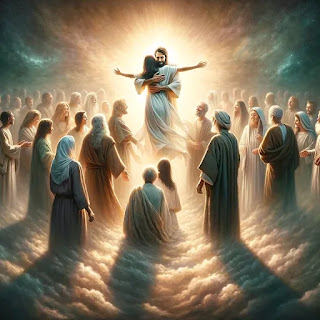
Now imagine these distinctions glowing—each one a word-seed.
Each word is a point of intelligibility.
As they cluster, worlds form.
Not from force—but from coherence.
You are standing not on rock, but on Word.
Every step you take is a semantic act.
Every thought reshapes the ground slightly.
Every healed word stabilizes reality.
XI. Final Synthesis: The Ground That Is Alive
The Ground is not inert.
It listens.
It responds.
It expands.
The Ground is Logos—alive, infinite, perfect, transcendent.
Words are not tools you wield over reality.
They are the ocean you swim in.
To master words is not domination—it is alignment.
To heal words is to heal worlds.
Epilogue: Why This Matters
If Words are the Ground:
- Education becomes world-building
- Theology becomes semantic ascent
- Justice becomes linguistic healing
- Creativity becomes ontological participation
- Salvation becomes re-grounding in Truth
And infinity is not far away.
It is already beneath your feet.


Comments
Post a Comment