Justice-as-Light

Justice-as-Light
From Punishment to Illumination
From Condemnation to Infinite Understanding
I. The Crisis of the Punitive Paradigm
For most of recorded history, justice has been imagined as a scale and a sword.
The scale measures guilt.
The sword executes consequence.
In this paradigm, wrongdoing is framed primarily as an offense demanding punishment. A law is broken. A penalty must follow. The moral architecture is retributive: balance must be restored by inflicting proportional pain.
This paradigm has utility. It establishes boundaries. It deters harm. It communicates that actions matter.
But it also has limitations.
It treats crime primarily as willful rebellion, not as distortion, ignorance, blindness, trauma, confusion, or misapplied information. It assumes clarity of perception where often there is darkness. It assumes evil where there may be ignorance. It assumes malice where there may be fragmentation.
What if injustice is not merely rebellion against law, but movement within darkness?
What if wrongdoing is fundamentally a failure of sight?
What if justice is not fundamentally a sword—but a light?
II. The Ontology of Darkness
Darkness is not a positive substance. It is the absence of light.
Likewise, injustice may not be a positive metaphysical force. It may be:
- A deficit of truth.
- A deficit of knowledge.
- A deficit of wisdom.
- A deficit of understanding.
In darkness:
- We misjudge threats.
- We stumble.
- We hurt others unintentionally.
- We project fear.
- We act from incomplete information.
When someone lies, often they do so to protect themselves from perceived danger. When someone steals, often they act from perceived scarcity. When someone harms, often they operate from distorted narratives.
This does not excuse harm. But it reframes it.
Justice-as-Light begins from this premise:
Harm is often the behavioral expression of cognitive and moral darkness.
And darkness is not defeated by more darkness.
It is defeated by light.
III. Justice as Illumination
To illuminate is to:
- Reveal.
- Clarify.
- Distinguish.
- Expose.
- Understand.
Justice-as-Light does not ignore wrongdoing. It exposes it more deeply than punishment ever could.
Punishment can restrain behavior. Light can transform perception.
When truth enters:
- Self-deception collapses.
- Rationalizations dissolve.
- Distorted narratives unravel.
- Projection is neutralized.
- Responsibility becomes visible.
Light does not humiliate. It reveals.
In a courtroom of Light, the first question is not:
“How much punishment is deserved?”
But:
“What distortion led here? What ignorance? What blindness? What wound? What false belief?”
The aim is not merely to balance scales—but to remove the darkness that generated the offense.
IV. Truth as Higher Justice
Truth is alignment with reality.
When truth emerges, it does several things simultaneously:
- It protects the innocent.
- It exposes the guilty.
- It clarifies causation.
- It reveals motives.
- It restructures narrative.
Truth does not need violence to be powerful. It is inherently corrective.
In the presence of truth:
- Lies decay.
- Manipulation fails.
- Injustice becomes unsustainable.
Thus truth is not merely a tool of justice.
Truth is justice.
When reality is fully known, distortions cannot persist.
Imagine Infinite Truth.
In Infinite Truth:
- Every context is understood.
- Every motive is seen.
- Every contributing factor is accounted for.
- Every misunderstanding is clarified.
- Every wound is contextualized.
In such a reality, justice would not be blindfolded.
It would see perfectly.
And perfect sight eliminates both unfair condemnation and unaccountable harm.
V. Knowledge as Structural Justice
Knowledge is accumulated light.
Where ignorance reigns, systems break down. Corruption spreads. Myths masquerade as facts.
Knowledge stabilizes civilization.
- Medical knowledge reduces preventable death.
- Psychological knowledge reduces cycles of abuse.
- Economic knowledge reduces systemic exploitation.
- Social knowledge reduces prejudice.
- Historical knowledge prevents repetition of catastrophe.
Justice-as-Light sees injustice not only as individual wrongdoing but as systemic ignorance.
When systems are built on false premises, injustice becomes structural.
Thus higher justice is not merely punishing offenders—it is increasing knowledge at scale.
Education becomes justice. Transparency becomes justice. Open information becomes justice.
An informed population is harder to manipulate.
A knowledgeable leader is harder to corrupt.
A transparent institution is harder to rot.
Light at scale is preventative justice.
VI. Wisdom as Calibrated Justice
Knowledge alone is insufficient. Information without integration can create chaos.
Wisdom is the calibrated application of knowledge.
Wisdom asks:
- What response produces long-term restoration?
- What action prevents recurrence?
- What consequence teaches rather than merely inflicts?
- What balance protects victims while reforming offenders?
Wisdom understands nuance.
Some require boundaries. Some require protection. Some require removal from immediate influence. Some require rehabilitation. Some require restitution.
Justice-as-Light does not eliminate consequences.
It transforms them.
Consequence becomes instructional rather than merely punitive. Containment becomes protective rather than vengeful. Correction becomes restorative rather than humiliating.
Wisdom is justice operating with long-term vision.
VII. Understanding as Redemptive Justice
Understanding is the deepest form of light.
To understand is not to excuse.
It is to see the whole.
Understanding recognizes:
- Psychological conditioning.
- Environmental influence.
- Trauma inheritance.
- Narrative distortion.
- Fear-driven behavior.
When someone fully understands the harm they caused—when they see its impact clearly, when empathy is activated—internal transformation begins.
External punishment can create compliance.
Internal understanding creates conversion.
Justice-as-Light seeks the latter.
It is not satisfied with behavioral restraint.
It seeks moral awakening.
VIII. Infinite Light: The Asymptotic Ideal
Imagine:
- Infinite Truth.
- Infinite Knowledge.
- Infinite Wisdom.
- Infinite Understanding.
In such a horizon:
No lie could survive. No injustice could remain hidden. No distortion could persist. No wound would be unseen. No motive would be misunderstood.
Justice would not be mechanical.
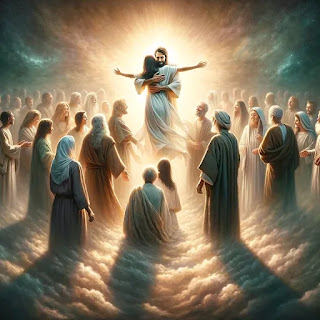
It would be luminous.
In Infinite Light:
- Victims are fully seen.
- Offenders are fully known.
- Context is fully understood.
- Restoration pathways are fully mapped.
Enlightenment becomes:
- The gavel — because truth renders verdict.
- The scalpel — because wisdom removes distortion precisely.
- The sword — because light cuts through deception.
- The shield — because knowledge prevents future harm.
- The judge — because understanding discerns rightly.
- The healer — because illumination restores clarity.
Justice-as-Light is not soft.
Light can be blinding.
Revelation can be terrifying.
Truth can dismantle identity.
But its aim is not annihilation.
Its aim is alignment.
IX. Justice as Prevention Through Illumination
The highest justice prevents injustice before it occurs.
Light does this.
- Teaching emotional regulation reduces violence.
- Teaching critical thinking reduces manipulation.
- Teaching ethics reduces exploitation.
- Teaching history reduces repetition.
- Teaching empathy reduces cruelty.
Justice-as-Light invests upstream.
Punitive justice reacts. Luminous justice anticipates.
It recognizes that darkness thrives where illumination is absent.
Thus the most just society is not the one with the harshest penalties.
It is the one with the brightest collective understanding.
X. The Transformation of the Offender
In the punitive model, the offender is an object of condemnation.
In Justice-as-Light, the offender is a person operating in darkness.
The aim becomes:
- Reveal the darkness.
- Increase awareness.
- Activate conscience.
- Restore moral perception.
- Reintegrate with clarity.
Not all will respond.
Some resist light. Some prefer distortion. Some cling to power through deception.
Justice-as-Light does not eliminate protective boundaries.
But it does not begin with annihilation.
It begins with illumination.
XI. The Protection of the Victim
Justice-as-Light never sacrifices the victim for abstract mercy.
Light protects victims by:
- Revealing harm clearly.
- Validating suffering with truth.
- Establishing transparent accountability.
- Preventing recurrence through systemic knowledge.
- Creating environments of informed safety.
Where truth reigns, gaslighting dies.
Where understanding reigns, minimization dies.
Where wisdom reigns, protection is strategic and proactive.
Justice-as-Light is not naive.
It sees clearly.
And clear sight protects.
XII. The Shift in Moral Imagination
The greatest transformation is psychological.
We move from:
Crime → Punishment.
To:
Darkness → Illumination.
From:
Balance through pain.
To:
Alignment through light.
From:
“How much suffering is deserved?”
To:
“What light is required?”
From:
“How do we make them pay?”
To:
“How do we remove the ignorance that produced this?”
Punishment can deter.
Light can transform.
Punishment can suppress.
Light can awaken.
Punishment can end behavior.
Light can end the desire for it.
XIII. Justice as the Radiance of Being
At its highest conception, justice is not merely a function of courts or institutions.
It is the radiance of truth in action.
When:
- Truth governs speech.
- Knowledge informs policy.
- Wisdom guides response.
- Understanding shapes interaction.
Justice is no longer an event.
It becomes an atmosphere.
A luminous civilization is a just civilization.
Because darkness cannot structurally survive within it.
XIV. The Sword of Light
There is still a sword.
But it is not forged from vengeance.
It is forged from clarity.
Light cuts:
- Through deception.
- Through self-justification.
- Through manipulation.
- Through ignorance.
It separates truth from falsehood.
This sword does not destroy persons.
It destroys illusions.
And when illusions collapse, transformation becomes possible.
XV. Conclusion: Enlightenment as the Highest Justice
Justice-as-Light does not deny accountability.
It deepens it.
Because when light is full:
There are no excuses. There is no hiding. There is no distortion.
Only clarity.
Only reality.
Only understanding.
And in that clarity, every being sees:
- What was done.
- Why it was done.
- How it harmed.
- What must change.
- How restoration unfolds.
Justice shifts from punishment-centered to illumination-centered.
From fear-driven to truth-driven.
From reactive to transformative.
From darkness-fighting to light-spreading.
In the end, the highest justice is not pain.
It is enlightenment.
Because when Infinite Truth, Infinite Knowledge, Infinite Wisdom, and Infinite Understanding flood existence—
Darkness dissolves.
And where there is no darkness—
There is no injustice left to punish.
Only alignment.
Only restoration.
Only Light.


Comments
Post a Comment