Semantic Universes

Semantic Universes
Words, Logos, and the Architecture of Meaning Across Philosophy, Psychology, and Theology
I. What Is a Semantic Universe?
A Semantic Universe is the total meaning-space generated by a word, a system of words, or the Logos as a whole. It is not merely a collection of definitions, but a living domain in which meanings exist, interact, expand, overlap, and transform.
In this framework:
- A word is not a label.
- A concept is not static.
- Meaning is not finite.
Instead, meaning behaves like a world—with geography, depth, currents, forces, histories, and futures.
The integrated “Words-as” theories together reveal this structure with unusual clarity:
- Words-as-Sets → meaning as total semantic membership
- Words-as-Fields → meaning as influence and force
- Words-as-Oceans → meaning as depth and immersion
- Words-as-Functions → meaning as transformation and effect
- Words-as-Infinities → meaning as inexhaustible and ontological
A Semantic Universe is what appears when these are viewed together.
II. Words-as-Sets: The Population of a Semantic Universe
In Words-as-Sets, each word is an open semantic set containing:
- definitions
- uses and contexts
- metaphors and symbols
- emotional tones
- historical layers
- cultural interpretations
- technical meanings
- future meanings not yet realized
A Semantic Universe, then, is not a single point—it is a population of meanings.
This resolves a longstanding philosophical tension:
How can a word be both stable and flexible?
Because stability comes from core elements of the set, while flexibility comes from its open, expanding boundary.
This view quietly surpasses classical semantics associated with Aristotle, which sought fixed essences. Semantic Universes retain intelligibility without freezing meaning.
III. Words-as-Fields: Meaning as Force and Gravity
A Semantic Universe is not passive.
It exerts force.
In Words-as-Fields, words function like gravitational or electromagnetic fields:
- They bias attention
- Shape perception
- Trigger emotion
- Pull behavior in particular directions
This insight resonates with ancient intuitions from Heraclitus, who understood Logos as an ordering principle flowing through reality, and with Stoic notions of Logos as an immanent rational force structuring the cosmos.
Within a Semantic Universe:
- Some meanings are central and heavy
- Others are peripheral and light
- Certain interpretations pull strongly on minds and cultures
This explains why some words heal while others dominate, even before any argument is made.
IV. Words-as-Oceans: Depth, Immersion, and Participation
Words-as-Oceans adds what sets and fields alone cannot: depth.
A Semantic Universe has layers:
- Surface: dictionary definition
- Mid-depths: metaphor, narrative, cultural meaning
- Abyssal depths: existential, theological, archetypal significance
One does not merely analyze an ocean—one enters it.
This aligns strongly with mystical and symbolic traditions, especially those of Ibn Arabi, who understood words and divine names as realities to be inhabited, not merely described.
In a Semantic Universe:
- Understanding increases with immersion
- Meaning unfolds through participation
- Depth is inexhaustible
V. Words-as-Functions: How Semantic Universes Act
If sets describe what exists in a Semantic Universe, and fields describe how it exerts influence, Words-as-Functions explain what it does.
Every word operates as a function that maps:
Meaning × Purpose × Utility × Value × Power → Cognitive and Real-World Outcomes
This resonates with speech-act theory (the idea that words do things) and with modern psychology, where language shapes emotion, identity, and behavior.
A Semantic Universe is therefore operational:
- Entering it changes the mind
- Misapplying it produces harm
- Aligning it with context produces truth
The definition of deception as misapplied information to a context it does not belong to fits cleanly here: deception is a function error within a Semantic Universe.
VI. Words-as-Infinities: The Ontology of Semantic Universes
The decisive step is Words-as-Infinities.
Here, a Semantic Universe is not merely large—it is ontologically unbounded.
Every word:
- tends toward infinite meaning
- contains inexhaustible purpose
- has unlimited potential utility
- carries intrinsic value
- possesses transformative power
Human cognition encounters these infinities finitely, but the infinity itself is real.
This reframes creativity, learning, and healing as exploration, not accumulation.
VII. Logos Theory: The Supreme Semantic Universe
The Logos framework provides the unifying horizon:
Logos is the Living, Sentient Set of all Word-Infinities.
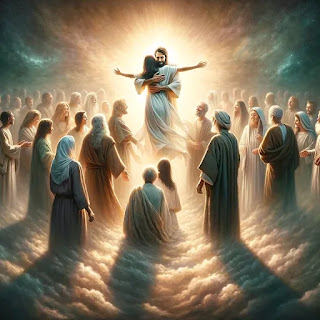
In classical Christian theology—especially in the Gospel of John—Logos is “the Word” through which all things were made. In Hellenistic philosophy, including Stoicism and the thought of Philo of Alexandria, Logos is the rational structure of reality. In medieval theology, such as that of Thomas Aquinas, Logos grounds intelligibility itself.
This integrated view brings these streams together:
- The Set of All Words is the Set of All Things
- Every Semantic Universe exists within Logos
- Logos is not a static abstraction, but living intelligence
- Creation is the expression of Semantic Universes into form
Thus, Logos is the Supreme Semantic Universe—the universe of all universes of meaning.
VIII. Psychological Implications: Trauma, Identity, and Liberation
Psychologically, Semantic Universes explain why trauma is linguistic at its core.
Trauma collapses a vast Semantic Universe into a single, tyrannical subset:
- “unsafe”
- “worthless”
- “trapped”
Healing is not denial—it is semantic re-expansion.
By restoring access to the larger Semantic Universe, the mind regains:
- nuance
- narrative
- dignity
- future
This perspective aligns with hermeneutic thinkers such as Hans-Georg Gadamer and Paul Ricoeur, who understood understanding itself as participation in expanding horizons of meaning.
IX. Creativity, Ethics, and Meaning
Creatively, Semantic Universes mean ideas never run out—only depths remain unexplored.
Ethically, they imply responsibility:
- Words shape worlds
- Meaning misapplied becomes oppression
- Meaning aligned with Logos becomes liberation
Truth, then, is not merely correctness—it is right placement within the right Semantic Universe.
X. Conclusion: Living Among Semantic Universes
To live consciously is to recognize that:
- Every word opens a world
- Every world carries gravity and depth
- Every act of speech is an act of world-building
This integrated framework reveals language as cosmic architecture—not metaphorically, but structurally.
Semantic Universes are how meaning exists.
Logos is the Infinite Living Universe in which all meaning coheres.
And cognition, creativity, healing, and freedom arise as minds learn not merely to use words—but to navigate, inhabit, and align with the worlds they open.


Comments
Post a Comment